


Garage Flooring UK – Rubber Tiles & Rolls for Garages
3 products

Your basket is empty
Continue shopping3 products
Garage flooring that protects the concrete, grips when wet and stands up to oil, fuel and dropped tools. Choose interlocking nitrile tiles that lay without adhesive, or rolls that cover the whole floor with few joins. Every order ships free across the UK.
| Product | Size | Thickness | Best for |
|---|---|---|---|
| Nitrile interlocking garage mats | 1 m x 1 m, with ramps and corners | 18 mm | Home garages, workshops, garage gyms |
| Nitrile garage floor tiles | 36 x 36 in, with safety strips | 16 mm | Garages and workshops where oil is spilled |
| R11 round dot rubber rolls | 10 m rolls, 1.0, 1.2 or 2.2 m wide | 3–6 mm | Covering a whole garage floor |
| Diamond tread PVC garage flooring | 2.2 m wide, 5 m or 10 m | 3 mm | Showroom look, grey or black |
Standard rubber can soften and swell if oil, fuel or brake fluid sits on it. Nitrile rubber resists oils and fuels, so it stays firm and grippy in garages and workshops. Our interlocking garage mats and garage floor tiles are both nitrile.
Measure the floor in metres and multiply length by width. A single garage of about 5 m x 2.5 m is 12.5 m², so it needs 13 of the 1 m x 1 m tiles plus ramps for the open edge. For rolls, divide the width of the garage by the roll width to get the number of strips, then multiply by the length.
Unroll rolls and leave them to settle for up to 48 hours before trimming.
Yes. Heavy duty 16–18 mm garage tiles are made to take car wheels. Fit ramps at the door edge so tyres roll onto the tiles without catching.
No. Interlocking tiles lay loose and hold together by their joins and weight. Rolls can also be laid loose in most garages.
Rubber tiles are thicker and more cushioned, which suits garage gyms and workshops where you stand for long periods. PVC diamond tread is thinner with a smooth, showroom finish that is easy to wipe clean.
Sweep, then mop with warm water and a mild degreaser. Wipe up fuel and oil spills promptly.
Related ranges: gym flooring, workshop mats, rubber flooring rolls, anti-fatigue mats and rubber flooring.
































Dispatch in 24 Hours
Satisfaction Guarantee
Secure Payments
sales@rubberco.co.uk
Popular searches
Shop by department
Best sellers
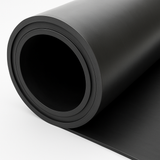 Commercial Rubber Sheet | Cut to Length | 1.5–25mm x 1.4m Wide5.0 (144)From £12.00 Inc. Vat
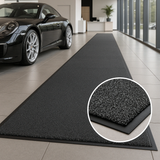 Heavy Duty Barrier Runner Mat | Non-Slip Entrance Matting | Rubber Co4.9 (41)From £90.00 Inc. Vat
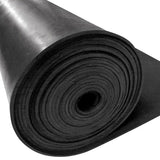 Soundproofing Rubber Sheet | Heavy Duty Acoustic | Industrial | Up to 75dB4.9 (33)From £51.27 Inc. Vat
 Anti-Slip Rubber Decking Matting with Drainage Holes | R11 Rated | 910mm x 910mm | 17mm | Rubber Co4.9 (45)From £22.00 Inc. Vat
Can’t find what you need? Call 01282 277786 for expert advice.


