- Free UK delivery on every order
- Secure checkout with Klarna & Shop Pay
- Expert advice: 01282 277786
Best sellers in Rubber Flooring
View all 47 products →


Not sure which rubber flooring is right for you?
Tell us the area, thickness or job and our team will recommend the right product.
Rubber flooring for homes, garages, gyms, workshops, vans and commercial buildings. Choose rolls cut to length, interlocking tiles or heavy-duty mats, in hard-wearing rubber, oil-resistant nitrile and a choice of colours. Rubber is slip-resistant, cushions footsteps and dropped items, and is quick to lay. Every order ships free across the UK.
Rubber flooring at a glance
| Type | Typical thickness | Sizes | Best for |
|---|---|---|---|
| Studded (penny) rolls | 3–6 mm | Up to 2.2 m wide, cut to length | Garages, workshops, commercial walkways |
| Diamond tread rolls | 3 mm | 2.2 m wide, black or grey | Loading areas, ramps, vans |
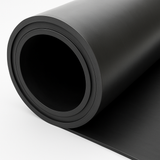
| Plain smooth rolls | 3–20 mm | 1.4 m and 2.0 m wide | Homes, offices, gyms |
| Gym flooring rolls | 4–12 mm | Rolls in a choice of colours | Home and commercial gyms |
| Interlocking tiles | 16–30 mm | 1 m x 1 m and 36 x 36 in | Free weights, garages, play areas |
| Drainage mats | 15–23 mm | 910 x 910 mm and similar | Showers, wet rooms, decking |
Rolls, tiles or mats?
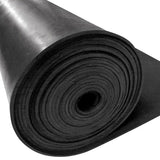
- Rubber flooring rolls – the quickest way to cover a large floor with few joins. Widths include 1.0 m, 1.2 m and 2.2 m, mostly 3–6 mm thick (gym rolls up to 12 mm), cut to length or as full rolls.
- Interlocking tiles – 1 m x 1 m and 36 x 36 in tiles from 16 mm to 30 mm thick for gyms, garages and play areas. Easy to carry and lay without adhesive.
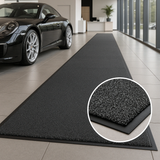
- Mats – ready-made heavy-duty mats for workstations, stables, wet areas and entrances.
Choose your surface pattern
- Studded (penny) – the classic R11 slip-rated pattern for garages, workshops, ramps and commercial walkways.
- Diamond tread – hard-wearing grip with an industrial look for loading areas, ramps and vans.
- Plain smooth – easy to clean, ideal for gyms, homes and areas where wheeled equipment moves.
- Hollow and drainage mats – let water and spills drain away in showers, wet areas and on decking.
Which thickness?
- 3–4 mm: homes, offices, vans and light commercial floors.
- 6–10 mm: workshops, garages, gym cardio areas and busy walkways.
- 16 mm and above: free-weight areas, stables and anywhere heavy items are dropped.
- 30 mm tiles: playgrounds and drop zones.
Rubber flooring by room
- Garages: R11 dot penny garage flooring or 18 mm nitrile interlocking garage tiles that resist oil and fuel. See all garage flooring.
- Home and commercial gyms: gym flooring rolls for cardio and functional areas, and 17 mm interlocking gym tiles under free weights. See gym flooring.
- Homes, garden rooms and offices: plain smooth rubber flooring, quiet underfoot and easy to mop.
- Workshops and commercial floors: studded R11 rubber flooring rolls or diamond tread safety flooring.
- Playgrounds: 30 mm rubber safety play tiles and other playground flooring.
- Kennels, vans and wet rooms: see kennel flooring, van flooring and wet room flooring.
How to lay rubber flooring
- Start with a clean, dry, flat base. Fill cracks and remove loose material first.
- Unroll rolls and leave them to settle in the room for up to 48 hours before fitting, so the rubber relaxes and stays flat.
- Lay rolls side by side with tight joins and trim edges with a sharp knife and straight edge.
- Tiles and mats lay loose. Bond rolls with rubber flooring adhesive in busy commercial areas, outdoors and where wheeled equipment is used.
Rolls are heavy, so plan for two or three people to handle them.
Which rubber compound?
- SBR and natural rubber: the general-purpose choice for most indoor floors.
- Nitrile: resists oil, grease and fuel, for garages, workshops and commercial kitchens.
- EPDM and recycled rubber: UV and weather resistant, for outdoor areas, gyms and play surfaces.
Rubber flooring FAQs
Is rubber flooring waterproof?
Rubber itself is waterproof, so spills sit on the surface and wipe away. For wet areas, choose mats with drainage holes so water drains through.
Which rubber flooring is best for a garage?
Studded or diamond tread flooring in an oil-resistant grade, or nitrile interlocking tiles. Standard rubber can be softened by oil and fuel over time.
What thickness of rubber flooring do I need for a home gym?
Around 6–10 mm suits cardio machines and bodyweight training. Under free weights or where dumbbells are dropped, use 16 mm tiles or thicker.
Does rubber flooring need adhesive?
Tiles and mats lay loose. Rolls can be laid loose in most rooms, or bonded with rubber flooring adhesive in busy commercial areas and where wheeled equipment is used.
How do I work out how much rubber flooring I need?
Measure the room's length and width in metres. For rolls, divide the room width by the roll width to get the number of strips, then multiply by the room length to get the total metres to order. Add a little extra for trimming.
How do I clean rubber flooring?
Sweep or vacuum, then mop with warm water and a pH-neutral cleaner. Avoid solvent and oil-based cleaners.
Related ranges: rubber flooring rolls, rubber floor tiles, garage flooring, gym flooring, anti-fatigue mats, soundproofing rubber, electrical safety matting and rubber matting.