











Rubber Tiles UK | Interlocking Floor Tiles | Heavy Duty | Free Delivery
30 products
30 products
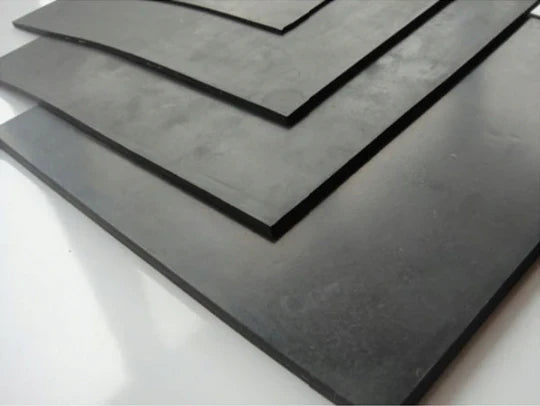
Rubber tiles are the most versatile flooring solution available in the UK. Each interlocking tile snaps together without adhesive, tools, or specialist installation — creating a professional, heavy-duty rubber floor in hours, not days. Rubberco stocks the UK's widest range of rubber floor tiles: interlocking gym tiles, studded garage tiles, playground safety tiles, industrial anti-slip tiles, outdoor EPDM tiles, and acoustic tiles — in every thickness from 6mm through to 75mm. Free delivery on all orders. Same-day dispatch on in-stock items ordered before 2pm. 60+ years supplying UK industry, schools, gyms, and homeowners.
| Thickness | Primary Application | Impact Protection | Noise Reduction | Typical Use Cases |
|---|---|---|---|---|
| 6–8mm | Light duty / office / entrances | Moderate | ~10 dB ΔLw | Treadmills, bikes, yoga, light stretching zones, entrance lobbies |
| 10–12mm | General gym / garage / school hall | Good | ~14 dB ΔLw | Most gym equipment, garage floors, school PE halls, light industrial |
| 15mm ⭐ Most Popular | Free weights / CrossFit / commercial gym | High | ~18 dB ΔLw | Dropped weights up to 50kg, functional fitness, commercial gyms |
| 20mm | Olympic lifting / industrial / heavy commercial | Very high | ~22 dB ΔLw | Barbell drops, forklift pedestrian zones, CrossFit boxes |
| 25–30mm | Olympic lifting platforms / playground | Extreme | ~25 dB ΔLw | Overhead barbell drops, playground CFH up to 1.5m (BS EN 1177) |
| 40–75mm | Playground high fall heights | Playground rated | ~28 dB ΔLw | School playground equipment >2m CFH (BS EN 1177:2018 certified) |
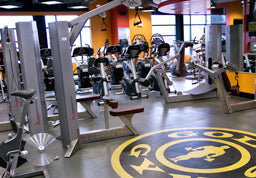
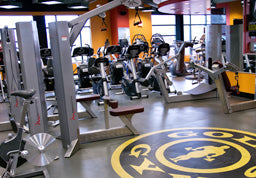
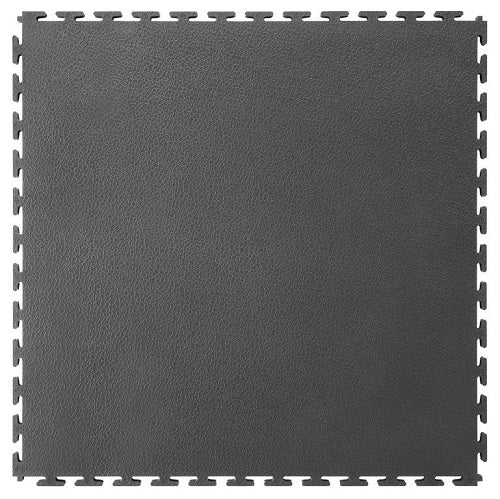
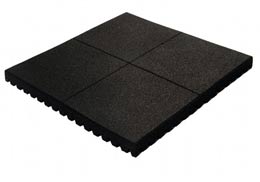
The most popular choice for UK home gyms and commercial fitness facilities. Manufactured from high-density recycled SBR rubber with a smooth, fine-studded, or coin-top surface. SBR is dense, resilient, and absorbs the impact from dropped weights without bouncing, cracking, or permanently compressing. Standard sizes are 500mm × 500mm and 1m × 1m — both include border strips for a clean perimeter finish. For the most demanding lifting environments, 20mm heavy-duty gym tiles offer Olympic-standard protection and meet the expectations of CrossFit affiliates across the UK.
Best for: Home gyms, commercial fitness studios, CrossFit boxes, school sports halls, hotel gyms, PT studios. Browse gym flooring →
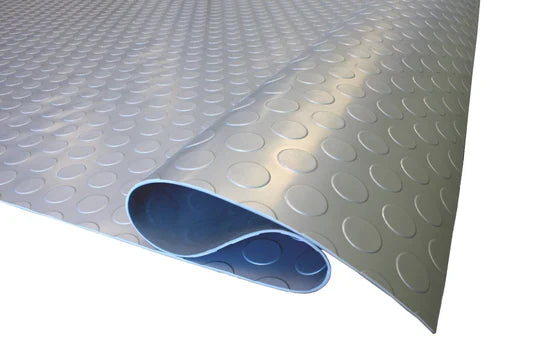
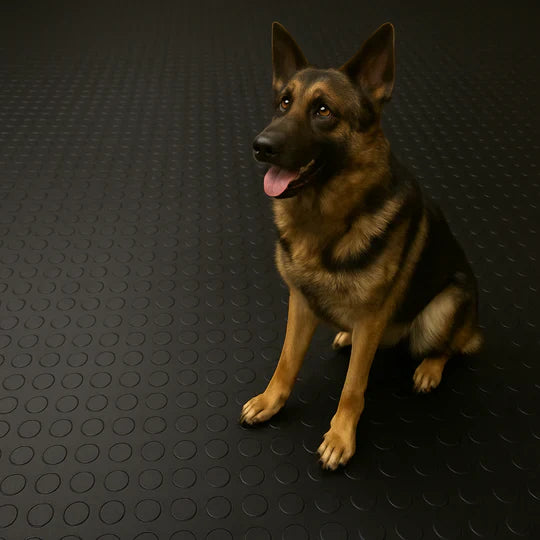
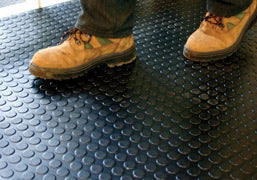
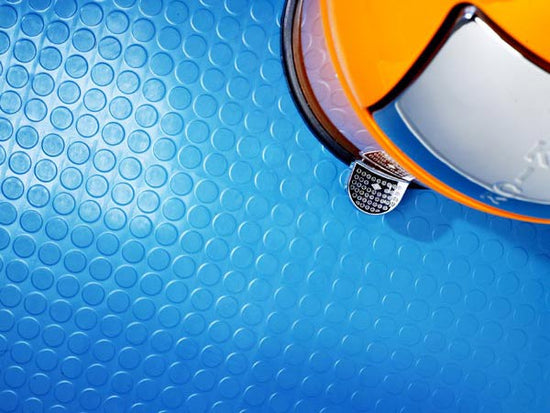
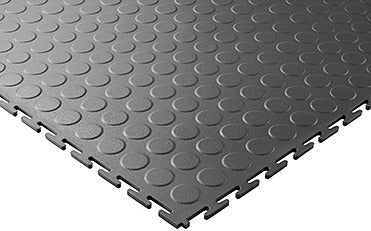
The studded surface profile is the standard choice for garage floors, workshops, and industrial areas. Raised studs provide enhanced grip in wet conditions, channel water away from the surface, and give the floor a robust, professional appearance. Highly resistant to oil contamination and easy to sweep or jet-wash clean. Ideal for pub cellars, commercial kitchens, loading areas, and catering spaces where spillage is frequent and cleanliness is a priority.
Best for: Garages, workshops, commercial kitchens, pub cellars, loading bay approaches, vehicle maintenance areas. Browse garage flooring →
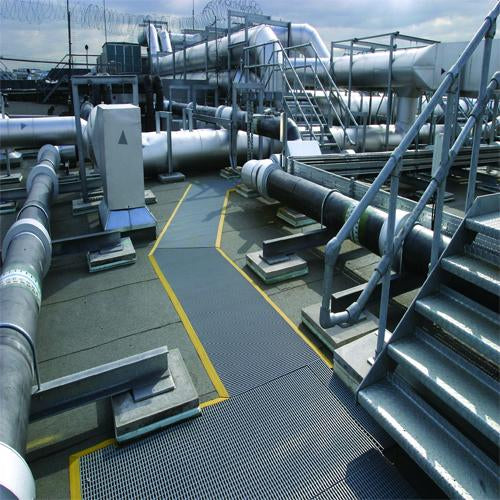
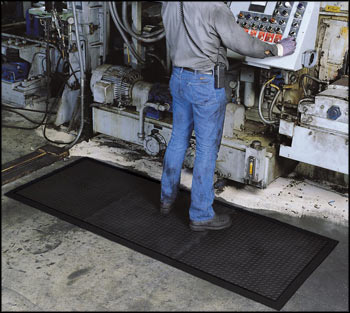
Heavy-duty tiles designed for factory floors, loading bay approaches, and pedestrian walkways in industrial environments. Available in chevron, diamond-plate, and open-grid designs to maximise grip, drainage, and durability under forklift and pallet truck traffic. Constructed from high-density vulcanised rubber with a superior resistance to oils, chemicals, and continuous heavy loading. Industrial rubber tiles meet R10–R13 anti-slip ratings (DIN 51130) — the highest classification available for wet-area safety flooring.
Best for: Factory floors, warehouse walkways, loading bays, plant rooms, engineering workshops. Browse industrial floor mats →
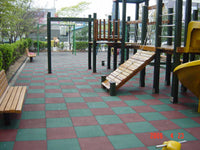
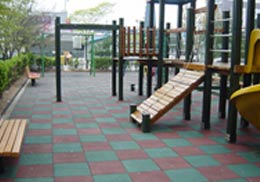
Impact-attenuating tiles independently certified to BS EN 1177:2018 for use in school playgrounds, nurseries, and public parks. Available in 30mm, 40mm, 50mm, and 75mm thicknesses providing certified Critical Fall Heights (CFH) from 1.0m through to 3m+. UV-stabilised EPDM compound for year-round outdoor performance in the UK climate. Multi-colour options available for creative playground design. Easy to replace individual tiles damaged by vandalism or impact — no need to relay the entire surface. Full certification documentation available for local authority procurement and Ofsted compliance.
Best for: School playgrounds, nurseries, public parks, leisure centres, adventure play areas, children's garden zones. Browse playground matting →
Dense rubber tiles with superior sound-dampening properties for home studios, music rooms, and multi-storey residential and commercial buildings. Significantly reduce impact sound transmission compared to hard flooring surfaces. Also suitable as anti-vibration isolation under gym treadmills, weight benches, and commercial kitchen equipment. The preferred specification for flat conversions and apartments where noise reduction is a requirement under Building Regulations Part E.
Best for: Home gyms in flats, recording studios, music practice rooms, home cinema rooms, multi-storey gym installations. Browse acoustic tiles →
EPDM rubber tiles resist UV degradation, temperature extremes (-40°C to +120°C), and water absorption — making them the definitive choice for outdoor applications. Used on roof terraces, patios, poolside areas, children's play zones, and public realm surfaces across the UK. EPDM tiles remain flexible and non-slip in UK winter temperatures when cheaper SBR or EVA materials crack or become brittle. Available in a full colour range — green, red, blue, yellow, grey, and multi-colour options — to complement exterior landscaping designs.
Best for: Garden patios, roof terraces, poolside areas, outdoor gym areas, decking, pathways, public realm paving. Browse outdoor matting →
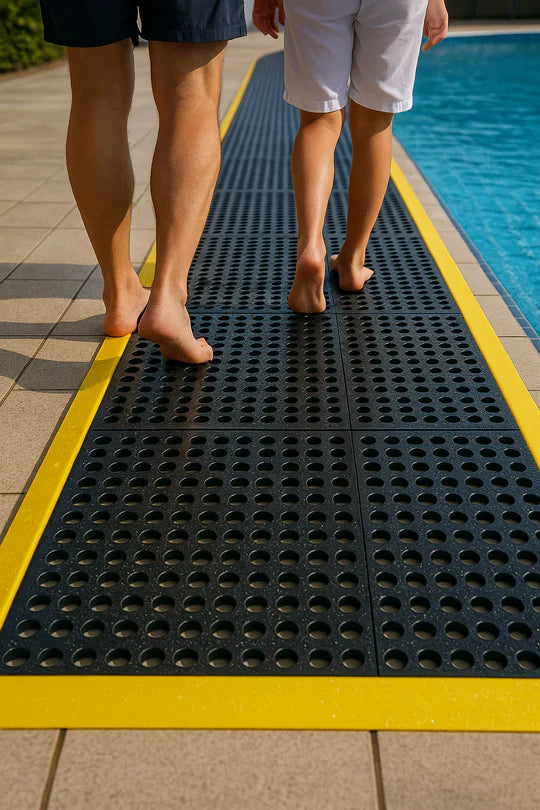
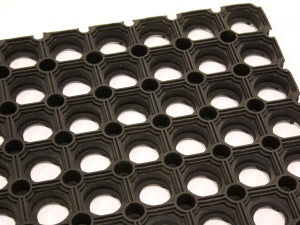
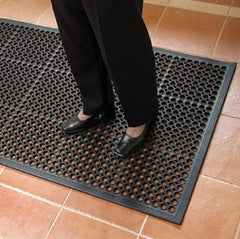
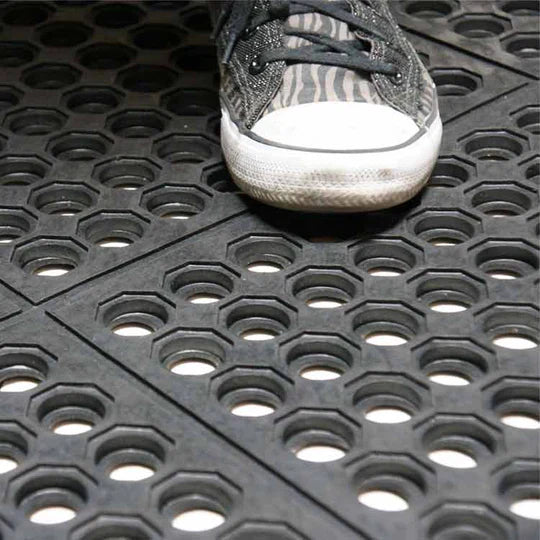
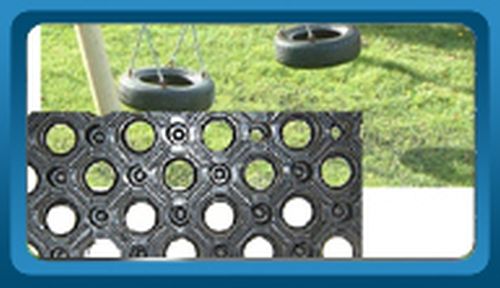
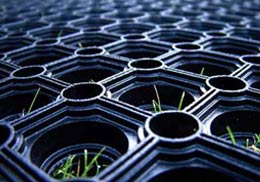
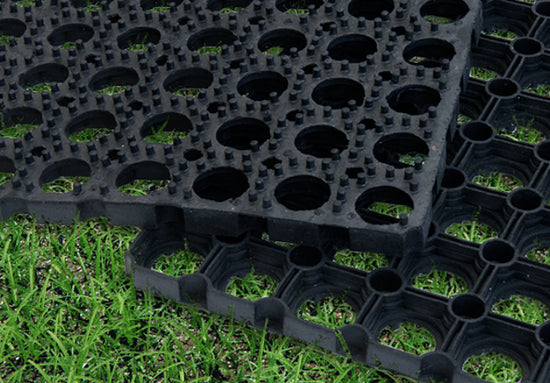
Open-grid drainage tiles prevent liquid pooling in wet areas — commercial kitchens, car wash bays, swimming pool surrounds, wet-area changing rooms, and industrial wash-down areas. The drainage hole pattern keeps foot contact zones dry even in constantly wet environments. Nitrile compound available for commercial kitchen grease environments. R11–R12 slip resistance rated.
Best for: Commercial kitchens, changing rooms, pool surrounds, car wash areas, brewery floors, food processing zones. Browse wet area matting →
| Material | Best Application | UV Resistance | Oil/Chemical Resistance | Hardness | Cost |
|---|---|---|---|---|---|
| SBR (Recycled) | Indoor gyms, garages, industrial walkways | ⚠️ Limited — indoor use | ⚠️ Water OK, oils limited | 55–65 Shore A | ✅ Lowest |
| EPDM (Coloured) | Outdoor, playgrounds, premium gym | ✅ Excellent (UV-stable) | ⚠️ Moderate | 55–70 Shore A | ⚠️ Medium |
| Nitrile (NBR) | Oil environments, kitchens, workshops | ❌ Not for outdoor | ✅ Excellent | 60–75 Shore A | ⚠️ Medium-High |
| Neoprene (CR) | Chemical labs, broad solvent resistance | ⚠️ Moderate | ✅ Broad chemical | 55–70 Shore A | ❌ Higher |
Rubberco supplies rubber floor tiles in two standard formats:
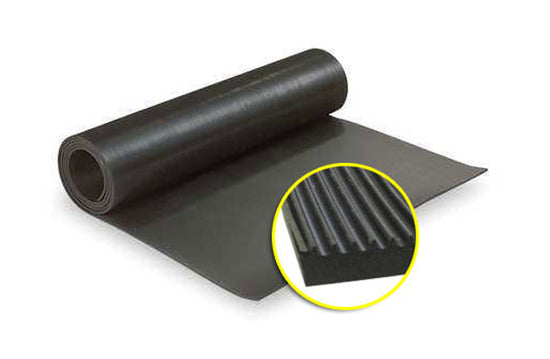
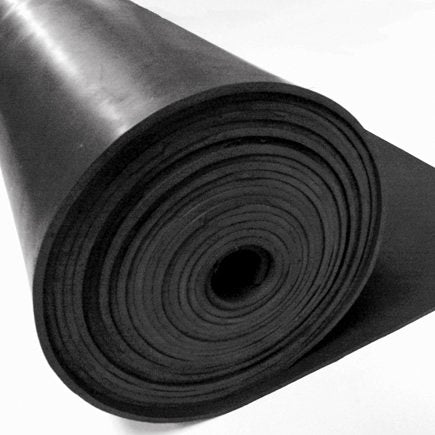
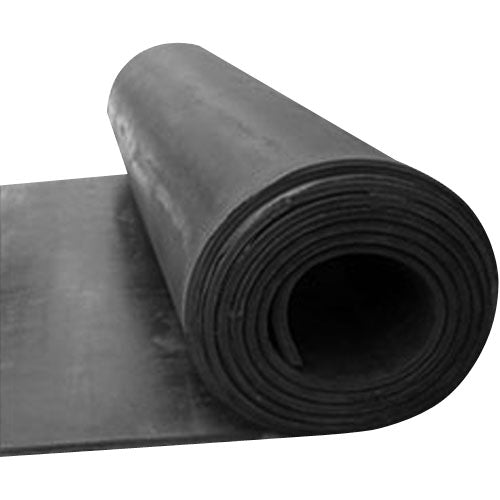
For non-standard gym dimensions, Rubberco's rubber roll range is cut to any exact width and length — eliminating wasteful border cuts. Custom-cut tile sizes available on request for specific project dimensions.
| Factor | Rubber Tiles | Rubber Rolls |
|---|---|---|
| Installation difficulty | ✅ Easy DIY — no adhesive, no tools | ⚠️ More skill for seam joins |
| Irregular rooms | ✅ Excellent — cut individual border tiles | ⚠️ Requires more planning |
| Seamless finish | ⚠️ Tile joints visible | ✅ No joints across the roll width |
| Portability | ✅ Lift and reinstall in minutes | ⚠️ Heavier, harder to move |
| Replace damaged section | ✅ Replace single tiles only | ❌ Must replace full roll section |
| Cost for large areas | ⚠️ More joins = slightly higher cost | ✅ Often lower per m² |
| Long corridors | ⚠️ Many joins across length | ✅ Ideal — single continuous run |
| Best format | Gyms, garages, modular spaces | Corridors, workshops, large open areas |
The most cost-effective way to protect a home gym floor. A 20m² home gym can be tiled in a single afternoon with no specialist tools. Choose 10mm tiles for cardio-only gyms; 15mm for mixed training with free weights; 20mm for dedicated lifting areas. Interlocking tiles eliminate the mess and permanence of liquid rubber coatings. If you move house, take the floor with you — it lifts in minutes and reinstalls just as fast. The UK's most popular home gym flooring solution for garages, spare rooms, and basement gyms.
Commercial gym operators require tiles that handle thousands of daily foot contacts, regular equipment moves, and periodic deep cleaning with commercial detergents. Look for tiles with a 5+ year commercial warranty, density of 1,000–1,200 kg/m³ for heavy-use areas. 1m × 1m format tiles are the industry standard for commercial gyms — minimising joint lines and installation time. Rubberco supplies gyms, leisure centres, hotel fitness suites, PT studios, and CrossFit boxes across the UK with full compliance documentation for insurance and planning requirements.
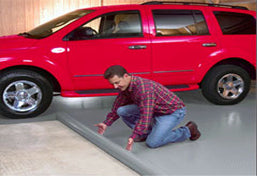
Concrete garage floors are cold, hard, and unforgiving when tools or parts are dropped. Rubber tiles transform a garage floor in 2–3 hours: warmer underfoot, resistant to oil spills, quieter when tools are dropped. Choose studded or coin-top profiles for garages — they shed water from vehicle drip and provide excellent year-round grip. For professional workshops with regular hydraulic fluid and engine oil exposure, specify nitrile-compound tiles for the best oil and fuel resistance.
Schools, colleges, and leisure centres across the UK choose rubber tiles for sports halls, changing rooms, and activity areas. Rubber provides a comfortable, warm, non-slip surface that meets Health and Safety requirements under the Workplace (Health, Safety and Welfare) Regulations 1992. Must be durable enough for daily PE sessions and resist damage from furniture, sports equipment, and heavy foot traffic. Bright colour options support zoning and activity marking in multi-use spaces.
In industrial environments, flooring must withstand fork truck traffic, chemical exposure, heavy impact, and 24/7 use. Industrial rubber tiles significantly extend floor service life compared to painted concrete — reducing slipping risk (the most common cause of workplace injury according to the HSE), lowering noise levels, reducing worker fatigue on standing shifts, and absorbing machine vibration. Interlocking modular designs allow tiles to be removed for access to underfloor services without specialist contractors.
EPDM rubber tiles are the definitive outdoor rubber flooring choice in the UK. UV-stable, ozone-resistant, and flexible from -40°C to +120°C — EPDM tiles handle British freeze-thaw cycles without cracking or becoming brittle. Anti-slip drainage profile maintains grip year-round in wet conditions. Used on roof terraces, patios, poolside walkways, children's play zones, and school playground safety surfaces across the UK. Available in a full colour range. BS EN 1177 certified playground tiles available with full documentation.
Measure length × width in metres. Multiply for total m². Add 10% waste allowance for cutting border tiles. For 1m × 1m tiles: number of tiles = m² area + 10%. For 500×500mm tiles: multiply m² by 4, then add 10%.
The subfloor must be clean, dry, and reasonably flat. Remove loose dust, grit, and debris. High spots over 5mm should be ground down; significant dips should be filled with self-levelling compound. Rubber tiles will bridge minor imperfections (up to 3mm) but cannot compensate for structurally uneven surfaces. On wooden subfloors, ensure all floorboards are secured and there is no significant flex.
Find the centre of the room by snapping chalk lines corner-to-corner. Start laying from the centre point outwards — this ensures border cuts are symmetrical on all sides and creates the most professional-looking result.
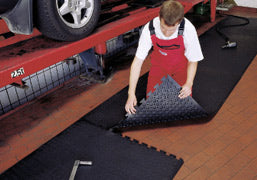
Align the tab-and-slot edges and press firmly together. For large areas, a rubber mallet helps seat tiles fully. Work in rows, checking alignment every 4–5 tiles. For heavy gym tiles (15mm+), gentle mallet taps ensure full seating of the interlocking joints.
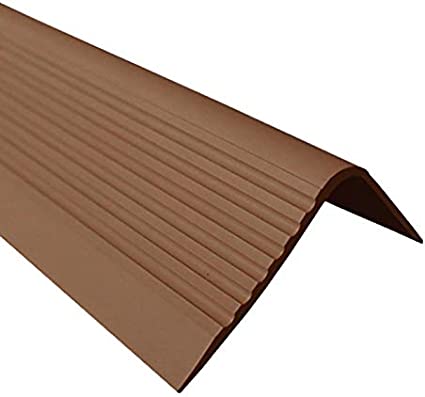
Mark the cut line with chalk or marker. For tiles up to 10mm: use a sharp Stanley knife with a straight edge, making multiple passes rather than one deep cut. For 15mm+ tiles: use a jigsaw with a fine-tooth blade. Finish exposed edges with rubber edge ramp strips for a professional, trip-hazard-free finish.
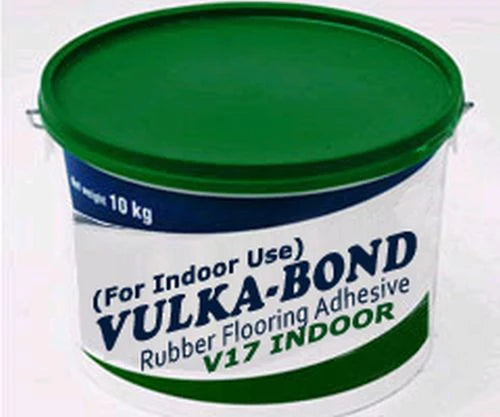
For commercial installations where tiles will experience heavy equipment movement, bond the perimeter row with contact adhesive rated for rubber flooring. The interlocking weight of the main tile field is self-stabilising without adhesive in most applications.
| Standard | What It Covers | Relevant Products |
|---|---|---|
| BS EN 1177:2018 | Playground impact attenuation — Critical Fall Height certification | Playground safety tiles |
| DIN 51130 R-ratings | Industrial slip resistance (R9–R13) | Industrial, garage, kitchen tiles |
| BS 7976-2 | Pendulum Test Value (PTV) — slip resistance | All floor tiles |
| ISO 10140 | Sound insulation testing | Acoustic tiles |
| BS 8300 | Accessible and inclusive built environment | Entrance and commercial tiles |
| Workplace Regs 1992 Reg 12 | Floor safety obligations on employers | All commercial floor products |
| Tile Type | Thickness | Price Range (per m²) | Best For |
|---|---|---|---|
| SBR Interlocking Gym Tile | 10mm | £12–£18/m² | Home gym, school hall, garage |
| SBR Interlocking Gym Tile | 15mm | £18–£28/m² | Commercial gym, CrossFit, free weights |
| Heavy Duty SBR Tile | 20mm | £25–£40/m² | Olympic lifting, powerlifting |
| EPDM Outdoor/Coloured Tile | 10–15mm | £22–£45/m² | Outdoor gym, terrace, premium gym |
| Studded Garage Tile | 10–15mm | £15–£28/m² | Garages, workshops, industrial |
| Playground Safety Tile | 30mm (CFH 1.0m) | £35–£55/m² | School playground, nursery |
| Playground Safety Tile | 50mm (CFH 2.0m) | £55–£90/m² | School equipment, public parks |
| Acoustic Rubber Tile | 8–15mm | £20–£45/m² | Home gym in flat, music room, studio |
Prices correct May 2026. Free UK mainland delivery on all orders. Contact us for volume pricing on commercial projects.
The most important first question is: what conditions will the tile face? Indoor or outdoor? Wet or dry? Oil and chemical exposure? Heavy impact? Forklift traffic? These conditions determine compound selection (SBR, EPDM, or nitrile), surface profile, and minimum thickness.
Light foot traffic only → 6–10mm SBR tiles. Regular free weight training → 15mm minimum. Olympic barbell drops → 20mm+ with dedicated platform. Forklift and pallet truck traffic → industrial-grade heavy-duty tiles rated for wheeled loads. Playground use → BS EN 1177 certified tiles matched to your specific Critical Fall Height requirement.
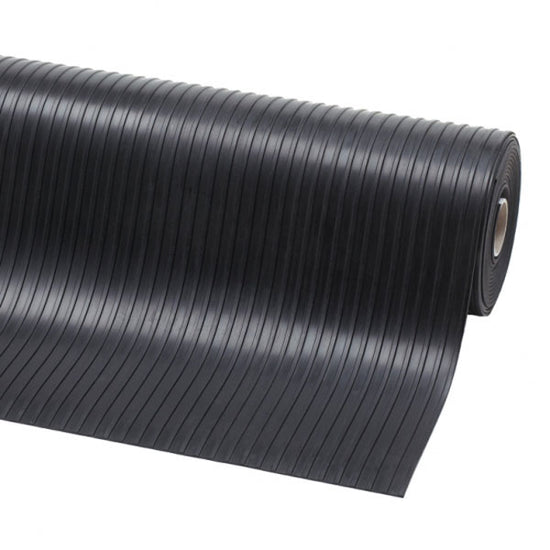
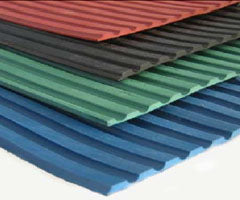
Smooth: cleanest look, easy to clean, good for gyms and studios. Coin/studded: excellent grip in wet conditions, drains well, suits garages and industrial areas. Ribbed: directs water flow on ramps and walkways. Open-grid drainage: keeps contact surfaces dry in continuously wet environments (kitchens, car wash, pool surrounds).
Tiles if: DIY installation, irregular room shape, relocating in future, or wanting single-tile replacement capability. Rolls if: long straight corridors, seamless aesthetic priority, or large open rectangular commercial areas where roll format saves cost.
For garages used primarily for parking and light storage: 10mm studded or coin-top SBR tiles provide excellent grip, oil resistance for minor spills, and a clean professional finish. For professional workshop use with regular oil and hydraulic fluid exposure: 10–15mm nitrile rubber tiles are the correct specification — nitrile resists petroleum products where SBR would absorb and swell. Interlocking tiles allow entire bays to be lifted for deep cleaning beneath.
For a mixed-use home gym: 15mm SBR interlocking tiles throughout, with a 20mm deadlift platform section in the free weights zone. This combination handles all training styles from yoga to heavy barbell work. 500×500mm tiles are easiest to handle solo during installation; 1m×1m tiles give a cleaner look in larger garage gyms. EPDM-topped tiles are worth the premium for outdoor gym areas or south-facing rooms with significant direct sunlight.
For UK school and nursery playgrounds, the mandatory specification is BS EN 1177:2018 certified rubber safety tiles with Critical Fall Height certification matching your tallest equipment. Standard specifications: 40mm tiles for equipment up to 1.5m CFH, 50mm for up to 2.0m, 75mm for up to 3.0m. All playground tiles must come with independent third-party test certification — not just manufacturer claims. EPDM compound is mandatory for outdoor playground tiles for UV and frost resistance. Full documentation provided for local authority procurement.
For general industrial pedestrian walkways: 10–15mm heavy-duty SBR with R10–R11 slip resistance rating. For areas with forklift or pallet truck traffic: industrial-rated tiles 15–20mm with confirmed load rating. For wet industrial areas (food processing, breweries, chemical plants): 15mm open-grid nitrile drainage tiles with R11–R12 certification. For ESD-sensitive electronics manufacturing: anti-static ESD-rated rubber tiles with surface resistance 10⁶–10⁹ Ω (BS EN 61340-4-1).
The most common rubber floor tile sizes in the UK are 500mm × 500mm and 1,000mm × 1,000mm. 1m × 1m tiles make coverage calculation simple — 10 tiles covers 10m². For lighter-duty applications or where one person is installing alone, 500×500mm tiles are easier to handle. All tiles include interlocking border pieces for a clean, professional perimeter finish. Custom cut sizes available — contact Rubberco for bespoke requirements.
No. Interlocking rubber tiles are engineered for tool-free, adhesive-free installation. The tab-and-slot system locks tiles together, and the density of rubber (1m² of 10mm tile weighs approximately 10–12kg) keeps the floor stable under normal use. For permanent commercial installations subject to heavy equipment movement, perimeter adhesive can be applied as an optional extra. Adhesive is not required or recommended for domestic or temporary installations.
For cardio equipment only (treadmill, bike, rower): 8–10mm is sufficient. For free weights, barbells, and kettlebells: choose 15mm minimum. For Olympic lifting with heavy barbell drops: 20mm tiles with a dedicated lifting platform provides professional-standard protection. When in doubt, go thicker — the additional cost is modest and the floor protection is significantly better.
Yes. Cut rubber tiles with a sharp Stanley knife and straight edge for tiles up to 10mm thick. For 15mm+ tiles, use a jigsaw with a fine-tooth blade. Mark the cut line clearly with chalk or permanent marker, clamp a straight edge, and make multiple passes rather than a single cut. The cut edge can be finished with a rubber edge ramp strip or butted neatly against a skirting board.
Yes — rubber tiles are among the best garage flooring solutions available in the UK. They resist motor oil and chemical contamination, cushion dropped tools and parts, provide an anti-slip surface in wet conditions, and insulate against cold. For garages, choose coin-top or ribbed-top tiles rather than smooth-top — they shed water and debris more effectively. 10–15mm is the recommended thickness. For professional workshops, choose nitrile-compound tiles for superior oil and fuel resistance.
Sweep or vacuum regularly to remove loose grit (which abrades the surface over time). Mop with warm water and a mild pH-neutral detergent for routine cleaning. For oil or grease contamination, use a degreaser suitable for rubber surfaces. For playground tiles, rinse with a hose or pressure washer as needed — rubber is waterproof and fully drainable. Avoid harsh solvents such as acetone or neat bleach, which degrade the rubber compound. Properly maintained rubber tiles perform well for 20+ years.
SBR (Styrene Butadiene Rubber) tiles are typically black, manufactured from recycled rubber, and offer excellent value for money. SBR is the standard choice for most indoor gym, garage, and industrial applications. EPDM (Ethylene Propylene Diene Monomer) tiles are available in a full range of colours and offer superior UV and ozone resistance — making them the preferred choice for outdoor playground surfaces, roof terraces, and external patio areas. EPDM costs more than SBR but significantly outperforms it in outdoor conditions.
EPDM rubber tiles are specifically designed for outdoor UK use. UV-stabilised to resist fading and degradation from the sun, they remain flexible and slip-resistant in UK winter temperatures. SBR tiles are primarily for indoor use — prolonged outdoor exposure can cause the surface to degrade over time. For outdoor applications including patios, playgrounds, pool surrounds, and roof terraces, always specify EPDM or tiles with confirmed UV-stable certification.
Calculate the area of your space in square metres (length × width). For 1m × 1m tiles, the number of tiles equals the m² area plus 10% for cuts. For 500mm × 500mm tiles, multiply m² by 4 for tile count, then add 10% for cuts. For irregular rooms with lots of corners, add 15% waste. Rubberco can provide a free tile count and quote for any space — email or call with your measurements.
Rubber floor tiles are compatible with underfloor heating systems in most cases, but the thermal resistance (tog value) limits heat transfer efficiency. For underfloor heating, choose the thinnest tile that meets your application requirements (typically 8–10mm) to maximise heat transfer. Ensure the underfloor heating system temperature does not exceed 27°C at subfloor level. Consult the tile product datasheet for confirmed underfloor heating compatibility before installation.
| Tile Type | Material | Best For | Avoid For | Typical Lifespan |
|---|---|---|---|---|
| SBR Interlocking | Recycled SBR rubber | Gyms, garages, industrial | Prolonged outdoor UV exposure | 15–20 years |
| EPDM Coloured | Virgin EPDM rubber | Outdoor, playgrounds, rooftops | Very heavy industrial use | 20–30 years |
| Nitrile Rubber | NBR compound | Workshops, oil/fuel environments | UV-exposed outdoor areas | 10–20 years |
| BS EN 1177 Safety | EPDM/SBR blend | School playgrounds, nurseries | Indoor industrial use | 15–25 years |
| Acoustic Tile | High-density SBR or EPDM | Multi-storey gyms, studios | Standard single-storey gyms | 15–20 years |
Not sure which rubber tile is right for your project? Contact our team — we'll specify the correct thickness, compound, and format for your exact application.
| Factor | Rubber Tiles | Rubber Rolls |
|---|---|---|
| Installation | Interlocking — no adhesive needed | Adhesive or loose lay |
| Removal | Easy — tiles lift out individually | Requires cutting and full removal |
| Replacement | Replace single damaged tiles | Patch repairs visible |
| Best for | Gyms, garages, irregular shapes | Corridors, large open areas |
| Joins | Visible tile pattern | Seamless or minimal joins |
| Cost | Slightly higher per m² | Lower material cost |
Verified reviews from UK buyers
































Dispatch in 24 Hours
Satisfaction Guarantee
Secure Payments
sales@rubberco.co.uk


