




















Rubber Sheeting UK | SBR, EPDM & Nitrile | 10m Rolls
59 products
59 products
🔬 SBR · EPDM · Nitrile · Neoprene · Natural Rubber · Silicone · Viton | Cut to size | REACH & RoHS compliant grades | WRAS-approved available | Free UK delivery
Rubber sheeting is one of the most versatile engineered materials in the UK's industrial, engineering, agricultural, and commercial sectors. Available in a comprehensive range of compounds, thicknesses, and hardness ratings, rubber sheeting UK serves an extraordinary breadth of applications — from seals, gaskets, and vibration damping in engineering, to lining, lagging, and protective cladding in construction and agriculture. At Rubberco, we supply industrial-grade rubber sheet cut to size across the UK, with free delivery on qualifying orders and expert technical support to help you select the right compound for your application.
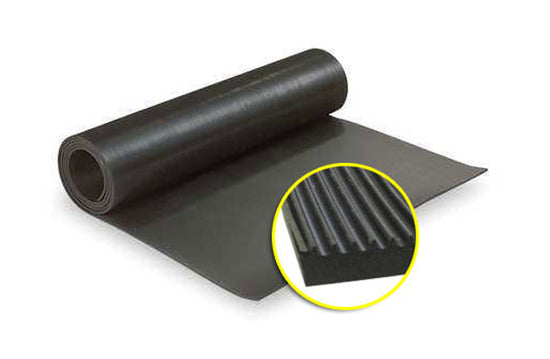
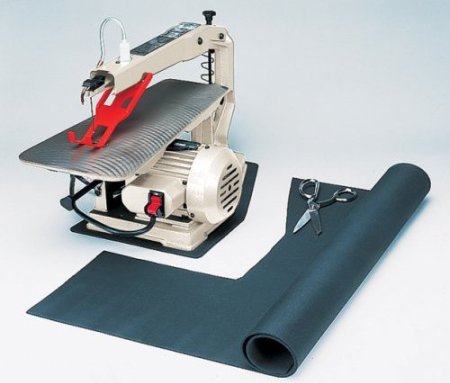
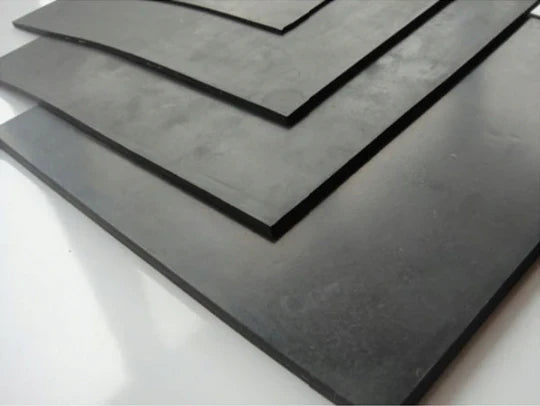
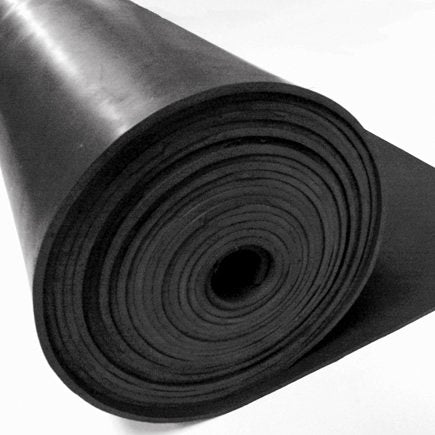
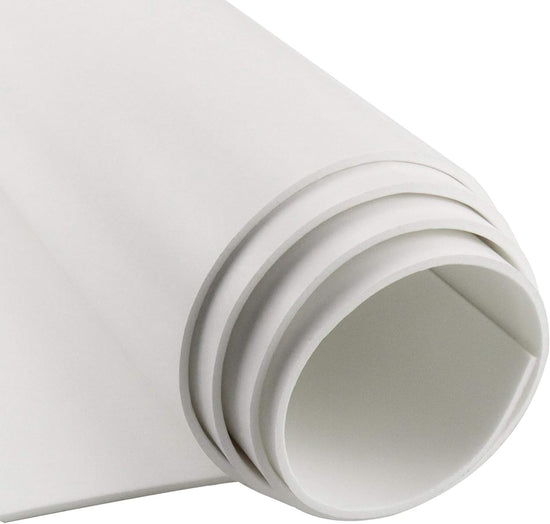
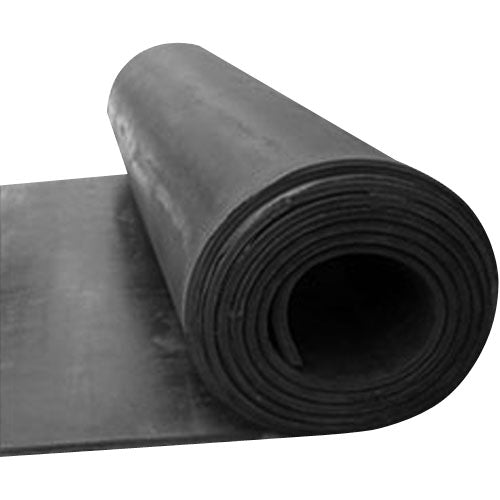
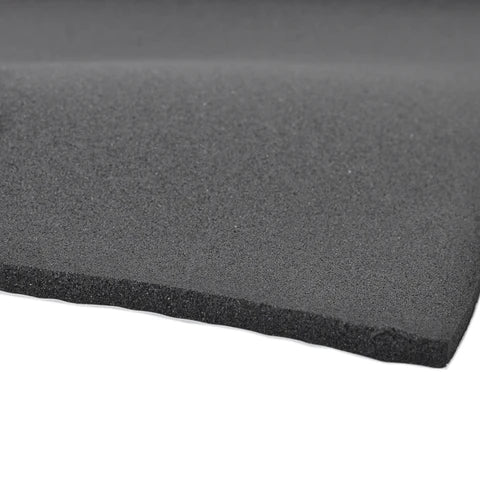
Rubber sheeting is a flat, planar rubber product manufactured by calendering (rolling) or moulding rubber compound into sheet form. Unlike rubber matting — which is primarily a flooring product — rubber sheeting encompasses a far broader product family used for engineering seals, gaskets, vibration isolation, protective linings, waterproof barriers, agricultural applications, and much more. Rubber sheeting is typically sold by the square metre or as cut pieces, in thicknesses ranging from 1mm to 50mm or more.
| Compound | Key Properties | Best Applications | Temperature Range |
|---|---|---|---|
|
SBR (Styrene-Butadiene) |
Excellent abrasion resistance, good tensile strength, low cost | General purpose lining, flooring, conveyor skirting, pond lining | -30°C to +70°C |
|
EPDM (Ethylene Propylene) |
Outstanding weathering, UV, ozone resistance. Excellent in hot water and steam | Outdoor sealing, roofing, hot water systems, agricultural irrigation | -40°C to +120°C |
| Nitrile (NBR) | Excellent oil, fuel, and solvent resistance | Fuel system seals, oil-resistant gaskets, hydraulic systems, engineering | -35°C to +100°C |
| Neoprene (CR) | Good weathering, moderate oil resistance, excellent flexibility at low temperatures | Marine applications, hose connections, flexible seals, outdoor use | -40°C to +100°C |
| Natural Rubber (NR) | Highest tensile strength, excellent flexibility and elasticity | High-flex applications, vibration isolation, precision gaskets | -50°C to +70°C |
| Silicone (VMQ) | Extreme temperature range, food safe, chemically inert | Food processing, pharmaceutical, extreme temperature applications | -60°C to +200°C |
Rubber sheeting is available in a range of hardness grades, measured in Shore A durometer. Understanding hardness is critical for engineering applications:
Also from Rubberco: Rubber Matting | Rubber Tiles | Anti-Fatigue Mats | Gym Flooring UK
SBR (Styrene-Butadiene Rubber) is a general-purpose compound with excellent abrasion resistance, suitable for most indoor applications including flooring, protective linings, and general gasket work. EPDM (Ethylene Propylene Diene Monomer) is specifically formulated for weather, UV, and ozone resistance, making it the preferred choice for outdoor sealing, roofing applications, hot water systems, and agricultural use where weathering resistance is critical.
Yes — EPDM rubber sheeting is one of the most popular pond liner materials in the UK. It's flexible, highly durable, UV-resistant, and completely safe for fish and aquatic life. EPDM pond liners can last 20+ years with minimal maintenance. Ensure you choose fish-pond-safe EPDM (free from antioxidants that can be toxic to fish).
For most gasket and flanged joint sealing applications, 3mm–6mm rubber sheeting is standard. Thicker sheeting (6mm–10mm) is used where greater compression is needed to seal irregular or worn mating surfaces. Very thin sheeting (1mm–2mm) is used for precision seals in controlled environments. Always consult engineering specifications or contact our technical team if in doubt.
Standard SBR and EPDM rubber sheeting is not food safe and should not be used in contact with food. Food-grade rubber sheeting is available in specific compounds (typically silicone, or food-grade EPDM) certified to FDA and EU food contact material regulations. If you need food-safe rubber sheeting, please specify this requirement when ordering and our team will advise on the appropriate grade.
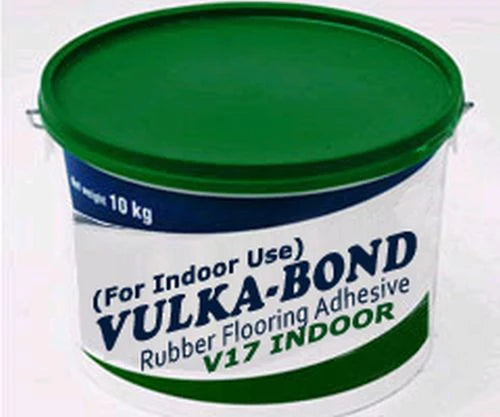
Yes. Rubber sheeting can be bonded to metal, wood, concrete, and other substrates using specialist rubber-to-substrate adhesives. For industrial applications, rubber-to-metal bonding is often done using contact adhesive or vulcanising adhesive for a permanent, high-strength bond. Surface preparation (cleaning, priming) is essential for good adhesion.
Rubberco stocks a comprehensive range of standard thicknesses and hardness ratings across our most popular compounds. For non-standard specifications — unusual thicknesses, custom hardness grades, or specialist compounds — contact our technical team. We can source and supply a very wide range of engineered rubber sheeting specifications for industrial and commercial projects.
Rubber sheeting prices vary considerably by compound, thickness, and order quantity. This reference guide gives typical UK market pricing for standard grades and thicknesses.
| Compound | Thickness | Width | Price Per m² | Common Use |
|---|---|---|---|---|
| SBR General Purpose | 3mm | 1.0m/1.2m | £6–£10/m² | General lining, flooring underlay |
| SBR General Purpose | 6mm | 1.0m/1.2m | £10–£15/m² | Gaskets, protective lining |
| SBR General Purpose | 10mm | 1.0m/1.2m | £16–£24/m² | Vibration damping, machine bases |
| EPDM Weatherproof | 3mm | 1.0m/1.2m | £12–£18/m² | Outdoor seals, roofing |
| EPDM Weatherproof | 6mm | 1.0m/1.2m | £18–£28/m² | Pond liner, hot water seals |
| Nitrile (Oil Resistant) | 3mm | 1.0m/1.2m | £18–£28/m² | Fuel seals, oil gaskets |
| Nitrile (Oil Resistant) | 6mm | 1.0m/1.2m | £28–£42/m² | Engineering seals, hydraulic |
| Neoprene | 3mm | 1.0m/1.2m | £20–£32/m² | Marine, electrical, outdoor |
| Natural Rubber | 6mm | 1.0m/1.2m | £22–£35/m² | High-flex, vibration isolation |
| Silicone | 3mm | 1.0m | £45–£80/m² | Food grade, extreme temp |
Prices correct May 2026. Cut-to-size lengths available from 0.5m. Full rolls offer best value per m².
Ordering rubber sheeting cut to size from Rubberco is straightforward. We stock sheeting in standard widths (1.0m and 1.2m for most compounds) and cut to any length from 0.5 metres upwards. To order:
Large project requirements? Contact our technical team for bulk pricing on orders over 20m². We also supply rubber sheeting on full rolls (typically 10m or 20m) for maximum economy on large-scale projects.
| Rubber Sheeting | Rubber Matting | |
|---|---|---|
| Primary use | Seals, gaskets, linings, engineering | Flooring, anti-slip, anti-fatigue |
| Surface finish | Smooth (most grades) | Ribbed, studded, diamond, smooth |
| Typical thickness | 1mm–50mm | 3mm–25mm |
| Installation | Cut to shape, bonded or clamped | Loose-lay or adhered |
| Compounds | Full range inc. silicone, viton | SBR, EPDM, nitrile (mainly) |
| Certifications | Food contact, BS/ISO engineering specs | BS EN 1177 (playground), BS EN 61111 (electrical) |
Standard SBR rubber sheeting operates reliably from -30°C to +70°C. Extended exposure above 70°C will cause hardening and embrittlement over time. For elevated temperature applications (steam, hot water systems, engine bay environments), choose EPDM (up to +120°C continuous) or silicone (up to +200°C). Always check the specific product datasheet for confirmed temperature ratings.
EPDM rubber sheeting is one of the most commonly used pond liner materials in the UK — flexible, UV-resistant, and fully safe for fish and aquatic life. Minimum 1mm thickness for small ornamental ponds; 1.5–2mm for larger water features and wildlife ponds. Ensure you specify fish-pond-safe EPDM, which is manufactured without certain antioxidants that can be harmful to fish. EPDM pond liners from Rubberco carry a 20-year service life expectation under normal UK conditions.
EPDM rubber sheeting has good resistance to dilute acids and alkalis. Neoprene offers moderate acid resistance. Neither SBR nor nitrile is specifically acid-resistant. For concentrated acid environments, specialist fluorocarbon rubber (Viton) sheeting is required — contact our technical team for FKM/Viton grades.
Use a specialist rubber-to-substrate contact adhesive. Surface preparation is critical: both surfaces must be clean, dry, and lightly abraded for maximum adhesion. Apply adhesive to both surfaces, allow to flash off (typically 5–15 minutes), then press firmly together. For structural bonds in demanding environments, vulcanising adhesives provide the strongest permanent bond. Our team can advise on adhesive selection for your specific rubber compound and substrate.
Beyond the core SBR, EPDM, Nitrile and Neoprene range, Rubberco can supply specialist rubber sheeting compounds for demanding technical applications:
Hypalon (Chlorosulfonated Polyethylene, CSM) offers exceptional resistance to UV, ozone, chemicals, and oxidising acids — making it the material of choice for chemical storage tank linings, roofing membranes, and marine applications. Superior UV stability over standard EPDM. Available in sheet form for custom fabrication.
Butyl rubber sheeting provides outstanding gas impermeability — making it the standard for inner tubes, air retention membranes, and gas-barrier applications. Excellent resistance to steam, hot water, and polar solvents. Commonly used as pond liners and reservoir membranes where gas permeation must be minimised.
Flame retardant rubber sheeting is formulated to self-extinguish and limit flame propagation. Essential for rail, underground, and marine applications where fire safety regulations apply. Available in SBR, EPDM, and Neoprene base compounds with flame retardant additives to UK and international fire safety standards. Specify grade required: Cfl-s1, Bfl-s1, or EN 45545 for rail applications.
Silicone rubber sheeting maintains physical properties across an exceptional temperature range (-60°C to +200°C continuous, +250°C intermittent). Used in oven door seals, autoclave gaskets, bakery equipment, and pharmaceutical clean-room applications. Available in food-grade (FDA/EC 1935/2004 compliant) and medical-grade specifications. WRAS-approved grades available for potable water contact.
| Standard | Applies To | Key Requirements |
|---|---|---|
| BS 2751 | General purpose rubber sheeting and rubber parts for mechanical purposes | Hardness, tensile strength, elongation at break, compression set |
| BS 2752 | Neoprene rubber sheeting | Compound hardness ranges, physical property testing, compound classification |
| BS EN 681-1 | Elastomeric seals for water and drainage pipework | Water contact applications, sewerage seals |
| WRAS Approval | Potable water contact materials | Non-tainting, no adverse effect on water quality |
| FDA 21 CFR | Food contact rubber materials (US standard, widely referenced UK) | Extraction limits, permitted compounding ingredients |
| EC 1935/2004 | EU food contact materials regulation | Overall migration limits, specific migration of compounds |
| BS EN 45545 | Fire protection for railway vehicles | Flame spread, smoke, toxicity requirements for rail applications |
When ordering technical rubber sheeting, provide the following to ensure you receive the correct compound:
Not sure what you need? Contact our technical team with your application details — we can recommend the correct compound and specification.
Supplying rubber sheeting to UK industry, construction and engineering since the 1960s. Trusted by manufacturers, workshops and contractors nationwide.
All rubber sheet cut to your exact length and width. Order by the linear metre, full roll, or specify a bespoke cut piece — no minimum order.
SBR, EPDM, Nitrile, Neoprene, Natural Rubber and Silicone. The correct compound for your chemical, temperature and mechanical requirements.
The widest thickness range available online — from ultra-thin 0.5mm gasket sheet through to 25mm heavy-duty industrial sheeting. All thicknesses in stock.
Not sure which rubber compound suits your application? Call 01744 520 110 — our technical team will select the right material for your chemical, temperature and load requirements.
Every rubber sheet order ships free to mainland UK. Same-day dispatch on in-stock items ordered before 2pm.
| Compound | Key Property | Best Applications | Avoid If |
|---|---|---|---|
| SBR (Commercial) | General purpose, cost-effective | Industrial gaskets, anti-vibration, general protection | Oil/fuel contact |
| EPDM | UV & ozone resistant | Outdoor seals, roofing, water/steam | Oil/petroleum |
| Nitrile (NBR) | Oil & fuel resistant | Automotive, garage, food processing, engineering | Strong acids |
| Neoprene (CR) | Oil + UV + flame resistant | Marine, HVAC, outdoor electrical | Strong oxidising agents |
| Natural Rubber (NR) | High elasticity & tear resistance | Gymnastics, laboratory, general sealing | Oil/fuel/outdoor |
| Silicone | Extreme temperature range (-60°C to +200°C) | Oven seals, food contact, high-temp gaskets | Dynamic high-stress applications |
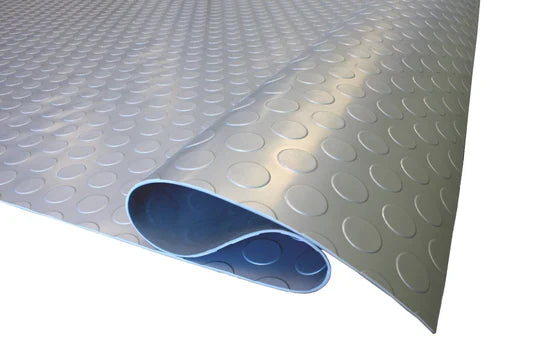
Rubber sheeting typically refers to thinner, flat-roll products used for gaskets, seals, liners, and surface protection — generally 1mm to 10mm thick. Rubber matting refers to products designed for flooring, with profiled surfaces (ribbed, studded) and thicker gauges for foot traffic. Most rubber sheeting products are sold per metre and can be cut to any dimension. All rubber sheeting products can technically be used as matting, but the surface profile and compound selection should match the intended use.
EPDM (ethylene propylene diene monomer) rubber sheeting is the best choice for outdoor applications. EPDM provides excellent UV resistance, ozone resistance, and frost performance — staying flexible to -40°C. SBR rubber sheeting degrades under prolonged UV exposure and is not recommended for permanent outdoor use. Neoprene provides good outdoor performance with the added benefit of moderate oil resistance for applications near vehicles or equipment.
Yes. Both EPDM and nitrile rubber sheeting are used for secondary containment bund lining in the UK. The Environment Agency's PPG 2 guidance requires bund liners to be chemically compatible with the stored liquid. For petroleum products, diesel, and hydraulic fluids: nitrile rubber sheet (minimum 3mm). For water-based chemicals and general liquids: EPDM rubber sheet. All bund lining joints must be overlapped and bonded with appropriate adhesive.
For standard flanged pipe gaskets: 1.5mm-3mm. For irregular or damaged flange faces requiring more compression: 4mm-6mm. For heavy-duty applications under high bolt loads: 6mm-10mm. Softer rubber (40-50 Shore A) seals better on imperfect surfaces; harder rubber (60-70 Shore A) provides better dimensional stability under sustained bolt load. Always confirm the compound's temperature rating for the specific application.
Verified reviews from UK buyers
































Dispatch in 24 Hours
Satisfaction Guarantee
Secure Payments
sales@rubberco.co.uk


