











Rubber Matting UK | Industrial & Commercial Rubber Matting | Rubberco
186 products
186 products
Updated June 2026 — Rubberco is one of the UK's leading suppliers of heavy duty rubber matting for commercial, industrial and residential applications. From anti-slip rubber matting for workshops and factories, to entrance matting, stable matting, gym flooring and specialist compounds for oil, chemical, and electrical environments — our range covers every requirement with products built for long-term performance. Free UK delivery on all orders.
Rubber matting is one of the most versatile industrial and commercial floor products available. It solves problems other flooring cannot — from slip prevention in oily workshops to impact protection in gyms, cushioning for horses in stables to noise reduction under machinery. Common applications include:
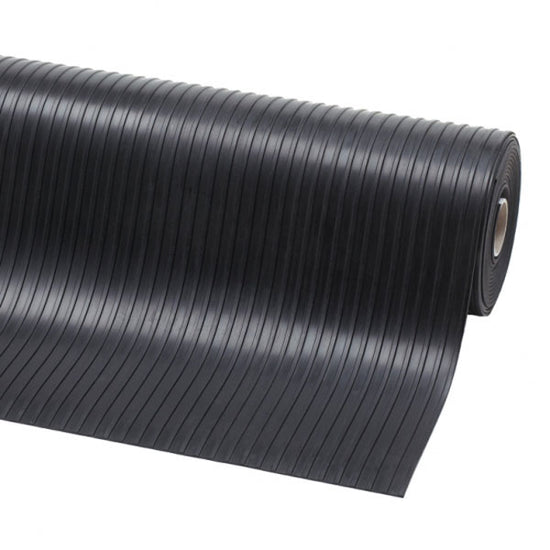
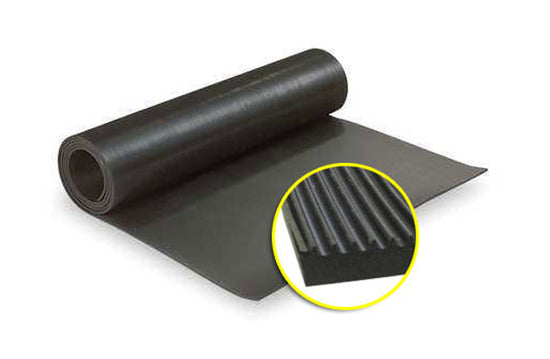
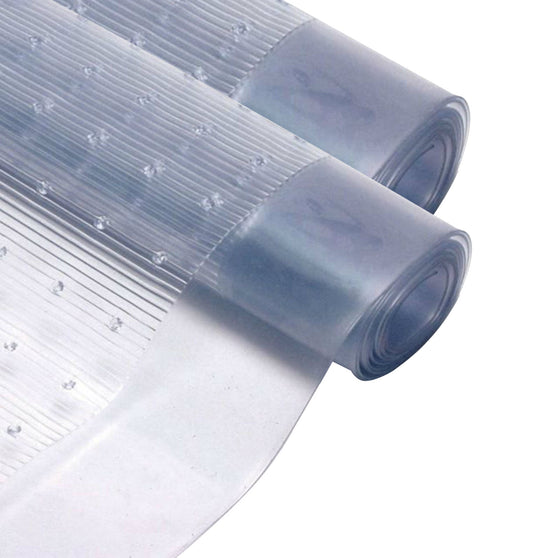
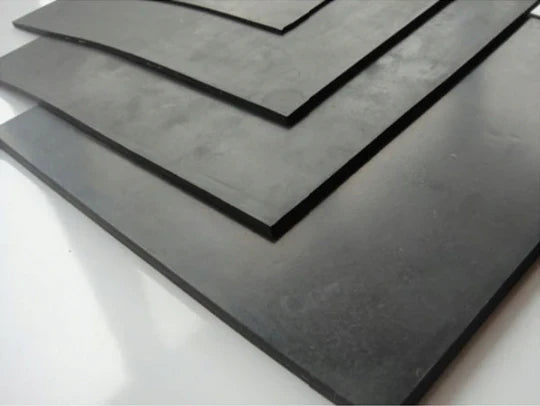
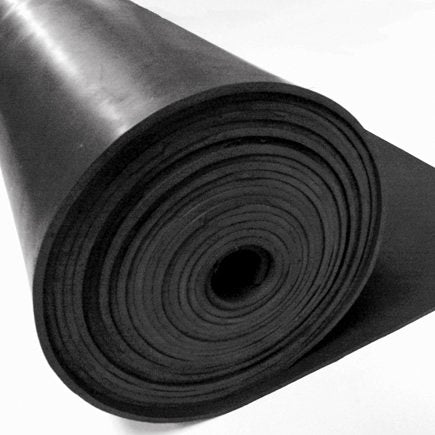
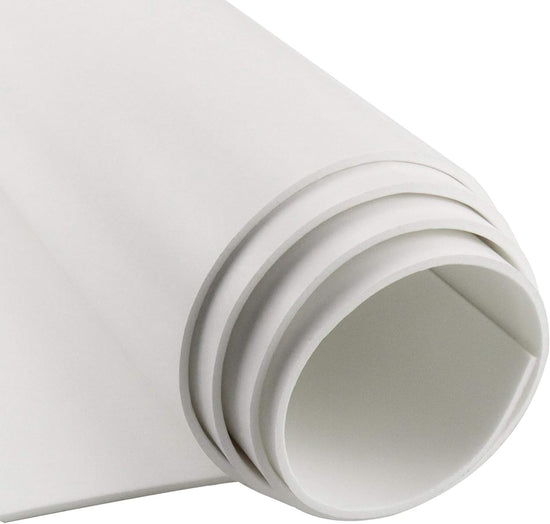
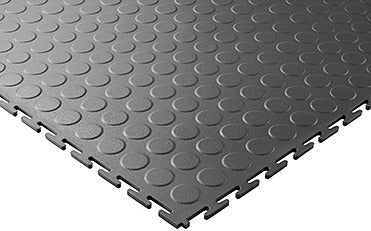
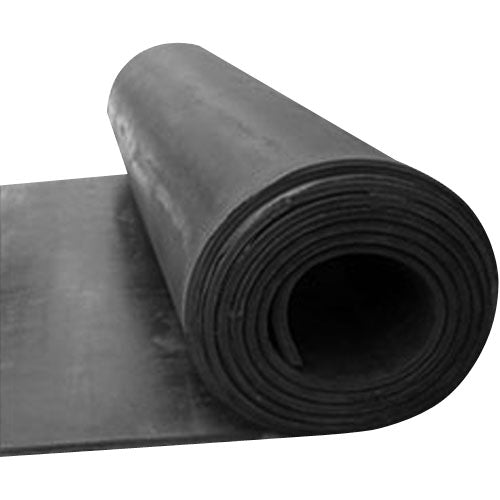
The most popular and cost-efficient format for large areas. Rubber matting rolls are supplied in standard widths (typically 1m, 1.2m, 1.4m, and 2m) and cut to any linear metre with no minimum order. Available in ribbed, studded, coin-pattern, smooth, and open-grid profiles from 3mm to 25mm thick. Ideal for corridors, workshops, garages, stable walkways, and any application requiring continuous floor coverage without joints in the traffic direction.
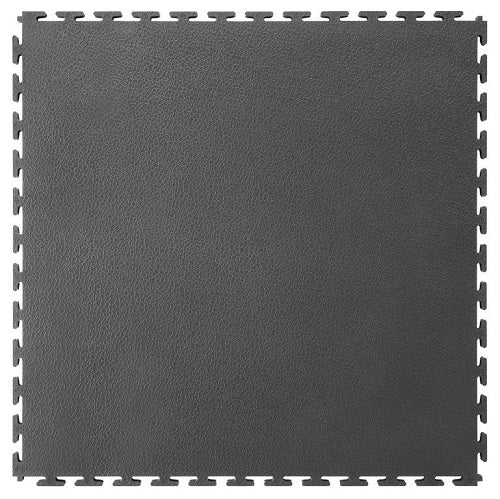
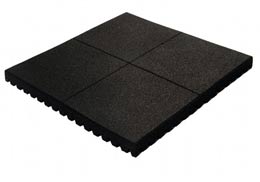
Interlocking rubber tiles for easy DIY installation without adhesive. Most popular for home gyms, commercial gym zones, and modular flooring areas that may need to be reconfigured. The interlocking system allows individual tiles to be replaced if damaged without relaying the whole floor. Most popular tile sizes: 1m × 1m (heavy duty), 500mm × 500mm, and 1m × 0.5m.
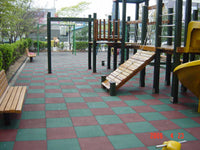
Standard-size pre-cut mats for specific applications: stable mats (1.83m × 0.91m), anti-fatigue workstation mats (600mm × 900mm), entrance mats, and playground safety tiles. Pre-cut sizes reduce installation time and minimise cutting waste for standard applications.
Purpose-formulated rubber matting for demanding applications: BS EN 61111 electrical safety matting, anti-static ESD matting for electronics manufacturing, acoustic/soundproofing rubber for noise reduction, fire-retardant rubber for rail and underground applications, and food-grade rubber for catering environments.
| Compound | Key Property | Best For | Avoid For |
|---|---|---|---|
| SBR (Recycled) | General purpose, cost-effective, abrasion resistant | Gyms, workshops, general industrial floors | Outdoor UV, oil contact |
| EPDM | UV stable, ozone resistant, colour-stable | Outdoor, pool surrounds, playgrounds, UV-exposed | Oil/fuel contact |
| Nitrile (NBR) | Oil and fuel resistant | Garages, fuel stations, engineering workshops | Strong acid/alkali environments |
| Natural Rubber (NR) | Maximum grip, highest elasticity, high tensile | High-grip applications, stable mats, precision sealing | Oil, outdoor UV |
| Neoprene (CR) | Oil + UV + flame resistant | Marine, HVAC, outdoor electrical environments | Strong oxidising agents |
| Anti-Static ESD | Static dissipative, electrically conductive | Electronics manufacturing, cleanrooms, server rooms | General purpose flooring |
| Profile | Slip Rating | Best Applications | Avoid For |
|---|---|---|---|
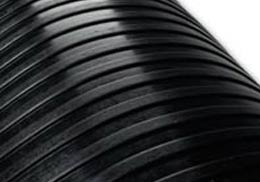
| Ribbed | R11 | Walkways, entrances, ramps — directional traffic | Multi-directional traffic areas |
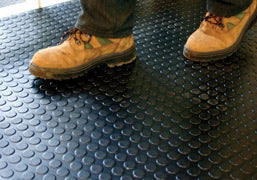
| Studded | R11–R12 | High-traffic outdoor and industrial areas | Areas with wheeled equipment |
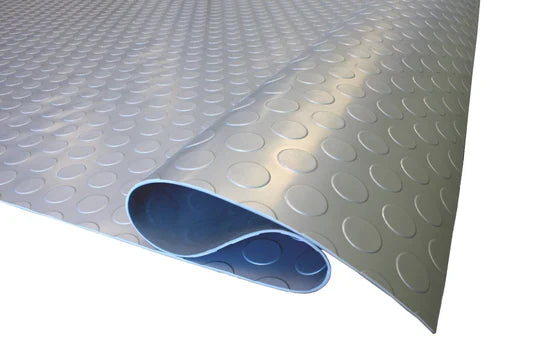
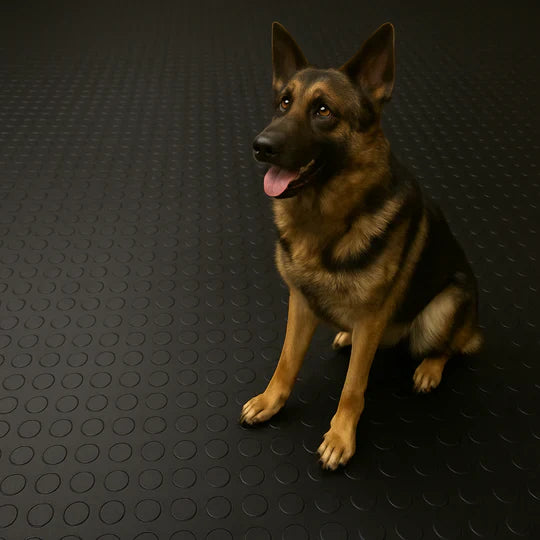
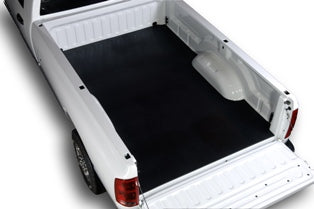
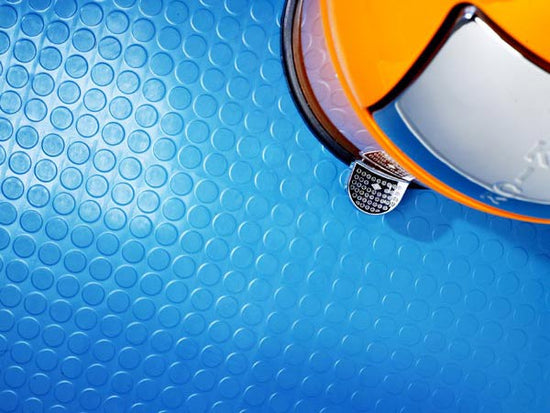
| Coin / Diamond | R10–R11 | Van floors, aesthetic commercial areas | Very wet areas, extreme contamination |
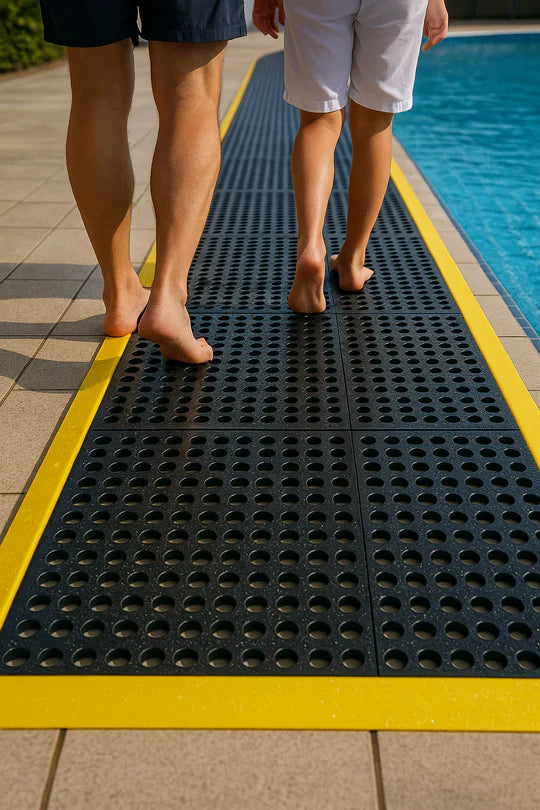
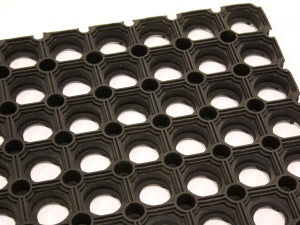
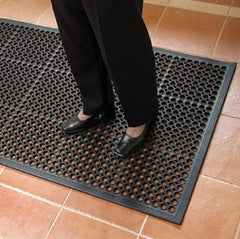
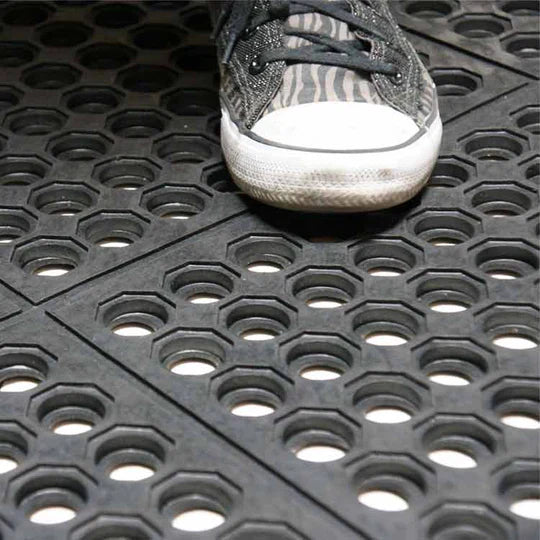
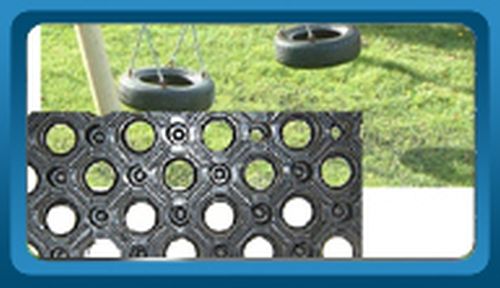
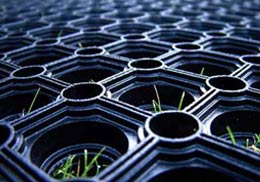
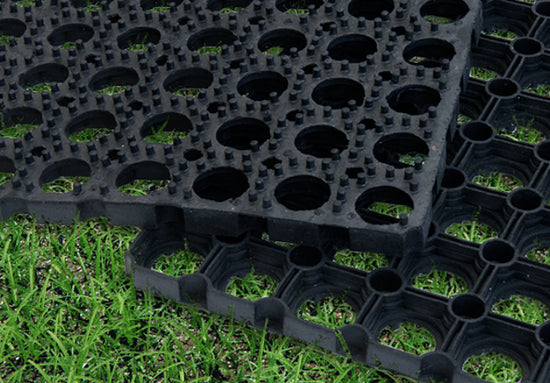
| Open-Grid / Drainage | R12 | Pool surrounds, wet rooms, kitchens, wash bays | Light-soled footwear, fine debris areas |
| Smooth | R9 | Clean rooms, yoga studios, food-grade applications | Any wet area, bare feet |
| Anti-Fatigue (domed) | R10 | Standing workstations, cashier stations, retail counters | Heavy vehicle traffic |
| Product | Typical Thickness | Price Per m² | Price Per Linear Metre (1m wide) |
|---|---|---|---|
| Ribbed SBR matting roll | 3mm | £4–£8/m² | £4–£8/m |
| Studded rubber matting roll | 6mm | £8–£14/m² | £8–£14/m |
| Heavy duty rubber matting | 10mm | £14–£22/m² | £14–£22/m |
| EPDM outdoor rubber matting | 6mm | £14–£24/m² | £14–£24/m |
| Nitrile oil-resistant matting | 6mm | £18–£30/m² | £18–£30/m |
| Gym rubber tiles (interlocking) | 15–20mm | £22–£45/m² | N/A (tile format) |
| Stable rubber mats (per mat) | 17mm | £21–£33/m² | £35–£55/mat |
Prices correct June 2026. Include VAT. Free UK delivery on all orders.
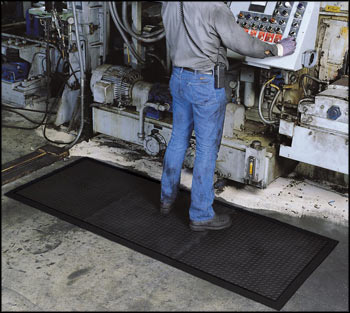
Industrial rubber matting must withstand continuous heavy-duty use: forklift crossings, pallet drops, chemical spillage, and 24/7 foot traffic. Anti-fatigue matting at assembly-line workstations is now considered standard ergonomic practice under UK Manual Handling Regulations 1992. The correct compound selection is critical: SBR for general dry environments; EPDM for chemical and wet areas; nitrile for oil and fuel contamination. HSE studies show properly specified anti-fatigue matting reduces lower-limb musculoskeletal complaints by 40–50% compared to unprotected concrete. See our Industrial Mats and Anti-Fatigue Mats collections.
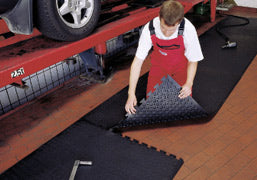
Garage rubber matting requires nitrile (NBR) compound for oil and fuel resistance — standard SBR rubber will swell and degrade when exposed to petroleum products. 6–10mm coin-pattern nitrile matting is the industry specification for vehicle workshop floors. The coin pattern provides multi-directional grip even when contaminated with oil, and allows liquid drainage between the coin raised areas. Anti-fatigue matting at vehicle inspection pits and workbenches significantly improves technician comfort on extended shifts. See our Garage Flooring collection.
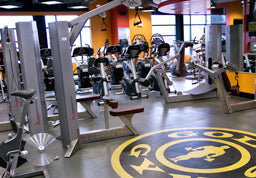
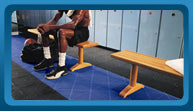
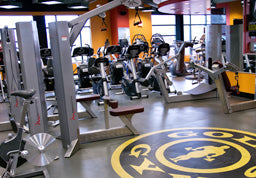
Gym rubber matting protects concrete subfloors from dropped weights, reduces impact noise by 15–22dB, and provides the non-slip surface essential for safe training. SBR recycled rubber tiles at 15–20mm are the standard specification for home gym and budget commercial gym installations. EPDM tiles provide better colour options and lower odour for premium commercial gyms. For CrossFit and Olympic lifting: 20–25mm minimum in drop zones. Free weights areas should never use less than 15mm. See our Gym Mats and Gym Flooring collections.
Stable rubber matting is one of the highest-ROI investments in equine management — reducing bedding costs by 30–50%, protecting joint health in accordance with BHS welfare guidelines, and lasting 15–25 years. Standard specification: 17mm solid vulcanised rubber for most horses; 22mm for large breeds and welfare-priority yards. Agricultural rubber matting for cattle cubicles reduces clinical lameness incidence by up to 35% (AHDB Dairy research). See our Stable Mats and Cow Mats collections.
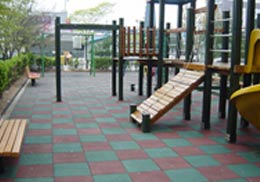
Rubber matting for schools must address multiple zones and standards simultaneously: playground safety (BS EN 1177:2018), sports hall performance (BS EN 14904), entrance matting for moisture control (BS 7953), and general slip resistance (R10+ DIN 51130). Schools typically specify 25–55mm playground safety tiles, 4–6mm commercial roll matting for corridors, and rubber-backed entrance matting cut to fit mat wells. See our Playground Safety Mats and Entrance Matting collections.
Commercial kitchen rubber matting must provide R11–R12 slip resistance in wet conditions with grease contamination (HSE guidance CAIS83), allow drainage to prevent standing water under the mat, be food-safe for any areas with direct food contact, and have bevelled edges to eliminate trip hazards. Anti-fatigue drainage mats at fryer stations and preparation counters reduce chef fatigue on long shifts. Specify EC 1935/2004 compliant rubber for food-contact zones. See our Kitchen Mats collection.
Pool surrounds, changing rooms, and wet leisure areas require EPDM open-grid or drainage matting with DIN 51097 Class C wet barefoot slip resistance (minimum PTV 36 wet barefoot). EPDM compound provides the UV stability required for outdoor pool environments and the anti-bacterial properties essential in high-hygiene leisure settings. See our Wet Area Matting and Outdoor Matting collections.
Quality rubber matting in normal commercial use typically lasts 10–20 years. The service life depends on compound, application, and maintenance. Anti-fatigue mats in high-traffic commercial kitchens may last 3–5 years with heavy daily use. Heavy-duty industrial rubber matting in a light-use environment can last 25+ years. SBR rubber outdoors deteriorates in 3–5 years from UV; EPDM compound lasts 15–25 years in outdoor conditions. Stable mats: 15–25 years with annual deep cleaning.
For automotive and engineering workshops: specify nitrile rubber matting for oil and fuel resistance — 6–10mm coin or studded pattern. Standard SBR will swell and degrade with petroleum product exposure. For dry workshops and fabrication: studded SBR at 10–15mm offers best value and durability. Anti-fatigue rubber mats at workbench stations reduce operator fatigue on long shifts. For heavy vehicle workshops: ribbed EPDM at 10mm+ on access ramps and inspection pits.
Standard SBR rubber matting is not food-grade. For food production, catering, and kitchen environments, specify rubber matting certified to EC 1935/2004 (EU food contact materials regulation) or FDA 21 CFR 177.2600 — typically food-grade EPDM or silicone compounds with smooth, closed-cell surfaces. Check product specifications for explicit food contact compliance certification. Open-cell foam-backed mats are not acceptable in food environments due to harbouring bacteria in the foam structure.
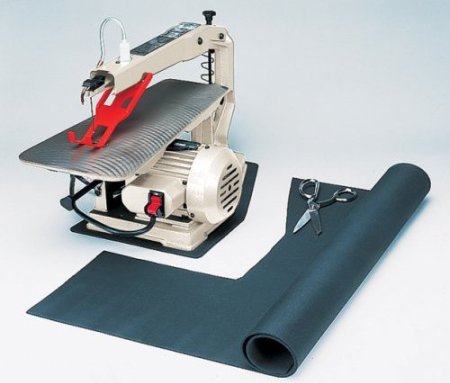
Yes. All Rubberco rubber matting rolls are sold by the linear metre and cut to your exact length from 0.5m upward. For mats up to 10mm thick: cut with a sharp Stanley knife and straight edge — score both faces, then fold and snap for a clean edge. For 15mm+ mats: use a jigsaw with a rubber/vinyl blade. Rubberco can also supply pre-cut mats to your specified dimensions for large orders — contact us for bespoke sizing.
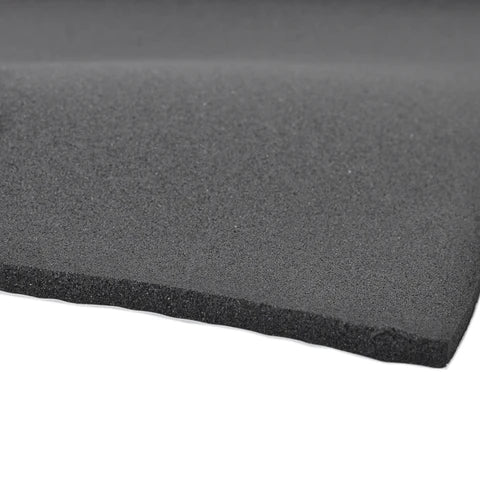
Yes — rubber is one of the most effective materials for impact sound reduction. 10mm rubber matting reduces impact noise by 12–15dB. 20mm reduces by 18–22dB. For acoustic applications, specify mass-loaded rubber barrier mat (minimum 5kg/m²) or purpose-designed acoustic rubber underlays. See our acoustic rubber range for specialist noise reduction products. In gyms, the 18–22dB impact noise reduction of 20mm rubber mats is the difference between liveable and unliveable in a flat above.
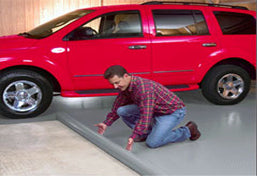
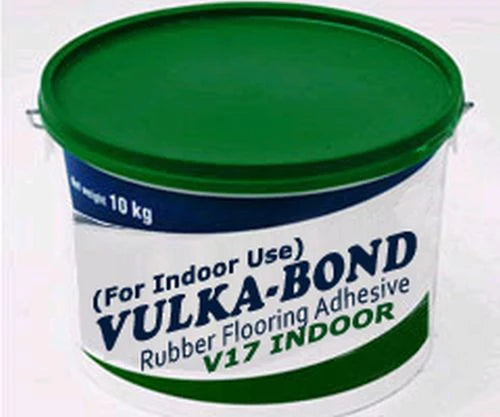
Light-duty rubber mats typically stay in place without fixing — their weight and rubber-on-floor friction is sufficient for most applications. For permanent commercial installations on smooth floors: use rubber flooring contact adhesive applied to both the mat underside and the prepared subfloor. Allow adhesive to flash off before pressing together. In wet areas: perimeter bonding prevents water ingress under the mat. Anti-fatigue mats often have bevelled edges as a trip-hazard alternative to fixing. Heavy interlocking stable mats do not require fixing — 30–35kg per mat holds them in position.
Home gym: 15–20mm interlocking SBR tiles — no adhesive, easy to install, good impact protection. Free weights zone: 20–25mm minimum. Olympic lifting: 25mm+ dedicated drop tiles. Commercial gym: 17mm commercial-grade rolls for cardio zones; 20–25mm tiles in free weights; 30mm+ for platform zones. EPDM for colour options and outdoor gym installations. See our Gym Mats collection.
Much of Rubberco's rubber matting range is made from recycled SBR rubber — sourced from end-of-life vehicle tyres. Approximately 2.5 car tyres are recycled per m² of 15mm gym tile. Recycled rubber delivers comparable performance to virgin rubber for most flooring applications while significantly reducing landfill. Rubberco's recycled rubber matting carries the same hardwearing characteristics and anti-slip properties as virgin rubber. EPDM is manufactured from virgin polymer for compound consistency, but is highly durable — its 15–25 year lifespan reduces lifecycle environmental impact versus shorter-lived synthetic alternatives.
Entrance and corridor: 3–6mm. Workshop anti-fatigue: 6–12mm. Garage floor protection: 6–10mm nitrile. Gym cardio: 8–15mm. Gym free weights: 15–20mm. Stable mats: 17mm (standard) or 22mm (large breeds). Playground safety: 25–80mm depending on equipment fall height. Olympic lifting: 25mm+. Electrical safety: 3–6mm specialist rated compound. When in doubt, contact our technical team — we've been specifying rubber matting for UK industry since the 1960s.
Supplying rubber matting to UK industry since the 1960s. Trusted by gyms, factories, schools, equestrian yards, and homeowners nationwide.
All rubber matting rolls cut to your exact linear metre requirement. No minimum order. No wasteful pre-cut sizes.
SBR, EPDM, Nitrile, Neoprene, Natural Rubber, Anti-Static. The correct compound for every environment — oil, UV, chemical, food, electrical.
Every rubber matting order ships free to mainland UK. Same-day dispatch on in-stock items ordered before 2pm.
📚 Expert Guides: Types of Rubber Matting UK | How to Clean Rubber Matting | How Long Does Rubber Matting Last? | Rubber Matting Rolls Buying Guide 2026
✅ Free UK Delivery | ✅ Cut to Your Required Length | ✅ Sold by the Metre | ✅ Expert Technical Advice | ✅ Same-Day Dispatch
Verified reviews from UK buyers
































Dispatch in 24 Hours
Satisfaction Guarantee
Secure Payments
sales@rubberco.co.uk


