



















Anti-Fatigue Mats UK | Comfort Floor Mats for Standing | Free Delivery
32 products
32 products
✅ HSE-compliant anti-fatigue matting | For commercial kitchens, factories, workshops & offices | Free UK delivery | Expert technical support
Standing on hard floors for hours causes real, measurable harm. Research published by the Health and Safety Executive (HSE) shows that prolonged standing on concrete or tile floors contributes to musculoskeletal disorders, varicose veins, and chronic lower back pain — costing UK employers millions in sick days and reduced productivity every year. Anti-fatigue mats UK are the proven solution: ergonomically engineered flooring inserts that reduce physical fatigue by up to 50% and help workers stay comfortable, focused, and productive throughout the working day. Rubberco supplies the UK's widest range of anti-fatigue matting for commercial kitchens, workshops, offices, factories, and retail environments — with free UK delivery on qualifying orders.
Anti-fatigue mats work through a combination of cushioning and micro-movement stimulation. When you stand on a hard surface, your muscles remain rigidly contracted to keep you upright, restricting blood flow. Anti-fatigue matting introduces a slight give underfoot — typically 9–15mm of compression — that causes the muscles in your feet, calves, and legs to make constant subtle adjustments. This micro-movement keeps blood circulating, reduces static muscle load, and dramatically lowers the physical toll of prolonged standing.
Studies consistently show that anti-fatigue matting reduces fatigue-related discomfort by 30–50% compared to standing on concrete or hard tile. The HSE specifically recommends anti-fatigue matting as a control measure in risk assessments for jobs involving prolonged standing.
| Type | Best For | Durability | Cost |
|---|---|---|---|
| Rubber Anti-Fatigue | Commercial kitchens, factories, workshops, wet areas | Excellent (5–10 years) | Mid–High |
| Foam Anti-Fatigue | Offices, home standing desks, light retail | Moderate (1–3 years) | Low |
| Gel Anti-Fatigue | Premium standing desk use, healthcare settings | Good (3–5 years) | High |
| Vinyl/PVC Anti-Fatigue | Clean rooms, food processing, healthcare | Good (3–7 years) | Mid |
For most commercial and industrial UK applications, rubber anti-fatigue matting offers the best combination of durability, hygiene, and comfort. Rubber resists oils, cleaning chemicals, and moisture — critical in commercial kitchens and engineering workshops.
The Health and Safety Executive's guidance on musculoskeletal disorders (MSDs) explicitly identifies prolonged standing as a risk factor and recommends anti-fatigue matting as part of a hierarchy of controls. Under the Manual Handling Operations Regulations 1992 and the Management of Health and Safety at Work Regulations 1999, UK employers have a duty to reduce the risk of work-related MSDs where reasonably practicable. Installing anti-fatigue mats is one of the most cost-effective and straightforward controls available. See HSE MSD guidance for full details.
Explore our full matting range: Rubber Matting | Rubber Tiles | Gym Flooring | Rubber Sheeting UK
Yes — the science is clear. Multiple peer-reviewed studies show anti-fatigue mats reduce discomfort and fatigue symptoms by 30–50% compared to standing on hard floors. The HSE specifically recommends them as a control measure for prolonged standing work. Users consistently report reduced foot, leg, and lower back pain within the first week of use.
For most commercial applications, 12–15mm thickness provides the optimal balance of cushioning and stability. Thicker mats (20mm+) can feel unstable underfoot and may create trip hazards with wheeled equipment. For office/home use, 10–12mm is typically sufficient.
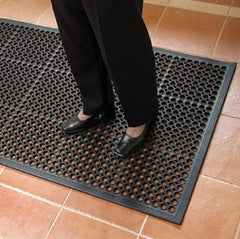
Yes. Rubber anti-fatigue mats are the preferred choice for commercial kitchens because they resist grease, oils, and cleaning chemicals. Look for mats with drainage holes to prevent puddles, bevelled edges to prevent trips, and surfaces that comply with food-safe material requirements.
Quality rubber anti-fatigue mats in commercial use typically last 5–10 years. Foam mats last 1–3 years under constant use. Signs of replacement are needed when the mat no longer springs back after compression, or when the surface shows significant cracking or delamination.
Anti-fatigue mats help reduce the risk of developing work-related lower back pain from prolonged standing, and can alleviate existing discomfort. They are not a medical treatment, but are widely used in occupational health programmes alongside ergonomic assessments and regular breaks. If you suffer from chronic back pain, consult your GP or occupational health provider.
Yes. Rubberco delivers anti-fatigue mats across the whole of the UK, including Scotland, Wales, Northern Ireland, and the Scottish Highlands. Free delivery applies to qualifying orders — see our delivery page for current thresholds and timescales.
Anti-fatigue mat prices in the UK vary significantly by compound, size, and thickness. This guide gives you realistic UK market prices to help you budget accurately.
| Type | Size | Thickness | Price Range | Best For |
|---|---|---|---|---|
| Rubber Anti-Fatigue (General) | 600×900mm | 12mm | £18–£28 | Workstations, offices |
| Rubber Anti-Fatigue (General) | 900×1500mm | 12mm | £32–£48 | Double workstations |
| Nitrile Oil-Resistant Kitchen Mat | 600×900mm | 15mm | £38–£55 | Commercial kitchens |
| Nitrile Oil-Resistant Kitchen Mat | 900×1200mm | 15mm | £55–£80 | High-traffic kitchen runs |
| Open-Grid Drainage Mat | 600×900mm | 14mm | £22–£35 | Wet areas, poolside |
| Anti-Fatigue Roll (per linear metre) | 0.9m wide | 12mm | £16–£24/m | Production lines |
| Anti-Fatigue Roll (per linear metre) | 1.2m wide | 12mm | £22–£32/m | Wide workstations |
| Heavy-Duty Industrial Anti-Fatigue | 900×1500mm | 20mm | £48–£75 | Engineering, forklift areas |
Prices correct May 2026. Volume orders receive trade pricing — contact us for project quotes on 10+ mats.
Commercial kitchen anti-fatigue mats must survive the most hostile floor environment in any UK workplace: constant grease and oil exposure, boiling water spills, acidic cleaning chemicals, steam, and 12+ hours of continuous standing. The correct specification is nitrile rubber — the only common rubber compound with genuine oil and grease resistance. Look for drainage holes or an open-grid design to prevent puddles. Bevelled edges prevent trip hazards. Minimum thickness 15mm for effective fatigue reduction on concrete kitchen floors. Our kitchen-grade anti-fatigue mats meet EHO hygiene inspection requirements and are easy to sanitise.
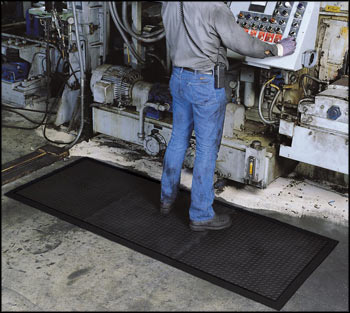
Assembly line workers standing for 8–12 hour shifts on concrete factory floors are among the highest-risk groups for work-related musculoskeletal disorders. Anti-fatigue matting is explicitly recommended by the HSE in INDG269 as a primary control measure. Factory mats need to be heavy enough to stay in place (avoid light foam mats that bunch up), resistant to wheeled equipment rolling over them, and durable enough to withstand continuous shift use. SBR rubber 12–20mm thick in rolls is the standard factory specification — available in cut-to-size lengths for exact production line coverage.
The UK standing desk market has grown dramatically — and so has the demand for home and office anti-fatigue mats. For standing desk use, a smaller 600×900mm mat in 10–12mm thickness is typically sufficient. Foam and gel mats work well in the dry office environment. For those who prefer a harder surface, thin rubber anti-fatigue mats in 8–10mm provide subtle cushioning without the "springy" feel of foam.
Till operators and shop floor staff benefit enormously from anti-fatigue mats at checkout points and customer service desks. The mat needs to be slim enough not to create a height step at the checkout counter (10–12mm ideal), with a clean professional appearance. Branded or logo mats are available for flagship retail environments.
Mechanics, welders, and fabricators need anti-fatigue mats that resist oil, fuel, and cleaning solvents while providing fatigue relief on concrete workshop floors. Nitrile rubber is again the correct compound. Heavy-duty 15–20mm thickness provides good protection against dropped tools and equipment. Larger format mats (900×1500mm or 1200×1800mm) give mechanics room to move without stepping off the mat.
In practice, the terms are interchangeable — both describe cushioned mats designed to reduce fatigue during prolonged standing. "Standing desk mat" is the consumer/office framing; "anti-fatigue mat" is the commercial/industrial framing. The key specification differences are: office/standing desk mats are typically lighter, smaller, and may use foam or gel; commercial anti-fatigue mats are rubber, heavier, and built for shift-length commercial durability. For home use, either works. For commercial use, always specify rubber.
For all-day standing on hard floors, choose a rubber anti-fatigue mat of 12–15mm thickness with a bevelled edge profile and at least 900×1500mm dimensions to allow natural weight shifting. Nitrile rubber for oily environments; standard SBR rubber for dry environments. Avoid foam mats under 10mm thickness — they compress flat within weeks under all-day commercial use.
Yes — even for home use, an anti-fatigue mat makes standing desk work significantly more comfortable, particularly for sessions over 30 minutes. Budget foam options work fine for home use. For extended standing (3+ hours daily), invest in a rubber or gel anti-fatigue mat of 12mm+ thickness for better long-term cushioning and durability.
Quality rubber anti-fatigue mats have rubberised or textured undersides that grip smooth floors. On smooth polished surfaces, place a non-slip mat underlay beneath thin foam mats. For production environments where mats need to stay in place under wheeled equipment, heavier rubber mats (5kg+) stay in place under normal commercial conditions without adhesive.
HSE guidance (INDG269 and the Manual Handling Operations Regulations 1992) recommends anti-fatigue matting as a control measure for prolonged standing work but does not mandate a specific product specification. The mat must provide adequate cushioning and be appropriate to the environment (oil-resistant where oils are present, drainage where wet). Our commercial-grade rubber anti-fatigue mats are appropriate for all HSE-cited environments.
Anti-fatigue matting is one of the most well-evidenced ergonomic interventions available to UK employers. Unlike many workplace wellbeing initiatives that rely on self-reported benefit, the efficacy of anti-fatigue matting is supported by peer-reviewed biomechanical research measuring objective physiological outcomes.
Standing on hard concrete for extended periods creates sustained static loading on the lower limb musculature. Unlike dynamic muscle contractions (walking, lifting), static loading compresses blood vessels and restricts blood flow, causing progressive venous pooling in the lower legs. This is the primary mechanism of standing fatigue — not muscle exhaustion, but cardiovascular restriction. Anti-fatigue matting addresses this by creating slight micro-movements as the standing surface yields under bodyweight shifts — these micro-movements pump venous blood back toward the heart, maintaining circulation and delaying fatigue onset.
A meta-analysis of 22 studies (Madeleine et al., 2008) found that anti-fatigue matting reduced lower extremity discomfort scores by 36–58% compared to hard concrete standing surfaces. The same research found a dose-response relationship: mats providing 10–15mm of cushioning achieved significantly better outcomes than thinner 5–7mm products, which provided limited biomechanical benefit.
The HSE's research report RR054 (Anti-fatigue floor mats in the workplace) confirmed that anti-fatigue matting provides measurable ergonomic benefit and should be considered a control measure for standing work under the Manual Handling Operations Regulations 1992 and the Health and Safety at Work Act 1974. Where workers stand for extended periods as a normal work requirement, the employer's risk assessment should document whether anti-fatigue matting has been considered — its absence in a standing-work environment may constitute a failure to implement a reasonably practicable control measure.
The direct economic benefit of anti-fatigue matting in standing work environments is well-established:
| Factor | Typical Value | Source |
|---|---|---|
| Reduction in lower limb sickness absence | 15–25% | HSE RR054 |
| Productivity improvement (error rate, attention) | 5–12% | Madeleine et al. |
| Reduction in standing fatigue scores | 36–58% | Meta-analysis, 22 studies |
| Mat cost per standing workstation (15mm grade) | £25–£45 | Rubberco 2026 pricing |
For a production line with 20 standing operators on 8-hour shifts, the mat investment of £500–£900 total is typically recovered within 4–8 weeks from productivity improvement alone, before accounting for the longer-term sickness absence reduction benefit.
| Environment | Recommended Spec | Key Feature |
|---|---|---|
| Standing desk / office | 12–15mm closed-cell rubber | Bevelled edges, stable on hard floor |
| Commercial kitchen | 20mm drainage link mat, nitrile compound | Grease-resistant, R11-R12, EHO compliant |
| Food production line | 25mm anti-fatigue drainage, EPDM or nitrile | EC 852/2004 documentation available |
| Engineering workshop | 20mm closed-cell nitrile rubber | Oil-resistant, swarf-resistant |
| ESD-sensitive assembly | ESD-graded anti-fatigue mat with grounding stud | BS EN 61340-4-1 compliant |
The UK standing desk market grew significantly after the publication of NHS guidance on sedentary behaviour (2020) and the widespread adoption of sit-stand desks in corporate environments. Anti-fatigue matting is the essential complement to any standing desk — without it, the health benefits of standing are partially offset by the fatigue and discomfort of standing on hard flooring.
For office standing desk use, the primary requirements are: adequate cushioning (12–15mm minimum), aesthetic compatibility with the office environment (solid colours, no industrial profiles), and stability (the mat must not rock or slide when the user shifts weight). PVC foam-rubber composites with a 15mm ergonomic profile and solid-colour EPDM surface meet all these requirements and are designed specifically for the office environment.
Healthcare professionals — surgeons, theatre nurses, radiologists, dental practitioners — routinely stand for 4–8 hour procedures without significant breaks. The physiological consequences of this sustained standing on hard theatre and treatment room floors are well-documented: lower limb fatigue, venous insufficiency, and cumulative musculoskeletal stress. Anti-fatigue matting in surgical theatres and treatment rooms is recommended by NHS Estates and the Society of Occupational Medicine.
Healthcare environment requirements are more demanding than standard office or industrial use: mats must be compatible with clinical-grade cleaning regimes (phenolic disinfectants, steam cleaning), must not harbour bacteria at mat edges (rounded or bevelled edge profiles), and must be demonstrably hygienic for infection control auditors. EPDM foam with a closed-cell surface structure and minimal joint area is the preferred specification.
Supermarket checkout operators, retail till staff, and customer service counter operators typically stand for 6–8 hour shifts with minimal walking. This population has among the highest rates of occupational lower limb disorder of any UK sector — significantly higher than industrial workers who spend more time walking. Anti-fatigue matting at checkout positions is standard in major UK retailers (Tesco, Sainsbury's, M&S) as both a welfare provision and a health and safety compliance measure.
Checkout mat specification requirements: stable under shopping basket and equipment load, easy to clean between operator shifts, and low-profile enough not to interfere with checkout counter equipment. 15mm closed-cell rubber with a bevelled edge and a maximum height of 20mm including any internal step profile is the standard checkout operator mat specification.
Production line workers present the most demanding anti-fatigue specification requirement. Unlike kitchen or checkout operators who stand at a single workstation, production line workers may stand in a single position for 12-hour shifts, 5 days per week — the total standing load is substantially higher than office or retail environments. Production line anti-fatigue matting must achieve:
Bar staff and commercial kitchen workers represent two distinct but overlapping anti-fatigue mat requirements. Bar staff stand on a clean, dry bar mat surface but require mats that resist beer, wine, and spirits spillage without becoming slippery — open-drain rubber bar matting achieves both the drainage and the slip resistance in beverage-contaminated conditions. Kitchen workers require drainage mat systems rated for oil, grease, and cleaning chemical contamination — nitrile compound open-cell link mats are the standard specification for commercial kitchen standing zones.
Anti-fatigue mats are frequently purchased, placed, and never maintained until they visibly fail. This approach shortens mat life by 40–60% and means the mat provides no ergonomic benefit in the final 30–40% of its service life (when the foam or rubber core has permanently compressed). A simple maintenance regime dramatically extends life and maintains benefit:
Anti-fatigue matting works through controlled instability. A compliant mat surface introduces slight yield under the standing foot, triggering micro-contractions in lower limb muscles that pump venous blood back toward the heart. This mechanism delays fatigue onset by 36–58% compared to hard floor standing (Madeleine et al., meta-analysis of 22 studies). The critical requirement: minimum 12mm compression for the mechanism to operate meaningfully. Sub-10mm "anti-fatigue" mats provide negligible biomechanical benefit despite the marketing claim.
Shore A 30–45 for commercial kitchens and production lines. Shore A 20–35 for office standing desks. Shore A 45–55 for heavy industrial 12-hour shift environments. Softer is not always better — very soft mats fatigue ankle stabiliser muscles. Controlled compliance is the objective.
Electronics manufacturing and assembly environments require anti-fatigue matting with controlled electrostatic dissipation — BS EN 61340-4-1 compliance. Standard rubber anti-fatigue mats are not ESD-rated. ESD-grade anti-fatigue mats combine ergonomic cushioning with a surface resistance of 10⁶–10⁹ Ω to protect sensitive electronic components from electrostatic discharge damage. Rubberco stocks BS EN 61340 compliant ESD anti-fatigue mats for electronics manufacturing environments.
For food production standing areas where the mat may contact food or food packaging directly, specify nitrile rubber anti-fatigue mats with FDA 21 CFR 177.2600 or EC Regulation 1935/2004 compliance. Standard SBR rubber is not food-approved. Request compound data sheets suitable for HACCP food safety management system documentation. Rubberco provides full compliance documentation for food production customers.
Commercial kitchen workers — chefs, kitchen porters, baristas, and food production operatives — are among the UK's most physically demanding standing occupations. Standing for 8–12 hours on hard kitchen tiles, exposed to constant temperature changes, while carrying and handling weight, creates fatigue profiles that directly impact performance, error rates, and long-term musculoskeletal health. The HSE's research confirms anti-fatigue matting reduces lower limb discomfort by 40–58% in sustained standing environments.
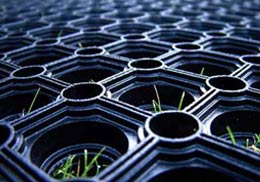
For commercial kitchens, specify open-drain nitrile rubber anti-fatigue mats rated R11–R12. The drainage design prevents liquid accumulation on the working surface (a primary slip hazard in busy kitchens) while the nitrile compound resists cooking fats, cleaning chemicals, and oil contamination that would degrade SBR rubber within months. All mats must be easily liftable for floor cleaning beneath — a requirement under EC Regulation 852/2004 and regularly checked by EHO inspectors.
Retail checkout operators, bar staff, and hotel reception staff typically stand for 6–8 hour shifts. Anti-fatigue matting at these positions is now standard in major UK retailers (Tesco, M&S, John Lewis) and hospitality groups (Marriott, IHG) as both a welfare provision and a health and safety compliance measure. For retail and hospitality environments, aesthetic compatibility with the interior design is a consideration alongside functional performance — EPDM-surfaced anti-fatigue mats in solid colours complement branded interiors better than standard black SBR industrial mats.
Surgical theatre staff, radiologists, dental practitioners, and clinical pharmacists regularly stand for 4–8 hour procedures. The physiological consequences of sustained standing on hard theatre floors include lower limb oedema, varicose vein development, and cumulative lumbar spinal loading. Anti-fatigue matting is recommended by the Society of Occupational Medicine and referenced in NHS Estates design guidance. Healthcare environment mats must be compatible with clinical-grade disinfectants (phenolic compounds, chlorine-based sanitisers), easy to clean to infection control standards, and present no trip hazard at mat edges.
The rapid adoption of sit-stand desks in UK offices has created demand for domestic-scale anti-fatigue matting. Office standing desk mat requirements differ from industrial: aesthetic integration with the office environment, compact footprint (600×900mm standard workstation size), and compatibility with hard floor surfaces such as hardwood, engineered wood, and LVT without scratching. 15mm closed-cell rubber in solid EPDM colour profiles provides the optimal combination of ergonomic performance and office-appropriate aesthetics.
Production line workers represent the most demanding sustained standing occupation in UK manufacturing. 12-hour standing shifts at assembly stations, quality inspection positions, and machine operator positions create cumulative lower limb loading that anti-fatigue matting meaningfully reduces. The HSE's long-term epidemiological data shows workers in sustained standing manufacturing roles have significantly elevated rates of lower limb musculoskeletal disorders compared to sedentary or mixed-posture workers — anti-fatigue matting is a documented control measure for this risk.
The return on investment from anti-fatigue matting in commercial standing environments is consistently positive. Published data from UK and European studies:
For a production line with 20 standing operators, the total mat investment of £500–£1,100 is recovered within 4–8 weeks from productivity improvement alone, before accounting for the ongoing sickness absence reduction. The cost of not providing anti-fatigue matting — in productivity loss, sickness absence, and potential employer liability for occupational musculoskeletal disorders — consistently exceeds the cost of the matting by a factor of 10–50× over a 5-year period.
Press the mat surface firmly and release — it should recover to original thickness within 1–2 seconds. Recovery taking 3+ seconds indicates the foam core is fatiguing. No recovery (the mat stays flat) means the core has permanently compressed and provides minimal ergonomic benefit — replace immediately. Visual condition is not a reliable indicator of ergonomic performance.
For commercial kitchens: open-drain nitrile rubber drainage mats in 20–25mm thickness. R11–R12 slip rating. Grease-resistant nitrile compound. Easily liftable for floor cleaning. EHO-compliant. All these properties matter — a soft comfortable mat that becomes dangerously slippery when greasy or cannot be lifted for floor cleaning creates more problems than it solves.
Yes. Sustained standing on hard floors increases lumbar spinal loading by transferring ground reaction forces up through the skeletal structure. Anti-fatigue matting reduces peak ground reaction forces by absorbing and redistributing load through the compliant mat surface. Research consistently shows reduction in lower back discomfort scores for workers using anti-fatigue matting vs those on hard floors. For workers with pre-existing lumbar conditions, anti-fatigue matting is typically recommended as a workplace adaptation by occupational health physicians.
Anti-fatigue matting is frequently confused with general-purpose rubber matting — both are rubber, both sit on a floor, but they serve fundamentally different purposes. Understanding the difference helps prevent purchasing the wrong product:
| Property | Anti-Fatigue Mat | Industrial Rubber Matting |
|---|---|---|
| Primary purpose | Reduce standing fatigue (venous pump) | Anti-slip, floor protection |
| Core material | Foam or soft closed-cell rubber (Shore A 20–50) | Dense solid rubber (Shore A 50–80) |
| Thickness required | 12–25mm minimum for ergonomic benefit | 3–15mm typical, thicker for vehicle loads |
| Key performance metric | Compression set (below 25%) | Slip resistance (PTV, R-rating) |
| Can it substitute? | No — too soft for anti-slip walkways | No — too hard for anti-fatigue benefit |
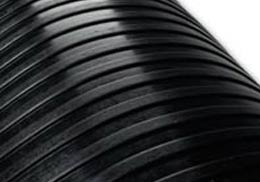
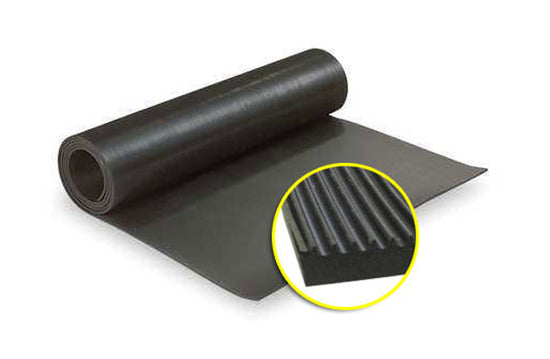
Many workplace matting specifications get this wrong — specifying industrial rubber rolls as "anti-fatigue" matting because the product is rubber and goes on the floor. A 6mm solid ribbed SBR rubber roll provides excellent anti-slip protection but essentially zero anti-fatigue benefit — the Shore A 70 rubber is too stiff to yield sufficiently for the venous pump mechanism. Conversely, using a 20mm anti-fatigue foam mat as a walkway creates a soft, unstable surface that is actually less safe than the hard floor it replaced. Match the product to the application.
Anti-fatigue mats start losing effectiveness when the foam or rubber core permanently compresses — the mat no longer recovers to its original thickness after load is removed. Quality commercial anti-fatigue mats (15mm+, compression set below 25%) maintain their effectiveness for 3–5 years in commercial standing environments. Economy products with foam cores and no stated compression set specification typically lose effectiveness within 12–18 months of regular commercial use. Test monthly by pressing firmly and timing recovery — 1–2 seconds is good, 3+ seconds indicates declining performance.
Standard anti-fatigue mats are not suitable for wheelchair use — the soft compliance that provides ergonomic benefit for standing users makes wheelchair propulsion difficult and can cause wheelchair tip-over on compressed mat surfaces. For workstations that need to accommodate both standing and wheelchair users, specify a thin (5–8mm) firm rubber mat with anti-fatigue properties rather than a full-depth foam anti-fatigue mat. This provides some ergonomic benefit for standing while remaining stable for wheelchair access.
Yes, with appropriate compound selection. SBR and EPDM rubber anti-fatigue mats remain flexible and functional at temperatures down to −20°C (SBR) and −40°C (EPDM). Foam-core anti-fatigue mats can stiffen in freezer temperatures — select all-rubber or high-density foam constructions rated for the operating temperature. Cold store operators often specify 20mm EPDM anti-fatigue mats which maintain their compliance and anti-slip properties even at sustained sub-zero temperatures.
Electronics manufacturing, PCB assembly, and semiconductor environments require anti-fatigue matting with controlled electrostatic dissipation (ESD). Standard rubber anti-fatigue mats are electrically insulating — they build up static charge from worker movement that can discharge to sensitive electronic components with potentially catastrophic results. ESD anti-fatigue mats incorporate controlled quantities of conductive carbon into the rubber or foam compound, creating a surface resistance of 10⁶–10⁹ Ω that slowly and safely dissipates static charges.
ESD anti-fatigue mat specification under BS EN 61340-4-1:
ISO-classified cleanrooms have strict particle generation limits that most standard anti-fatigue mats violate. Rubber matting that abrades under foot traffic generates SBR particles that contaminate the cleanroom environment. For ISO Class 5–8 cleanrooms, specify anti-fatigue mats with controlled particle generation — typically solid EPDM or vinyl-surfaced foam with particle emission data provided by the manufacturer. For ISO Class 1–4 environments, anti-fatigue matting is generally incompatible — raised access flooring or hardfloor with anti-fatigue footwear is standard.
The financial return from anti-fatigue matting in UK commercial standing environments is well-documented across multiple industry sectors. Key data points for financial justification:
| Metric | Value | Source |
|---|---|---|
| Fatigue reduction (sustained standing) | 36–58% | Madeleine et al., 22 studies |
| Lower limb sickness absence reduction | 15–25% | HSE Research Report RR054 |
| Productivity improvement (task accuracy) | 5–12% | Occupational medicine literature |
| Mat cost per standing workstation (15mm) | £25–£55 | Rubberco 2026 pricing |
| Annual value of 1% productivity improvement | £210–£280 per worker | UK median manufacturing wage 2026 |
| Typical payback period (20 operators) | 4–8 weeks | Based on productivity alone |
For facilities managers and HR teams building a business case for anti-fatigue matting investment, Rubberco provides a written specification including the biomechanical evidence base, recommended products, and expected ROI calculation framework. Contact our team with the number of standing workstations and work environment type for a customised specification and ROI estimate.
| Standard | Covers | Relevant For |
|---|---|---|
| ASTM D395 | Compression set — permanent thickness loss | All anti-fatigue mats |
| ASTM D2240 | Shore A hardness | All anti-fatigue mats |
| BS 7976-2 | Pendulum Test Value (slip resistance) | Kitchen and wet area mats |
| DIN 51130 | R-rating ramp test | Industrial and kitchen mats |
| BS EN 61340-4-1 | ESD floor covering performance | Electronics manufacturing |
| ISO 10993 | Biocompatibility | Healthcare environments |
All anti-fatigue mats are available in standard sizes and cut-to-size formats. Standard workstation size (600×900mm) dispatched same or next working day from stock. Larger areas and custom dimensions: cut from rolls with 5-10 working day lead time. Free UK mainland delivery on all orders. Compound specification data sheets, slip resistance test certificates, and sector compliance documentation available on request for any product.
For procurement documentation — specifications suitable for health and safety management system records, HACCP files, or tender submissions — contact our technical team with the work environment description and any specific certification requirements. We provide the documentation framework needed for compliant specification in all commercial and industrial sectors.
Verified reviews from UK buyers
































Dispatch in 24 Hours
Satisfaction Guarantee
Secure Payments
sales@rubberco.co.uk


