














Outdoor Matting
4 products
4 products
Updated May 2026 — Expanded with seasonal guide, 2026 trending applications, additional FAQs, and internal links.
Outdoor matting serves a critical function: it protects surfaces, prevents dirt ingress, and dramatically reduces slip risk at entries, ramps, and outdoor walkways. At Rubberco, we supply the UK's full range of commercial and domestic outdoor matting — from heavy-duty rubber entrance mats to grass-protecting walkway systems.
Choosing the right outdoor matting starts with understanding which type suits your application:
The UK climate presents specific challenges for outdoor matting:
| Application | Recommended Type | Key Spec |
|---|---|---|
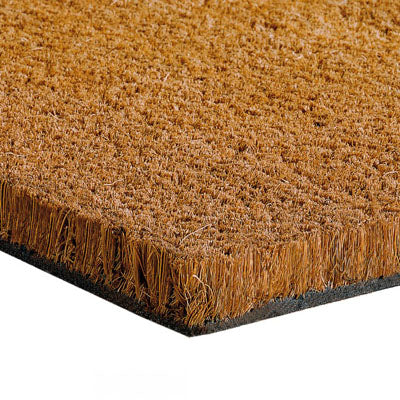
| Commercial entrance (covered) | Coir or rubber entrance mat | PTV 36+ wet, scraper surface |
| Commercial entrance (exposed) | Heavy rubber outdoor mat | EPDM or vulcanised SBR, PTV 40+ |
| Outdoor decking / patio | Anti-slip decking mat | Drainage holes, PTV 40+ wet |
| Ramps & steps | Ribbed rubber matting | PTV 40+, fixed edges |
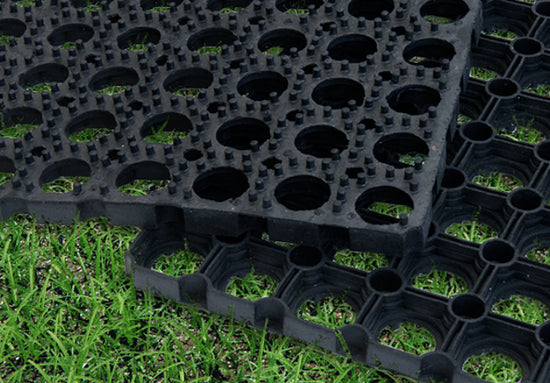
| Event / festival ground | Rubber grass mats | Interlocking, load-bearing |
| Equestrian / stable gate | Rubber grass / stable mats | 17–22mm, heavy-duty |
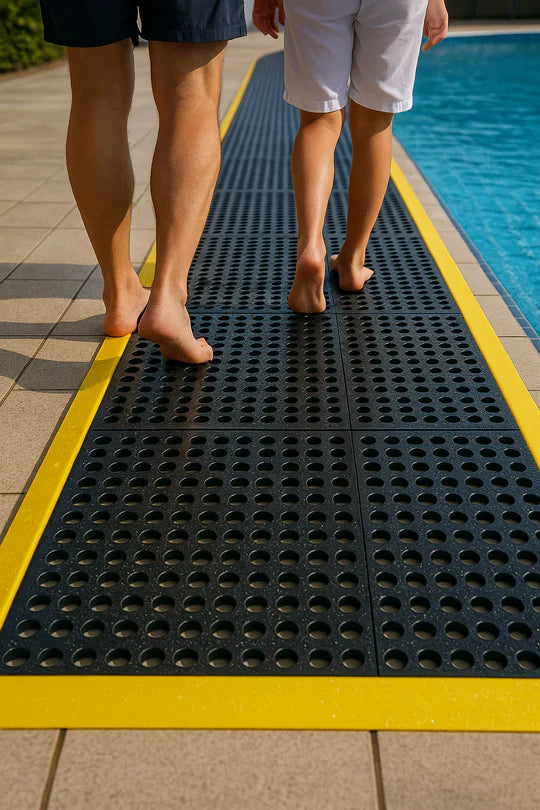
| Pool surround | Drainage rubber mat | EPDM, PTV 40+, chlorine-resistant |
For entrance matting, the general rule is: the mat should be at least 1.5x the stride length of your typical user, allowing 3–4 footfalls on the mat before entering. For most commercial entrances, this means a minimum mat depth of 900mm (standard) to 1200mm (busier entrances with heavier soiling).
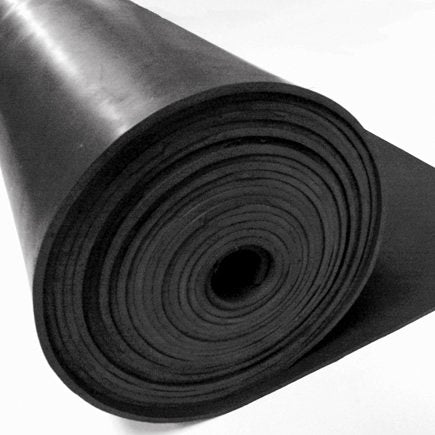
For decking and patio coverage, measure the walking areas and order to suit — mats can be cut to size, or roll rubber ordered by the linear metre. Don't forget to account for fixed obstacles (furniture legs, planters).
Q: Will outdoor rubber matting fade in UK sun?
A: Carbon-black rubber compounds (most dark grey or black mats) have inherent UV resistance and fade very slowly. Coloured rubber mats (particularly red or blue) may fade faster in direct sun — if colour retention is important, specify EPDM compounds with colour-stable pigmentation, or accept that natural weathering will occur.
Q: Can outdoor rubber mats be left out all year in the UK?
A: Yes. Quality vulcanised rubber and EPDM mats are designed for year-round outdoor use in UK conditions. Coir matting should be brought in or stored under cover in winter if fully exposed to rain. Lightweight foam or EVA mats are not suitable for permanent outdoor use.
Q: How do I secure outdoor matting to stop it moving?
A: Options include: heavy-gauge mats that stay in place by weight alone (commercial 15–20mm rubber); recessed mat channels built into paving or concrete; rubber anchor stakes pushed through drainage holes; or double-sided outdoor tape for lighter duty positions. For permanent positions, mats can be bonded with EPDM-compatible adhesive.
Q: Do you offer custom-sized outdoor mats?
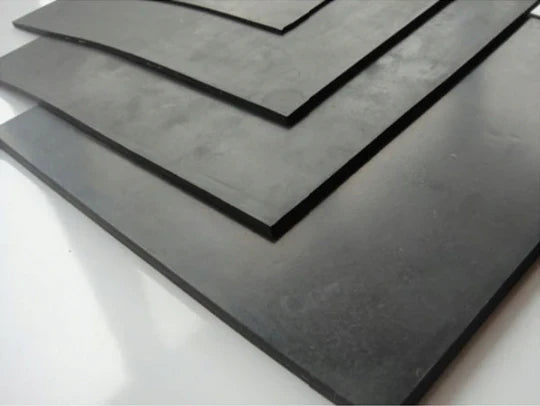
A: Yes — Rubberco supplies outdoor matting cut to size. Order rubber rolls by the linear metre for custom widths and lengths. Standard mat widths are 1m, 1.2m and 1.5m. For bespoke shapes, contact us with your dimensions.
Q: What is the best outdoor matting for a care home or hospital entrance?
A: Specify recessed entrance matting with a PTV 36+ wet rating and a scraper/wiper surface to remove both mud and moisture. Rubber entrance mats (not coir) are preferred in healthcare settings due to their easy cleaning and hygienic properties. Ensure the mat is flush with the surrounding floor to eliminate trip hazards — critical for wheelchair and mobility aid users.
UK weather presents different outdoor matting challenges through the year. Here is what to consider by season:
| Season | Primary Risk | Matting Priority | Recommended Action |
|---|---|---|---|
| Spring (Mar–May) | Wet mud, frost still possible, algae growth resumes | Mud control, anti-slip | Check mat condition after winter; clean algae; replace worn mats |
| Summer (Jun–Aug) | UV fading, rain events on hot surfaces (thermal shock), high visitor traffic | High-traffic durability | EPDM compound for full-sun positions; inspect mats under heavy use |
| Autumn (Sep–Nov) | Wet leaves (slip hazard on mat surface), high rainfall | Leaf and wet slip management | Clean mats weekly to remove leaf debris; check drainage is clear |
| Winter (Dec–Feb) | Ice, frost, reduced daylight (slip visibility) | Ice resistance, visibility | Rubber is ice-safe; avoid metal shovels on mat surface; check mat is anchored against wind |
These applications are driving increased outdoor matting demand in the UK in 2026:
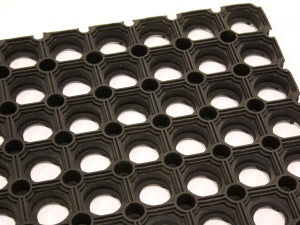
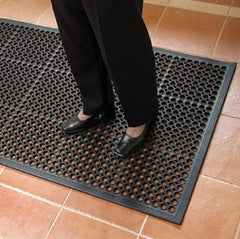
For a UK entrance that gets wet footwear year-round, the best option is a heavy-duty rubber entrance mat with an open-grid or ribbed profile. The open profile allows water to drain below the mat surface, keeping feet on a dry(ish) surface. Look for a PTV 40+ wet rating and minimum 10mm thickness for durability under heavy footfall. See our Entrance Matting UK range.
Yes — for permanent outdoor matting installations, use an EPDM-compatible contact adhesive or polyurethane adhesive. The surface must be clean, dry, and free from frost before bonding. Note that bonded mats cannot be easily removed for maintenance — where access to the substrate may be needed (drains, services), keep mats loose-laid or use anchor pins instead.
Options: choose heavy commercial-grade rubber mats that resist wind displacement by weight; use mat anchor stakes pushed through drainage holes into the ground; install recessed mat channels in the paving; or use outdoor mat clips on hard surfaces. For mats against a wall or building, a channel edge prevents uplift from wind eddies around the building perimeter.
Yes — and it is specifically recommended. Rubber outdoor matting provides anti-slip surfaces critical for elderly and mobility-impaired residents. Specify a flush-edge mat (no trip hazard lip) with a PTV 40+ wet rating. For wheelchair access, ensure mat joins are smooth and within 5mm height differential. Rubber is also easy to clean with care home disinfectants and does not absorb moisture or harbour bacteria.
Verified reviews from UK buyers
































Dispatch in 24 Hours
Satisfaction Guarantee
Secure Payments
sales@rubberco.co.uk


