











Non Slip Rubber for Decking
1 product
1 product
Updated May 2026 — Product range and slip ratings verified against current UK stock.
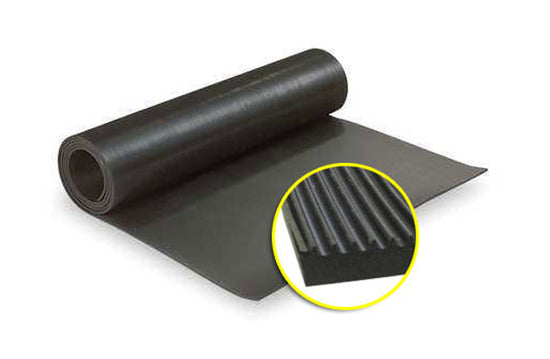
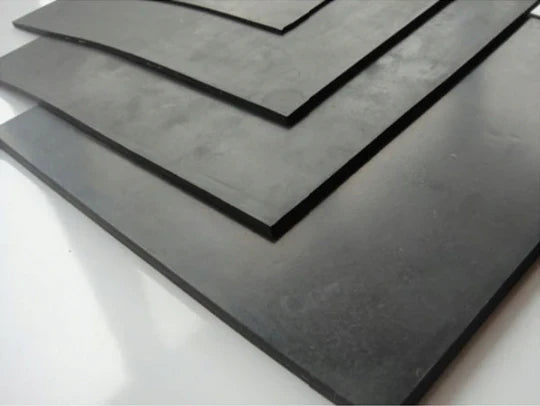
Decking becomes dangerously slippery when wet — particularly in the UK climate where moss, algae, rain and frost create year-round hazards. Our non-slip rubber decking strips and mats provide certified anti-slip performance on timber, composite, concrete and tiled decking surfaces without requiring specialist installation.
Smooth timber and composite decking surfaces have very little inherent grip when wet. Moisture, biological growth (algae and moss), and frost all dramatically reduce the coefficient of friction — creating surfaces that can be more slippery than ice. The HSE classifies wet decking as a significant slip hazard, particularly for elderly users and in commercial settings.
Rubber anti-slip overlays work differently from chemical treatments: they provide a mechanically textured surface that maintains grip in all weather conditions, doesn't wash off, and provides consistent performance year-round.
| Solution Type | Slip Resistance | Installation | Lifespan | Best For |
|---|---|---|---|---|
| Rubber decking strips | Excellent — PTV 36+ | Peel and stick | 5-10 years | Existing decking, steps |
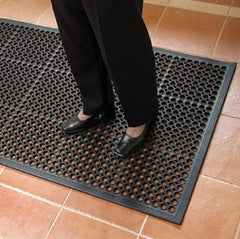
| Rubber decking mats | Excellent — PTV 36+ | Lay flat or fix | 8-15 years | Full coverage areas |
| Anti-slip decking paint | Moderate — varies | Application needed | 1-3 years | Budget option |
| Anti-slip tape | Good initially | Peel and stick | 1-2 years | Temporary/light use |
| Composite decking boards | Good when new | Full replacement | 20+ years | Renovation projects |
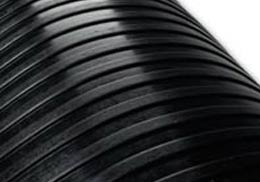
Narrow rubber strips (typically 25-50mm wide) that fix along the length of each decking board. Ideal for:
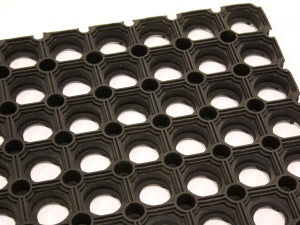
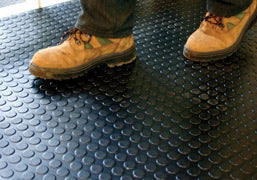
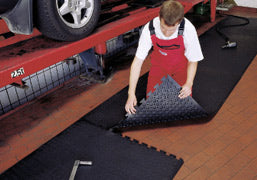
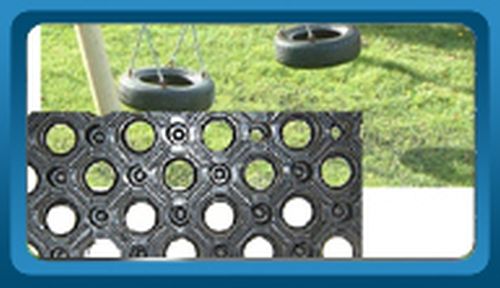
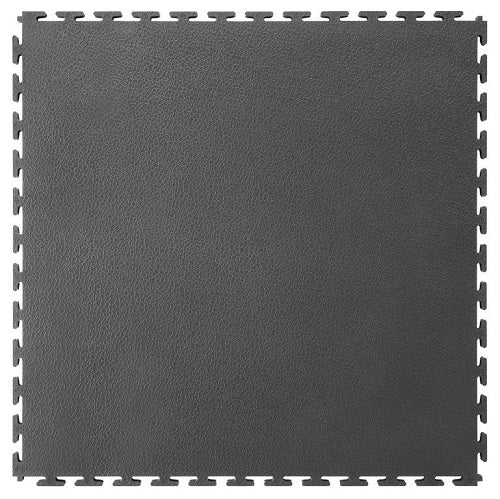
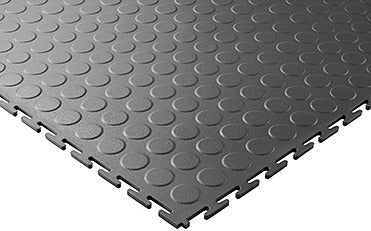
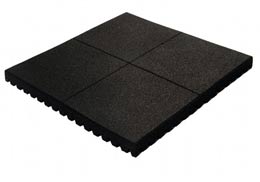
Larger rubber mats for full or partial coverage of decking areas. Ideal for:
| Season | Bare Decking Risk | Rubber Grip Performance |
|---|---|---|
| Spring (rain, algae growth) | High — algae reforming | Excellent — rubber unaffected |
| Summer (dry, but sudden rain) | Moderate | Excellent |
| Autumn (wet leaves, rain) | Very high — wet leaves + algae | Excellent |
| Winter (frost, ice, wet) | Extreme — frost on wet timber | Very good — EPDM stays flexible below 0°C |
No — rubber anti-slip strips are non-invasive and will not damage decking. Adhesive-backed strips use pressure-sensitive adhesive that can be removed without leaving significant residue. Screw-fixed strips leave small fixing holes (2–3mm) which are easily filled if the strips are later removed. Neither type causes structural damage.
Composite decking typically accepts adhesive-backed rubber strips without issue. Clean the surface thoroughly with a degreaser, allow to dry, then apply the strip with firm pressure along its full length. Screw-fixing is an alternative for permanent installations — use stainless steel screws to prevent rust staining on composite surfaces.
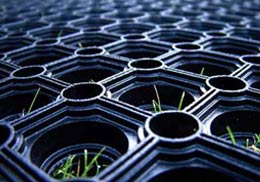
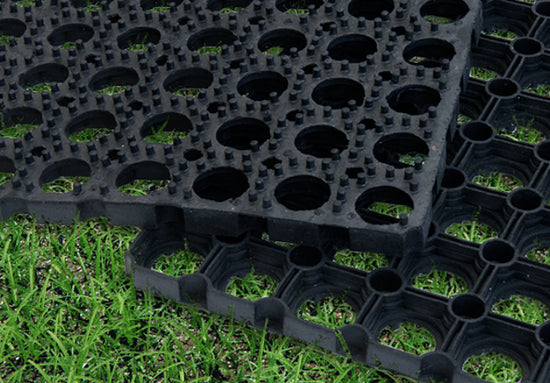
Rubber matting does not rot — rubber is unaffected by water. However, trapping moisture between the rubber mat and the timber decking beneath can accelerate timber rot if the decking is not properly treated or sealed. This is easily avoided by: choosing rubber mats with drainage holes or raised profiles that allow airflow, lifting and cleaning beneath mats occasionally, and ensuring the decking has been properly treated with preservative.
The HSE recommends a minimum Pendulum Test Value (PTV) of 36 for low-risk pedestrian surfaces. Decking used by the general public, elderly users, or children should achieve PTV 40+ in wet conditions. Our rubber decking products achieve PTV 36–45 depending on the surface profile — contact us if you need certified test data for a commercial or public space application.
EPDM rubber remains flexible and maintains its grip performance down to -40°C — well below any temperature experienced in the UK. Frost does not cause EPDM to crack, stiffen, or lose adhesion. This makes EPDM rubber the correct specification for any outdoor application including decking, entrance areas, and external steps.
Rubber decking mats are easy to clean — sweep or hose down regularly to remove debris and prevent algae build-up. For algae or moss growth on the rubber surface, use a dilute deck cleaner (not bleach, which can degrade rubber over time). Lift mats annually to clean the decking surface beneath, and allow both surfaces to dry before replacing the mat.
Related Collections at Rubberco
Free UK delivery. Contact us for advice on anti-slip requirements.
No. Self-adhesive strips do not damage decking boards. The adhesive bonds to porous wood without penetrating the grain. When removed, minor adhesive residue can be cleaned with a solvent cleaner. Screw-fixed rubber nosings leave small screw holes that can be filled with exterior wood filler if removed later.
Self-adhesive rubber anti-slip strips typically last 3–5 years on outdoor decking with normal UK weathering. Full-coverage rubber mats with EPDM compound last 10–15 years. Replace strips when the raised surface profile is worn smooth — a flat rubber strip has lost most of its anti-slip function.
Yes. Rubber anti-slip strips and mats work on composite decking (Trex, Millboard) as well as natural timber. For composite boards with a very smooth surface finish, choose a pressure-sensitive adhesive rated for low-porosity surfaces, or use mechanical fixings.
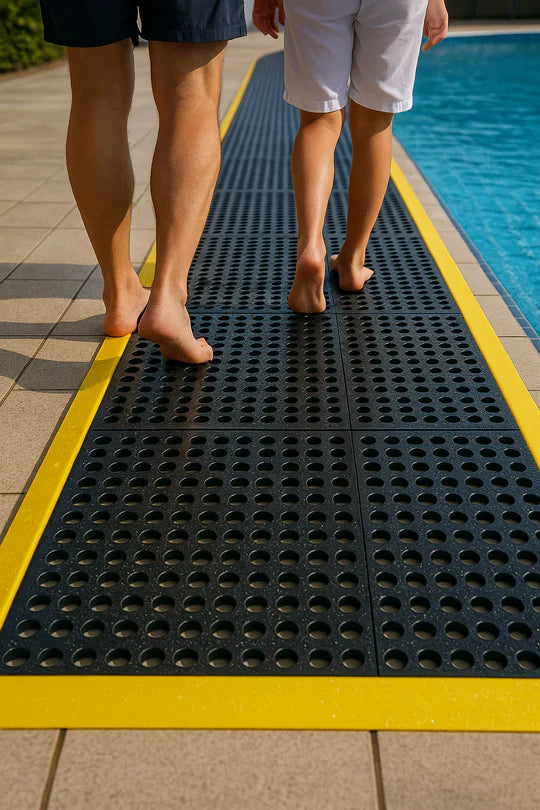
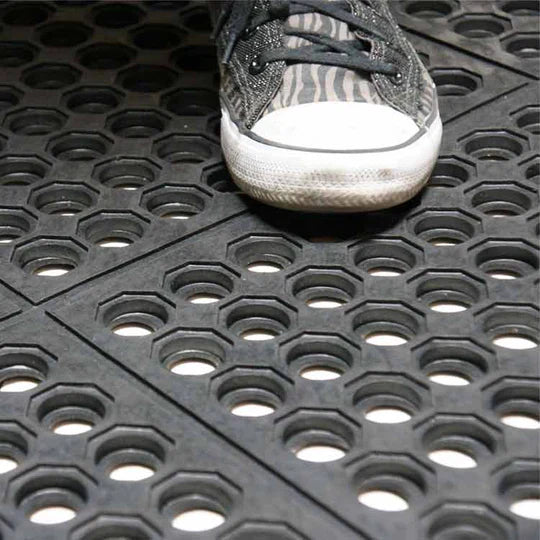
Yes. Specify open-cell or drainage-hole rubber mat tiles that allow pool water to drain freely rather than pool on the mat surface. EPDM compound provides long-term resistance to chlorine, UV, and wet conditions. Pool surround matting should achieve PTV 50+ when wet for barefoot users.
Wet wooden and composite decking is responsible for thousands of serious garden and commercial outdoor injuries in the UK every year. The mechanism is simple: wood and composite decking achieves PTV 55-65 when new and dry. Within two UK winters, algae, lichen, and green mould colonise the surface — reducing wet PTV to below 20 in the worst cases. At PTV 20, the HSE classifies the surface as high slip risk. Anti-slip rubber for decking converts this hazard into a manageable, compliant surface without the cost of decking replacement.
The UK climate creates uniquely challenging conditions for outdoor decking. Mild, damp winters allow algae and lichen to colonise decking surfaces year-round. The result is a surface that is dangerously slippery on approximately 180 days per year — any day when decking is wet or damp, which includes most of autumn and winter, and many summer mornings after overnight dew. For commercial premises with public access (restaurant terraces, hotel gardens, retail exteriors), this creates continuous liability exposure.
| Surface | PTV Wet (typical) | Risk Level (HSE) |
|---|---|---|
| New untreated timber decking | 55–65 | Low |
| Treated timber decking (1 year) | 40–55 | Low–Medium |
| Composite decking (new) | 45–60 | Low |
| Algae-contaminated timber (wet) | <20 | HIGH RISK |
| Anti-slip rubber strips (wet) | 45+ | Low |
| Full rubber deck coverage (wet) | 50+ | Low |
For a domestic garden deck that adults use primarily in summer, self-adhesive rubber anti-slip strips spaced every 3–4 boards provide adequate protection at minimal cost. Apply in spring before the outdoor season begins. 50mm wide ribbed rubber strips on natural timber decking; 75mm on composite (smoother surface requires wider strip for equivalent grip area). The strips will last 3–5 years with normal UK weathering.
Children run on decking — their footwear provides less grip than adults (flat-soled trainers vs tread soles) and their lower mass means less downward force to create friction. For a family garden with young children, or any deck with a step or level change, increase strip spacing to every 2 boards and ensure all step edges have purpose-designed stair nosing rubber strips. Consider full-coverage rubber tile matting for the primary area around outdoor furniture and play areas.
Commercial operators face liability exposure under the Occupiers' Liability Acts 1957 and 1984 for any slip on their premises. For pub beer gardens, restaurant terraces, and hotel outdoor areas, the professional specification is full-coverage open-drain rubber matting — tiles or rolls that cover the entire deck surface, allow drainage, and can be demonstrated to achieve PTV 45+ when wet. This is both the safest specification and the most defensible one in the event of a liability claim.
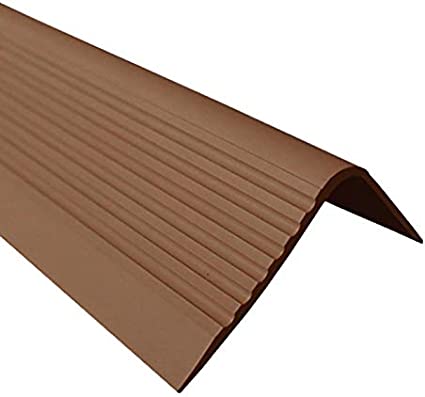
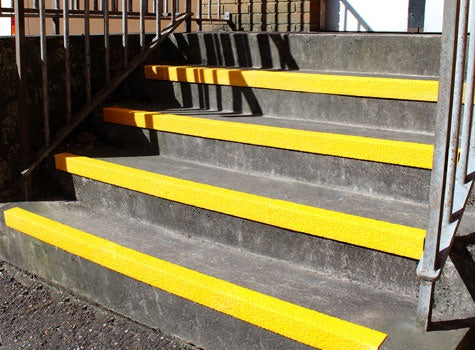
The leading edge of each deck step is the highest-risk point on any elevated deck. This is where foot contact is concentrated (the toe of the footwear contacts the step nosing first), where water runs off and concentrates, and where the contrast between the step tread and the riser must be clear for visibility. For commercial premises and anywhere children or elderly persons use decking steps, purpose-designed stair nosing rubber strips — with a bevelled edge profile and a high-contrast surface — are the correct specification rather than repurposing standard grip strips.
A slip on commercial decking typically results in a claim under the Occupiers' Liability Act 1957 (for invited visitors) or the Occupiers' Liability Act 1984 (for trespassers). The claimant must establish that the occupier knew or should have known about the slip hazard and failed to take reasonable steps to address it.
UK courts and insurers now have extensive data on decking slip incidents. Algae-contaminated untreated decking in autumn/winter conditions is well-established as a foreseeable hazard. A premises owner who fails to treat the hazard — particularly after it has been drawn to their attention — faces significantly weakened defences in a slip claim.
Anti-slip rubber treatment is a documented control measure. Maintain a record of: when the matting or strips were installed, the PTV rating achieved (request test certificate from supplier), and the inspection and maintenance schedule. This documented approach to slip risk management provides the strongest defensible position and satisfies the majority of insurers' requirements for outdoor premises liability cover.
The cost of anti-slip rubber treatment for a standard commercial terrace (50m²) is typically £400–£800 including materials. A single employer's liability or public liability decking slip claim costs insurers an average of £12,000–£40,000 in the UK. The economics of prevention are straightforward.
Rubberco has supplied non-slip rubber solutions for outdoor applications since the 1960s. Our outdoor rubber products are UV-stabilised EPDM compound — not generic SBR that will crack within two winters of outdoor exposure. Every anti-slip decking product carries an independent PTV wet test result, giving you documented evidence that the product achieves the slip resistance level claimed. We supply anti-slip decking rubber to commercial premises, pub and restaurant groups, hotel groups, and domestic customers — the same products at the same prices with no trade minimum. Free UK mainland delivery on all orders. Same or next-day dispatch on all standard stock items.
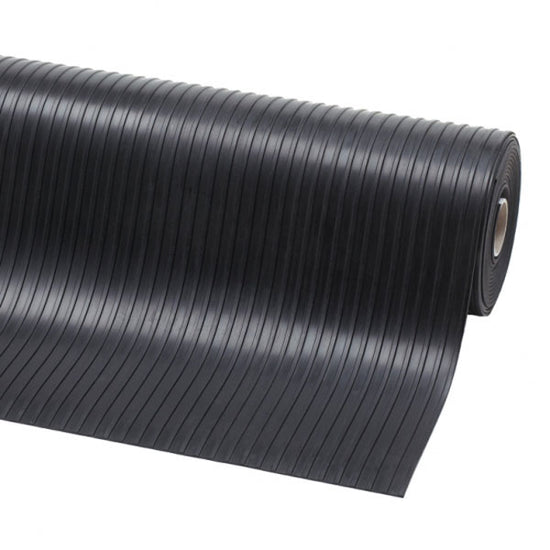
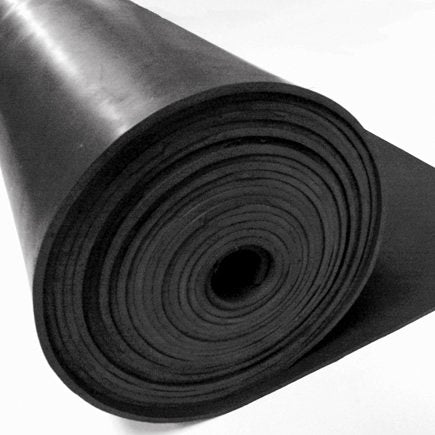
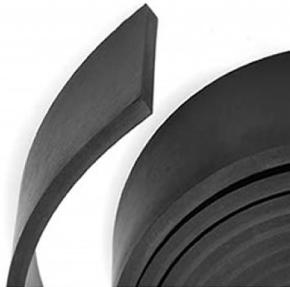
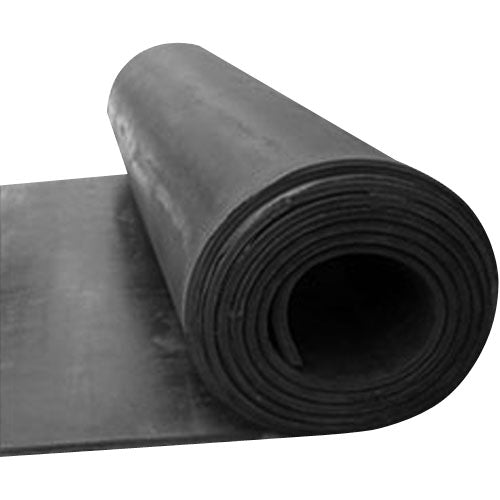
All Rubberco anti-slip decking rubber is supplied in cut lengths — specify the exact length you need and we cut from roll with no waste. Available in 50mm, 75mm, and 100mm wide anti-slip strip formats, and in full-coverage roll and tile formats. UV-stabilised EPDM compound for permanent outdoor installation that won't crack in frost or fade in summer UV. Free UK mainland delivery. Same or next-day dispatch on all standard stock. Independent PTV wet test results available for every product — providing documented evidence of slip resistance performance for insurance and liability purposes.
Anti-slip decking rubber available in cut strip widths (50mm, 75mm, 100mm) and full coverage tiles. EPDM compound for UV stability. Same or next-day dispatch. Free UK mainland delivery. Independent PTV wet slip certificates available for every product. Contact us for specification advice on any decking application.
Rubberco anti-slip decking solutions: self-adhesive rubber strips (50mm, 75mm, 100mm widths), interlocking rubber tiles for full-coverage decking, and purpose-designed stair nosing rubber for deck steps. All products UV-stabilised EPDM compound for UK outdoor conditions — frost-resistant, no cracking, 10+ year outdoor life. Free mainland UK delivery. Same or next-day dispatch from stock. Call our technical team for specification advice on any outdoor anti-slip application.
Rubberco have been supplying anti-slip rubber for outdoor surfaces to UK businesses, commercial premises, and domestic customers for over 60 years. Every product in our anti-slip decking range carries an independent PTV wet test certificate. Call our outdoor rubber team for specification advice on any anti-slip decking or outdoor rubber application — we provide no-obligation technical guidance and will tell you exactly which product is right for your situation.
Verified reviews from UK buyers
































Dispatch in 24 Hours
Satisfaction Guarantee
Secure Payments
sales@rubberco.co.uk


