


Kitchen Mats UK
1 product



















1 product
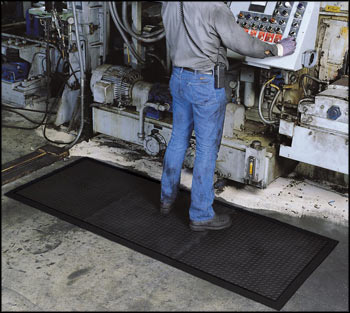
Commercial kitchens are among the most demanding flooring environments in UK industry. Floors are continuously wet from cleaning and food preparation, surfaces become greasy from cooking oils and fats, and kitchen staff stand for shifts of 8–12 hours on concrete or tile surfaces that cause measurable physical harm. The Health and Safety Executive's CAIS83 guidance specifically identifies kitchen flooring as a high-risk area for slip injuries and musculoskeletal disorders — and mandates adequate risk control measures including appropriate matting. Kitchen mats from Rubberco are engineered for exactly these conditions: anti-fatigue, oil-resistant, and anti-slip in the environments where all three properties are needed simultaneously. With free UK delivery and expert technical support, we supply commercial kitchens, food processing facilities, school catering units, and domestic kitchen environments across Britain.
Standard rubber mats — the kind sold for warehouses or gyms — are inadequate for kitchen environments for three specific reasons:
The solution is nitrile rubber kitchen matting — the same compound used in oil-resistant gloves and industrial seals. Nitrile (NBR) rubber is inherently oil and grease resistant, non-porous, fully washable, and compatible with food-safe disinfectants.
| Mat Type | Best Environment | Oil Resistance | Anti-Fatigue | Drainage |
|---|---|---|---|---|
| Nitrile Anti-Fatigue Mat | Prep stations, fryer areas, chef positions | Excellent | Excellent | Solid surface |
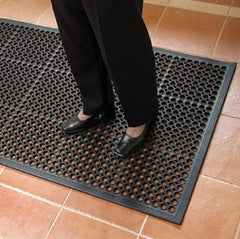
| Drainage / Open-Grid Mat | Wash stations, dishwashing areas, wet zones | Good | Moderate | Excellent |
| SBR Anti-Slip Mat | Dry kitchen areas, storage rooms | Limited | Good | Solid surface |
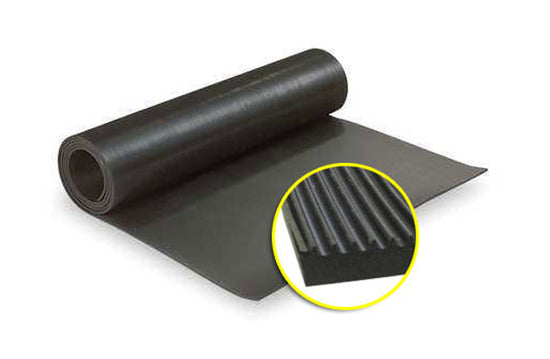
| Anti-Fatigue Runner | Long prep lines, serving counters | Good (nitrile grade) | Excellent | Solid surface |
| Interlocking Kitchen Tiles | Large kitchen floors, modular coverage | Good | Good | Drainage options available |
Professional kitchen staff in the UK typically stand for 6–10 hours per shift on concrete or ceramic tile floors. The physical toll is well-documented:
Anti-fatigue kitchen mats address this through controlled compression: the mat deflects 6–12mm underfoot, causing constant micro-adjustments in leg and core muscles. This micro-movement keeps blood circulating and reduces static muscle load — the primary mechanism of standing fatigue on hard surfaces.
Kitchen mats in UK commercial food environments must meet two distinct regulatory frameworks:
UK employers have a duty to control slip and trip risks and to reduce musculoskeletal disorder risks from standing work. The HSE's Catering Information Sheet CAIS83 specifically identifies:
Any mat used in a food preparation area must be constructed from food-safe materials. This means:
Rubberco's nitrile kitchen mats meet both HSE guidance requirements and Food Standards Agency food-safe material specifications. Contact us if you require written compliance documentation for your risk assessment or HACCP file.
Correct sizing is essential for both safety and cost-efficiency. Undersized mats leave exposed hard flooring at the edges of work positions — staff step off the mat without noticing, losing the anti-fatigue benefit and encountering the hard surface at the most dangerous moment (when already fatigued).
Kitchen mats must withstand intensive cleaning to remain safe and hygienic:
Domestic kitchen mats are a different market — smaller, lighter, often textile-backed, and designed for comfort rather than industrial durability. However, for serious home cooks and households where someone stands at the kitchen counter for extended periods (baking, large family meal preparation), commercial-grade anti-fatigue kitchen matting offers real benefits:
The trade-off is aesthetics — commercial rubber kitchen mats are functional rather than decorative. For homes where appearance is a priority, choose a textile anti-fatigue mat with a waterproof backing. For homes where you actually cook seriously, commercial rubber is the practical choice.
Supplying rubber to UK industry since the 1960s. Our team understands material science, not just product catalogues.
All kitchen mats meet HSE CAIS83 guidance requirements. Compound data sheets available for HACCP documentation.
Odd-shaped kitchen layouts? We cut mats and runners to your exact dimensions — no minimum order.
Free delivery to all mainland UK addresses. Most orders dispatched same working day.
Commercial kitchens require R11 or R12 rated anti-slip drainage mats under HSE guidance (CAIS83). The mat must have a grease-resistant surface (nitrile rubber or PVC), through-drainage to prevent liquid pooling, and anti-fatigue properties for cooks standing for extended periods. All kitchen mats must be easy to lift and clean — the area beneath must be accessible for EHO inspection. Specify mats with PTV 50+ when wet for compliance with HSE slip risk assessments.
Solid rubber kitchen mats are suitable for dry prep areas and low-moisture zones. Drainage rubber mats (open-cell link or bar pattern) are essential for areas near sinks, dishwashers, fryers, and any zone where water or grease accumulates. If liquid can pool on the walking surface, drainage matting is mandatory for slip safety. Drainage mats have the added benefit of anti-fatigue benefit in the raised bar contact zones.
Standard SBR rubber is not food approved. For direct food contact applications or areas where food debris will land on the mat, specify EPDM or nitrile rubber with food-grade compound certification — typically EC Regulation 1935/2004 or FDA 21 CFR compliant. For anti-fatigue kitchen mats where no direct food contact occurs, standard industrial rubber grades are acceptable and meet HSE CAIS83 guidance requirements.
Commercial kitchen drainage mats in busy restaurant or food production use typically require replacement every 12-24 months. Replace when: the drainage cell structure becomes permanently compressed and no longer provides drainage; the surface texture is worn smooth and slip resistance is compromised; or the mat cannot be adequately cleaned. Daily cleaning and periodic disinfection significantly extends mat lifespan.
Commercial kitchen flooring is one of the most demanding rubber mat applications. The environment combines:
| Compound | Oil Resistance | Chemical Resistance | Best For |
|---|---|---|---|
| Nitrile (NBR) | Excellent | Very Good | Commercial kitchens, food processing, engineering bays |
| SBR | Poor | Moderate | Dry domestic kitchens only — not commercial use |
| EPDM | Poor | Good (acids/alkalis) | Outdoor kitchen areas, cold environments |
| Natural Rubber | Poor | Poor | Dry domestic use only |
| Nitrile/PVC blend | Good | Very Good | Budget commercial kitchen alternative |
The choice between drainage and solid kitchen mats depends on the specific zone:
| Kitchen Zone | Recommended Mat Type | Key Reason |
|---|---|---|
| Dishwash / pot wash area | Open-grid drainage mat | Constant water — drainage essential to maintain dry standing surface |
| Fryer station | Nitrile solid anti-fatigue | Oil resistance priority; raised lip channel to contain oil spills |
| Cold prep / pastry | Solid nitrile anti-fatigue | Dry area — maximum cushioning; closed surface easier to clean |
| Service pass | Open drainage or rubber roll | High traffic; spill resilience |
| Cold room entrance | Rubber entrance mat | Dirt and moisture scraping before cold room |
| Chef's main station | Solid nitrile anti-fatigue, 15–20mm | Maximum anti-fatigue benefit for long-shift standing |
The Health and Safety Executive specifies requirements for commercial kitchen floor safety in several publications:
Rubberco's commercial kitchen mat range can be supplied with PTV test data, HACCP compliance documentation, and material safety data sheets for use in food safety management systems.
Correct sizing is critical — undersized mats are less effective anti-fatigue tools and can create trip hazards:
For domestic kitchens, the requirements differ from commercial environments:
Nitrile rubber anti-fatigue mats with oil and chemical resistance. Open-grid drainage types for wet zones; solid anti-fatigue for dry prep areas. Minimum 12–15mm thickness for fatigue benefit. HACCP-compliant materials for food-safe environments.
Our commercial kitchen mats meet HSE INDG269 anti-fatigue guidance and achieve PTV 36+ wet (BS 7976-2 low slip risk classification). Test documentation available on request.
Daily: hose off debris, clean with food-safe floor cleaner, rinse thoroughly. Weekly: deep clean with degreaser compatible with nitrile rubber. Never use petroleum-based solvents.
Single workstation minimum: 900 × 600mm. Preferred: 900 × 900mm or 900 × 1200mm. Long counters: mat roll supplied per metre in standard widths (900mm, 1200mm).
Yes — studies show 30–50% reduction in reported discomfort for standing workers. For 10–12 hour kitchen shifts on hard floors, the benefit is significant in reducing fatigue, errors, and injury risk.
Drainage/open-grid mats allow spilled liquids to fall through — essential in wet zones (dishwash, fryer areas). Solid mats provide maximum cushioning and easier cleaning in dry prep areas.
Verified reviews from UK buyers































Dispatch in 24 Hours
Satisfaction Guarantee
Secure Payments
sales@rubberco.co.uk


