














Industrial Mats
3 products
3 products
Updated June 2026
Industrial rubber mats are specification products — selected to meet specific service conditions rather than aesthetic preferences. Correct specification prevents slip accidents, reduces fatigue-related injuries, and protects flooring from damage by heavy loads, chemicals, and mechanical wear. This guide covers the key categories and selection criteria.
| Mat Type | Primary Use | Key Property | Typical Thickness |
|---|---|---|---|
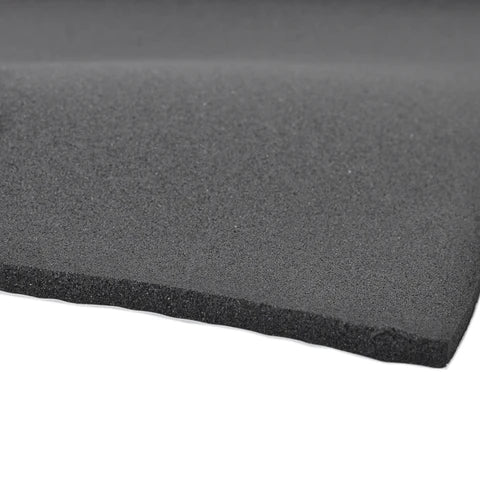
| Anti-Fatigue Mat | Standing workstations, assembly lines | Ergonomic cushioning reduces MSD risk | 12–20mm |
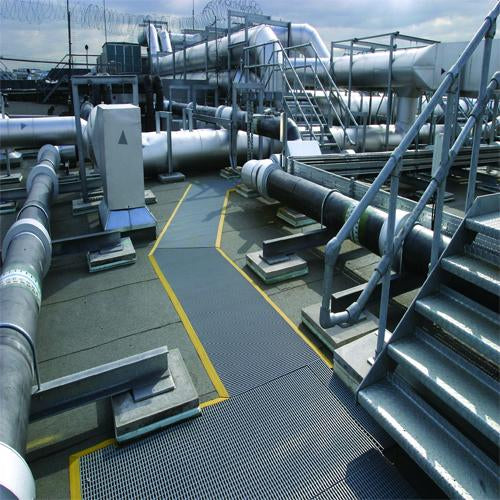
| Anti-Slip / Safety Mat | Walkways, wet areas, ramps | R11–R13 slip rating, drainage channels | 6–12mm |
| Electrical Safety Mat | Switchgear, electrical panels | IEC 61111 / BS921 insulation rating | 6–12mm |
| Chemical Resistant Mat | Chemical processing, labs | Nitrile/neoprene compound | 6–10mm |
| Welding / Spark Mat | Welding bays, hot work areas | Flame-retardant, spark-resistant | 6–10mm |
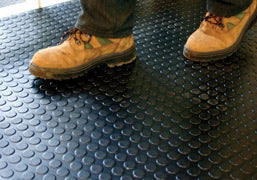
| Heavy Duty Floor Matting | Factory aisles, vehicle entry | High abrasion resistance, vehicle rated | 8–15mm |
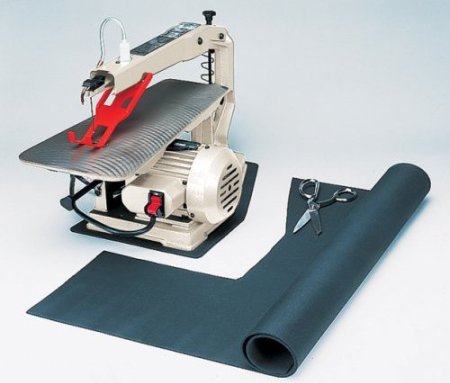
| Machinery Vibration Mat | Under CNC, compressors, pumps | Vibration isolation / anti-vibration | 25–50mm |
The Health and Safety Executive (HSE) references anti-fatigue matting in its guidance on musculoskeletal disorders (MSDs) and Standing at Work (HSG57). Key requirements:
IEC 61111 specifies six classes (Class 00 to Class 4) based on working voltage:
Class 00: up to 500V AC / 750V DC
Class 0: up to 1,000V AC / 1,500V DC
Class 1: up to 7,500V AC / 11,250V DC
Class 2: up to 17,000V AC / 25,500V DC
Class 3/4: high voltage applications
For most UK electrical panel and switchgear applications (240V–415V), Class 0 or Class 00 is the correct specification. Always consult a qualified electrician for specification in your environment.
Anti-fatigue mats: inspect monthly, replace when compression set exceeds 20% (the mat no longer rebounds to its original thickness). Electrical safety mats: annual electrical retesting, replace if any cracks, cuts, or contamination are present. Chemical resistant mats: replace if swelling, cracking, or surface degradation is observed. Anti-slip mats: replace when the slip-resistant surface profile is worn smooth. For all safety-critical mats, incorporate inspection into your maintenance schedule and document results.
Yes — Rubberco's cut-to-size service covers anti-fatigue matting rolls and most sheet mat products. Provide your required dimensions (length and width) at checkout, or contact us for L-shaped, U-shaped, or irregular footprint mats. Custom mat frames (aluminium edging strip) are also available to provide a professional finish and prevent trip hazards at mat edges. Minimum order for cut-to-size is typically 0.5m length.
Anti-fatigue matting is designed for humans to stand on — it provides ergonomic cushioning to reduce leg and lower back fatigue at standing workstations. Anti-vibration matting (machine mounts) is placed under machinery — it isolates vibration from compressors, pumps, CNC machines, and generators to protect the building structure and reduce noise. The two products have very different rubber hardness, thickness, and load specifications and are not interchangeable. Anti-vibration machine mounts are typically 25–75mm thick natural or EPDM rubber with a higher Shore hardness (60–80A).
Updated May 2026 | Free UK Delivery | Expert Technical Advice | Same-Day Dispatch
Rubberco supplies a comprehensive range of industrial mats for UK manufacturing, logistics, food production, automotive, and processing facilities. Our industrial rubber mats are engineered to withstand the demands of continuous heavy use — from forklift traffic and pallet jack access to chemical exposure and oil contamination. Every product meets or exceeds UK Workplace Regulations 1992 requirements for safe, slip-resistant flooring.
| Mat Type | Best Application | Key Feature | Rubber Compound |
|---|---|---|---|
| Anti-Fatigue Mats | Standing workstations, production lines, checkout counters | Reduces lower back, leg, and joint fatigue by 50%+ in clinical studies | SBR, Nitrile, PVC foam |
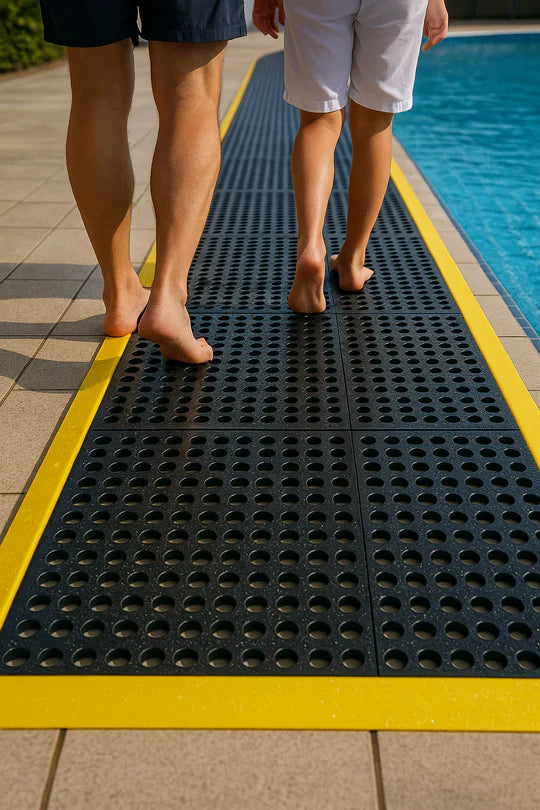
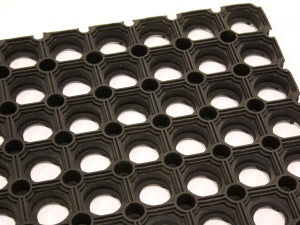
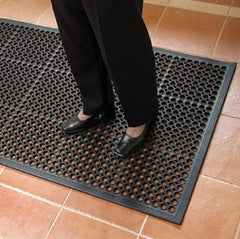
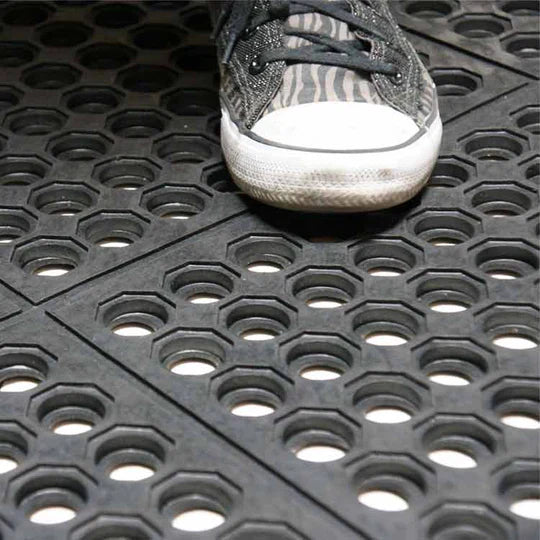
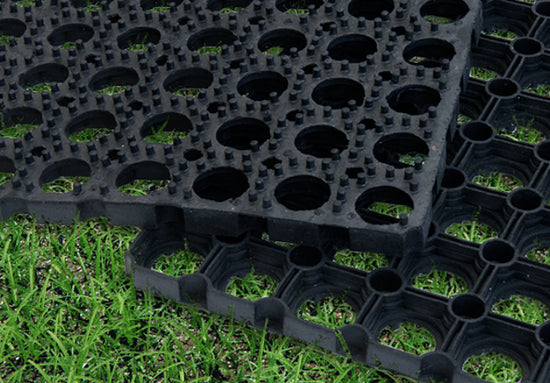
| Anti-Slip Drainage Mats | Wet process areas, food preparation, washdown bays | Open-grid design allows liquids to drain away; remains grippy when wet | Nitrile, EPDM |
| Swarf-Trapping Mats | Machining centres, CNC areas, metal fabrication | Honeycomb or bi-level surface captures metal swarf and debris safely | Nitrile |
| Oil-Resistant Rubber Mats | Automotive workshops, hydraulic areas, engine bays | Nitrile compound resists petroleum oils, hydraulic fluid, fuel | Nitrile (NBR) |
| ESD Anti-Static Mats | Electronics assembly, server rooms, PCB manufacturing | Controlled electrical resistance protects sensitive components from electrostatic discharge | Conductive rubber compound |
| Electrical Insulating Mats | Switchgear rooms, electrical substations, HV areas | BS EN 61111 certified; rated from 3kV to 36kV depending on class | Specialist insulating compound |
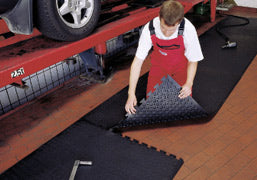
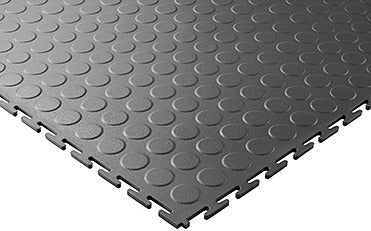
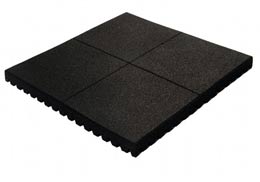
| Heavy-Duty Rubber Tiles | Factory floors, warehouse aisles, loading bays | Interlocking for easy installation; rated for forklift and pallet jack traffic | SBR, Nitrile |
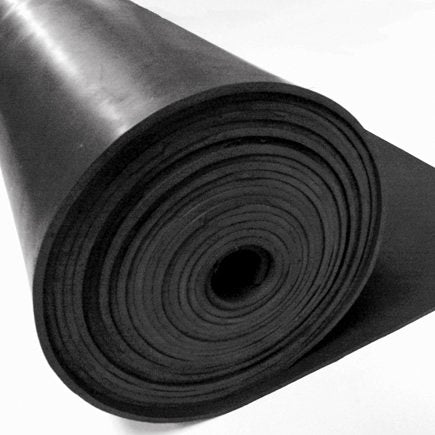
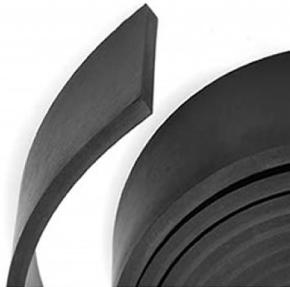
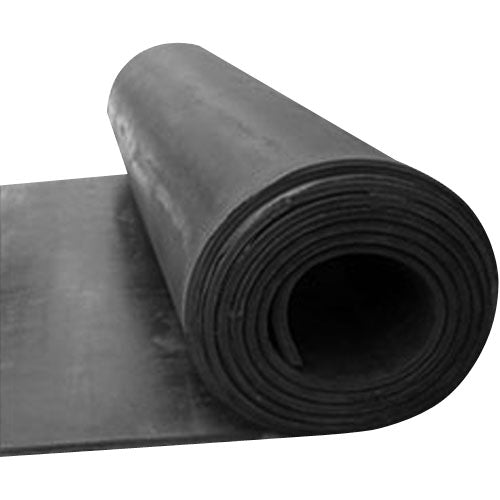
| Industrial Rubber Rolls | Large-area continuous coverage | Seamless installation across vast floor areas; cut to exact required length | SBR, Nitrile, EPDM |
| Compound | Oil Resistance | Chemical Resistance | UV/Outdoor | Temperature Range | Best Industrial Use |
|---|---|---|---|---|---|
| SBR | Poor | Moderate | Poor | -20°C to +70°C | General factory floors, warehouses, gyms |
| Nitrile (NBR) | Excellent | Good | Poor | -30°C to +100°C | Workshops, kitchens, automotive, food production |
| EPDM | Poor | Excellent (acids/alkalis) | Excellent | -40°C to +120°C | Outdoor areas, chemical plants, pharmaceutical |
| Neoprene (CR) | Moderate | Good | Good | -40°C to +100°C | Marine, refrigeration, mild chemical areas |
| Electrical Insulating | N/A | Moderate | Poor | -20°C to +50°C | Electrical substations, HV switch rooms |
| Thickness | Application | Load Rating |
|---|---|---|
| 6–8mm | Light industrial corridors, walkways, entrance areas | Pedestrian + light trolley traffic |
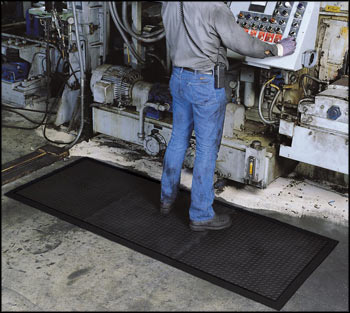
| 10–12mm | Anti-fatigue standing workstations, assembly lines, machine operator positions | Pedestrian, standing use |
| 12–15mm | Factory floors, light forklift access, heavy pedestrian traffic | Pallet trucks, occasional forklift |
| 15–22mm | Loading bays, heavy industrial, vehicle workshop floors | Full forklift traffic, HGV access areas |
Manufacturing facilities require flooring that withstands the combined demands of continuous shift work, heavy machinery, forklift access, and often chemical or fluid exposure. Our heavy-duty rubber tiles (12–15mm, interlocking) are the preferred specification for production floor areas. They can be installed quickly during shutdown periods without specialist contractors, and individual damaged tiles can be replaced without removing the entire floor.
In automotive workshops, oil and hydraulic fluid contamination of flooring is inevitable. Standard rubber will absorb these fluids and degrade within months. Nitrile rubber matting rolls or tiles are the mandatory specification for any area where oil or fuel contact is possible. Our nitrile workshop mats resist petroleum-based lubricants, hydraulic fluid, diesel, and most cutting fluids used in engineering machining operations.
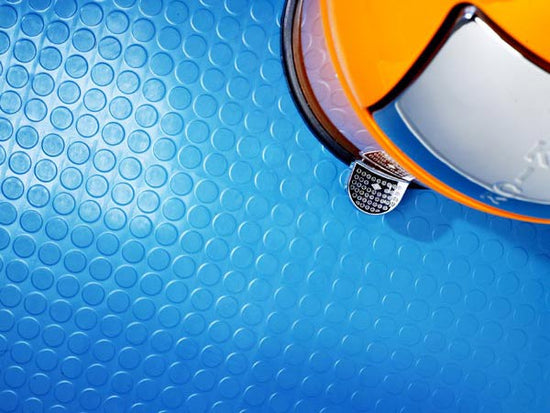
UK food production facilities must comply with Food Safety (General Food Hygiene) Regulations. Flooring must be non-porous, easy to clean, and resistant to the cleaning chemicals used in washdown. Our food-grade nitrile drainage mats are the recommended solution: open-grid construction allows liquid and debris to fall through the mat surface, keeping the working area dry and reducing slip risk. Available in HACCP-compatible colours (white, blue, and food-grade grey).
Electrostatic discharge (ESD) is one of the primary causes of component failure and warranty returns in electronics manufacturing. Our ESD anti-static mats dissipate electrostatic charges through a controlled resistance pathway (10⁶–10⁹ ohms) to an earthing point, preventing damaging discharge to sensitive PCBs and components. Compliant with IEC 61340-4-1 standards for ESD workstations.
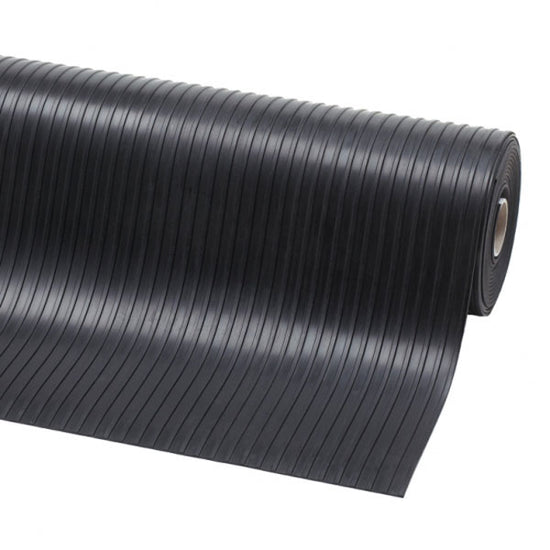
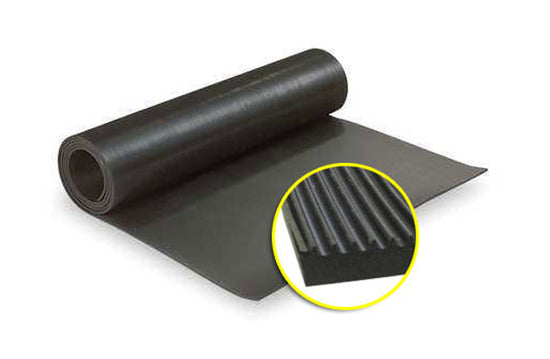
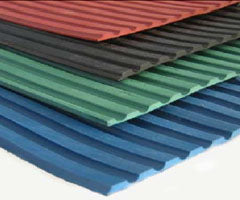
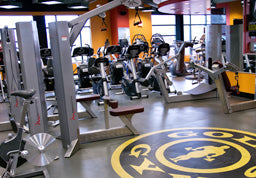
Distribution centres and warehouses present specific flooring challenges: vast areas of concrete floor, heavy pallet jack and forklift traffic, and workers on their feet for full 8–12 hour shifts. Our warehouse rubber matting solutions address all three: anti-fatigue rubber tiles at picking workstations reduce worker fatigue and sick days; heavy-duty ribbed rubber rolls in aisles provide anti-slip grip in all weather conditions; and 15mm+ tiles in loading bays withstand continuous forklift traffic without permanent deformation.
Industrial mats include: anti-fatigue mats (for standing workstations), anti-slip drainage mats (for wet process areas), swarf-trapping mats (for machining areas), oil-resistant nitrile mats (for workshops and kitchens), ESD anti-static mats (for electronics manufacturing), electrical insulating mats (BS EN 61111 certified), and heavy-duty rubber tiles or rolls for factory floors, warehouses, and loading bays.
SBR is a cost-effective general-purpose compound suitable for most dry industrial environments. Nitrile (NBR) rubber is specifically formulated to resist oils, fuels, hydraulic fluids, and greases. SBR will degrade when exposed to petroleum-based oils; nitrile will not. For automotive workshops, commercial kitchens, and any area where oil contamination is a risk, always specify nitrile.
Workplace flooring must comply with the Workplace Health, Safety and Welfare Regulations 1992. Anti-slip industrial matting rated R10 or above supports compliance. For electrical environments, matting must be certified to BS EN 61111. Our industrial mat range is independently tested and certified to relevant UK and EU standards.
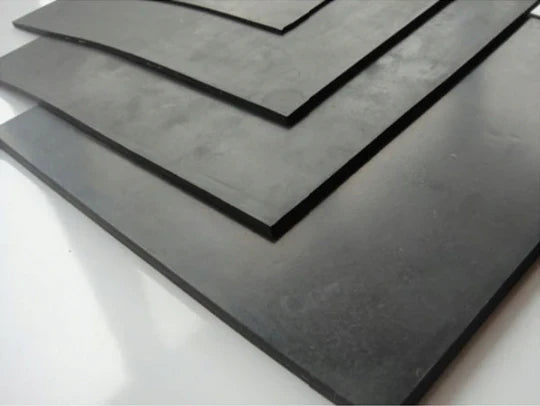
For standing workstations, 10–12mm anti-fatigue mats provide adequate comfort. For factory floors with pedestrian traffic, 6–10mm rubber rolls or tiles are standard. For forklift and pallet truck access areas, specify 12–15mm minimum. For heavy loading bays and vehicle access, 15–22mm thick industrial rubber is required.
Yes — for food production and commercial kitchen environments, specify food-grade nitrile or EPDM rubber matting. These compounds are resistant to animal fats, cooking oils, and cleaning chemicals. White and blue colour options are available for food-safe environments, and all our food-grade matting is non-toxic and HACCP compatible.
Verified reviews from UK buyers































Dispatch in 24 Hours
Satisfaction Guarantee
Secure Payments
sales@rubberco.co.uk


