


















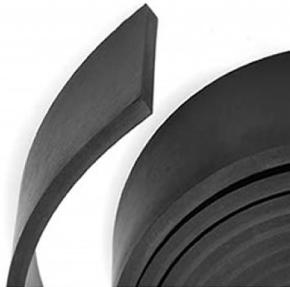


Anti Vibration Matting
1 product
1 product
Updated June 2026
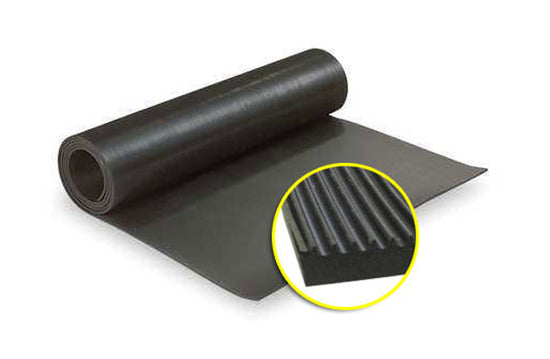
Anti-vibration rubber matting isolates machinery, equipment and structures from vibration and impact shock — reducing noise, protecting equipment from fatigue damage, and improving workplace comfort. Used in industrial facilities, commercial gyms, domestic appliance installations, and building construction throughout the UK.
Rubber has natural viscoelastic properties — it absorbs mechanical energy by converting it into negligible amounts of heat, rather than transmitting it onward as vibration. Anti-vibration matting placed under vibrating machinery interrupts the transmission path between the vibration source and the surrounding structure. The result:
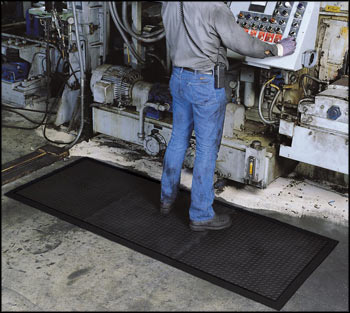
CNC machines, compressors, generators, pumps and presses all produce significant vibration during operation. Anti-vibration mats under these machines prevent vibration transmitting to the building structure — reducing noise complaints from adjacent areas and protecting sensitive measuring equipment and electronics nearby.
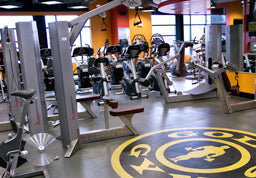
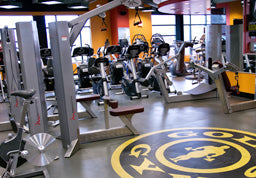
Treadmills, rowing machines, ellipticals and weight-drop areas all generate significant impact vibration. Anti-vibration gym matting absorbs impact, reduces noise transmitted to floors below (critical in multi-storey buildings), and protects both the equipment and the floor surface. See our gym flooring range for dedicated gym applications.
Washing machines and tumble dryers 'walk' across hard floors during spin cycles without anti-vibration isolation. Anti-vibration matting under domestic appliances prevents movement, dramatically reduces noise transmitted through the floor, and extends appliance life by reducing structural fatigue in mountings.
Rooftop HVAC units, boiler rooms and plantrooms require anti-vibration isolation to prevent noise transmission into occupied building spaces. Purpose-designed anti-vibration pads and matting under plant equipment form the first line of vibration isolation before specialist spring mountings are required.
Anti-vibration matting is used as a resilient layer under concrete screeds, under raised access floors, and beneath heavy masonry to reduce impact sound transmission between building floors.
| Grade | Compound | Thickness | Load Capacity | Best Application |
|---|---|---|---|---|
| Standard | Recycled SBR rubber | 6–10mm | Up to 5 tonnes/m² | Domestic appliances, light equipment |
| Medium Duty | Virgin SBR rubber | 10–15mm | Up to 10 tonnes/m² | Gym equipment, medium machinery |
| Heavy Duty | Natural rubber / NR blend | 15–25mm | Up to 20 tonnes/m² | Industrial machinery, compressors, generators |
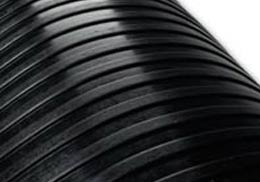
| Specialist Ribbed | SBR with ribbed profile | 10–25mm | Up to 15 tonnes/m² | Broad machinery footprints; enhanced air-gap isolation |
| Cork-Rubber Composite | Cork and rubber blend | 10–50mm | Up to 5 tonnes/m² | Building/acoustic floor isolation; maximum noise reduction |
Selecting the correct grade involves three key considerations:
If in doubt about specification, contact our technical team with your machine details — we'll help you select the correct grade for reliable vibration isolation.
Thickness depends on the vibration frequency and machine weight. For domestic appliances (washing machines, tumble dryers), 6–10mm is sufficient. For gym equipment (treadmills, ellipticals), 10–15mm provides effective isolation. For industrial machinery (compressors, presses, CNC machines), 15–25mm heavy-duty matting is the standard recommendation. Thicker matting provides better isolation at lower frequencies but may affect stability for tall machines.
Yes — anti-vibration matting significantly reduces structure-borne noise by breaking the transmission path between vibrating equipment and the surrounding structure. It is particularly effective at reducing the low-frequency thudding and rumbling associated with machinery during operation. For airborne noise (sound waves through air rather than structure), acoustic panels or enclosures are required in addition to anti-vibration matting. See our acoustic matting range.
Yes — this is one of the most common domestic applications. A 6–10mm anti-vibration mat under a washing machine reduces walking during spin cycles, dramatically cuts noise transmitted through the floor, and reduces wear on the machine's suspension components. Size the mat to match the machine's footprint — typically 60cm × 60cm for a standard UK washing machine.
They overlap but are not identical. Anti-vibration matting primarily targets structure-borne vibration isolation — preventing mechanical energy from transmitting through floors and walls from machinery. Acoustic/sound deadening matting focuses on impact sound (footfall, dropped objects) and can also provide thermal insulation. Some products serve both purposes, but specialist applications (recording studios, precision manufacturing) require specific products optimised for their particular noise/vibration challenge.
For most applications: clean the floor, cut the matting to the machine's footprint (or slightly larger for stability), place under the machine feet or under the full base, and ensure level seating. No adhesive is required for most applications — the weight of the machine holds the mat in place. For mobile machines that might shift, adhesive can be applied to bond the mat to the floor. Avoid folding or compressing the mat — flat installation ensures even load distribution and maximum isolation efficiency.
No — rubber anti-vibration matting will not damage concrete, tile, or timber floors. The mat sits between the machine and the floor, distributing load and absorbing vibration without marking or adhering to the subfloor. Black rubber can leave marks on very light-coloured tiles under heavy sustained load — a sheet of non-marking rubber or a protective liner can be used where this is a concern.
Shop Related Products
Browse our full anti-vibration and acoustic matting ranges — industrial, commercial, and domestic grades. Free UK delivery on qualifying orders.
View Rubber Matting Range →The natural frequency of the anti-vibration system must be significantly lower than the disturbing frequency of the machine. As a practical rule: for machines running at 1,000 rpm (16.7 Hz), a natural frequency of 3-5 Hz is required, achieved with a pad deflection of 10-25mm under load. For most industrial machinery (compressors, pumps, generators), 25mm-50mm anti-vibration mounts or 10mm-20mm rubber pads are the appropriate starting point. For precise isolation, calculate the static deflection required using the machine weight and target natural frequency.
Anti-vibration matting is designed to isolate machinery from the floor structure — it is specified by its natural frequency, load-bearing capacity, and vibration isolation efficiency. Anti-fatigue matting is designed to cushion workers standing for extended periods — it is specified by its ergonomic properties and slip resistance. The two products look similar but are not interchangeable. Anti-fatigue mats placed under machinery will not provide adequate vibration isolation; anti-vibration pads under workers provide no ergonomic benefit.
Yes. Anti-vibration rubber pads under domestic appliances (washing machines, dishwashers, tumble dryers) reduce the noise and vibration transmitted through the floor, particularly on upper floors with timber joists. Standard 5mm-10mm anti-vibration pads under each corner of the appliance are sufficient for domestic use. The pads reduce the high-frequency vibration that causes the floor and adjacent walls to resonate and amplify appliance noise. Commercial laundry machines require heavier purpose-designed isolators.
Anti-vibration rubber matting load capacity varies significantly by product. Standard 10mm SBR anti-vibration mat typically handles 0.5-2.0 kg/cm² (50-200 kPa) static load. Heavy-duty industrial anti-vibration pads can handle 5-20 kg/cm². Always specify the load per unit area rather than total machine weight — a 500kg machine on a 500×500mm pad exerts 2 kg/cm², well within standard mat capacity. A 500kg machine concentrated on a 100×100mm contact area exerts 50 kg/cm², which would require specialist heavy-duty isolation mounts.
The UK market for industrial anti-vibration matting has seen increased demand in 2025–2026, driven by the growth in UK manufacturing, EV battery plant construction, and the expanding data centre sector. All these applications require precision vibration isolation to protect sensitive processes and equipment. Our anti-vibration matting range is available from UK stock with next-working-day dispatch on standard grades.
| Specification | Anti-Vibration Matting (Pad/Sheet) | Anti-Vibration Mounts (Isolators) |
|---|---|---|
| Form factor | Sheet, roll, or cut pad under full machine base | Individual rubber-metal spring isolators at machine feet |
| Load capacity | Up to 20 tonnes/m² (standard); higher for specialist grades | Engineered to specific machine weight and resonant frequency |
| Isolation efficiency | Moderate — suitable for most commercial/industrial applications | High — required for precision equipment and high-vibration machinery |
| Installation | Simple — cut to size and place under machine | More complex — each mount must be correctly selected and torqued |
| Cost | Low–Medium | Medium–High |
| Best for | Compressors, gym equipment, domestic appliances, generators | CNC machines, printing presses, precision manufacturing |
Before committing to a full installation, validate performance with a simple test:
If measured reduction is below 30%, the matting grade is insufficient for the load/frequency combination — consult our technical team for alternative specification.
The Control of Noise at Work Regulations 2005 require employers to reduce worker noise exposure by technical means before relying on personal protective equipment. Anti-vibration matting under machinery is a recognised technical control measure, reducing structure-borne noise propagation. Vibration exposure is separately regulated by the Control of Vibration at Work Regulations 2005 (CVWR), which sets exposure action values (EAV) and exposure limit values (ELV) for hand-arm and whole-body vibration. For workers on vibrating platforms or floors, anti-vibration flooring forming part of a whole-body vibration control programme.
Anti-vibration matting requires minimal maintenance, but periodic inspection maintains performance and safety:
Browse our full range of rubber matting UK products, or read our complete anti-vibration matting guide for specification support.
Verified reviews from UK buyers
































Dispatch in 24 Hours
Satisfaction Guarantee
Secure Payments
sales@rubberco.co.uk


