












Acoustic Tiles
4 products
4 products
Updated May 2026 — Range and pricing verified against current UK stock.
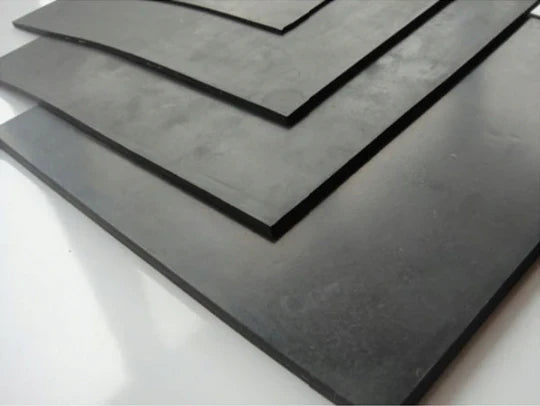
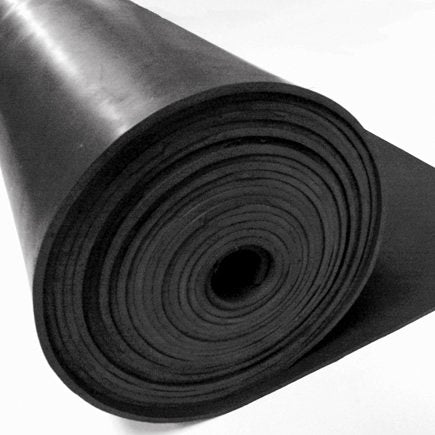
Our acoustic rubber tiles are specifically engineered to absorb and diffuse sound, reducing reverberation, echo, and impact noise transmission in commercial, industrial, and residential settings. Unlike standard rubber flooring, acoustic-grade tiles are formulated to deliver measurable sound reduction performance — making them the professional specification for recording studios, home cinemas, gymnasiums on upper floors, offices, and industrial spaces where noise control is a requirement, not just a preference.
Standard hard flooring — concrete, tile, vinyl — reflects sound waves, creating echo and noise amplification. Acoustic rubber tiles work differently: their dense, cellular rubber structure absorbs sound energy and converts it to minimal heat, dramatically reducing reverberation time and impact noise. Key performance benefits include:
| Thickness | Impact Noise Reduction | Best Application | Approx Price/m² |
|---|---|---|---|
| 6-8mm | 10-15dB reduction | Acoustic underlay, light domestic use | £12–18 |
| 10-15mm | 15-20dB reduction | Commercial office flooring, gym studio | £18–28 |
| 20-25mm | 20-25dB reduction | Heavy gym use, industrial plant rooms | £28–42 |
Acoustic rubber tiles reduce sound transmission to adjacent rooms, improving both recording quality and preventing noise complaints. For home cinema use, 10–15mm tiles beneath a floating floor deliver significant bass impact reduction.
First-floor gym studios require acoustic flooring to prevent impact noise from weights, jumping, and heavy foot traffic from transmitting to the floor below. BS 8233 recommends impact sound levels below 45dB for residential settings — acoustic rubber tiles help achieve this.
Compressors, pumps, and generators mounted on acoustic rubber pads transmit dramatically less vibration to the building structure. Anti-vibration acoustic mounts using 20–25mm rubber significantly reduce structure-borne noise.
Open-plan offices with hard flooring suffer from echo and speech intelligibility problems. Acoustic rubber tiles beneath floor finishes or as direct-lay flooring reduce reverberation and improve working comfort.
Yes — acoustic rubber tiles deliver measurable impact noise reduction of 10–25dB depending on thickness and density. This is equivalent to reducing perceived noise by half to two-thirds. They are particularly effective at reducing impact noise (footsteps, dropped objects, machinery vibration) rather than airborne sound (voices, music).
Standard rubber tiles provide excellent durability and anti-slip performance but are not specifically engineered for sound absorption. Acoustic rubber tiles use a higher-density, closed-cell or specially formulated rubber compound with optimised thickness and density to maximise impact noise reduction. They typically cost 20–40% more than equivalent standard rubber tiles.
Yes — acoustic rubber tiles are frequently used as underlay beneath laminate, hardwood, or LVT flooring. When used this way, the rubber absorbs impact noise before it transmits through the floor structure. 6–10mm rubber acoustic underlay is the most common specification for residential floating floor installations.
10mm acoustic rubber tiles typically achieve 15–20dB impact noise reduction when tested to ISO 717-2 standards. In practice, this represents a clearly audible improvement — neighbours or occupants in rooms below will notice significantly reduced footfall noise. For heavier impact sources (gym equipment, machinery), 20mm+ is recommended.
Yes — acoustic rubber tiles are the standard specification for upper-floor home gyms. Minimum recommended thickness is 15mm for general gym use and 20mm+ for free weights and Olympic lifting. Combine with a floating plywood sub-floor for maximum isolation performance. This combination can reduce impact noise by 20–30dB — enough to prevent complaints in most residential buildings.
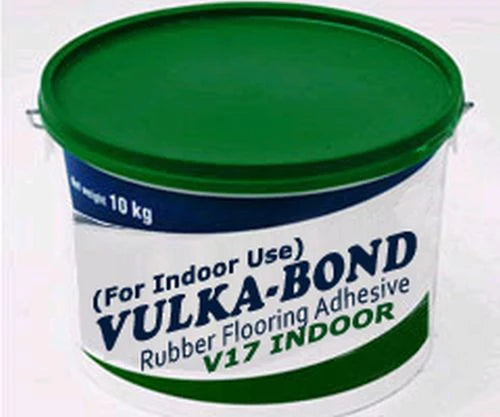
Acoustic rubber tiles can be loose-laid (no adhesive) for floating floor applications, or bonded with contact adhesive for permanent installations. For underlay applications, loose-laying is standard. For direct-use acoustic flooring in gyms or industrial spaces, adhesive bonding provides edge stability and prevents tile migration under heavy loads.
Related Collections at Rubberco
Free UK delivery. Contact us for project specifications.
UK demand for acoustic rubber tiles is being driven by the growth in home studios, podcast recording spaces, upper-floor home gyms, and multi-occupancy building renovations. Here is what buyers most commonly need to know before specifying:
| Thickness | Impact Sound Reduction | Typical Lw Value | Best Application |
|---|---|---|---|
| 8mm | Moderate (~12–15dB) | Lw 17–22 | Light foot traffic, upper-floor offices |
| 12mm | Good (~18–22dB) | Lw 20–25 | Home studios, residential upper floors |
| 15mm | High (~22–28dB) | Lw 25–30 | Home gyms, dance studios, music rooms |
| 20mm+ | Very high (~28–35dB) | Lw 30–40 | Commercial gyms, industrial vibration isolation |
Lw values are approximate and depend on subfloor construction. Full acoustic performance testing data available on request for specification projects.
Approved Document E (Resistance to the Passage of Sound) sets minimum performance standards for impact sound transmission between floors in new-build and conversion projects in England and Wales:
For projects requiring Approved Document E compliance documentation, acoustic tiles should be tested as part of a complete floor system. Contact Rubberco for system specification support.
Acoustic rubber tiles primarily address impact sound (footsteps, dropped objects, machinery vibration). They offer limited reduction of airborne sound transmission through floors. For airborne sound isolation, you need mass — a floating floor system with a concrete screed or heavy board over the rubber layer significantly improves airborne sound performance. If you need to stop music or voices from travelling between floors, a combined system (rubber isolators + heavy floating floor + ceiling treatment) is required rather than rubber tiles alone.
Yes — this is one of the strongest applications for acoustic rubber tiles and pads. Treadmills, washing machines, HVAC equipment, and manufacturing machinery all transmit vibration through the building structure. A correctly specified acoustic rubber isolator or anti-vibration mat under the equipment breaks the vibration transmission path. For machinery, seek specific anti-vibration mats rated to the equipment's frequency range rather than general acoustic floor tiles.
Yes, as a floor treatment they reduce impact noise from the studio reaching rooms below, and from other parts of the building affecting the studio through floor transmission. For professional recording quality, supplement rubber floor tiles with wall and ceiling acoustic treatment (panels, bass traps) as these have greater impact on the airborne sound environment inside the recording space.
Standard rubber tiles (SBR gym tiles, for example) provide some incidental acoustic benefit due to rubber's natural vibration-damping properties. Acoustic-grade rubber tiles are specifically engineered with a higher void content, different durometer (hardness), or layered construction to maximise sound absorption and impact isolation. Always check the manufacturer's acoustic performance data (Lw or IIC value) rather than assuming all rubber tiles perform equally for acoustic applications.
Acoustic rubber tiles provide impact noise reduction of 15-40dB depending on tile thickness and density. Standard 6mm acoustic tiles achieve approximately 15-20dB impact noise reduction. Thicker 10mm-15mm high-density tiles achieve 25-40dB. To put this in perspective, 10dB is perceived as approximately half the loudness, so 20dB represents a very significant reduction in perceived noise. Airborne sound transmission (voices, music) is not significantly reduced by floor tiles — acoustic ceiling and wall treatments are required for airborne sound.
Rubber acoustic floor tiles are appropriate for home studios as a floor treatment to prevent impact noise from studio use disturbing adjacent rooms. They do not provide significant airborne sound isolation on their own — studio isolation requires a 'room within a room' approach with decoupled walls and ceiling. For home studio use, combine 10mm-15mm acoustic rubber floor tiles with isolation platforms under heavy equipment (speakers, drum kits) for best results.
Acoustic rubber tiles are primarily mass-based — they use density and mass to block and absorb impact noise transmission through the floor structure. Acoustic foam panels are primarily absorption-based — they reduce sound reflections and reverberation within a room. They serve different purposes: rubber floor tiles prevent noise leaving through the floor; acoustic foam improves the acoustic quality within the room. Both may be used together in a recording studio or music room.
Yes. Rubber acoustic tiles up to 8mm thick are generally compatible with underfloor heating systems. The thermal resistance (TOG value) of rubber tiles is low — 6mm rubber tiles have a TOG of approximately 0.05, lower than most carpets. Do not exceed 28°C floor surface temperature beneath rubber tiles. For wet underfloor heating systems, EPDM rubber is preferable to SBR for long-term compatibility with sustained heat exposure.
Verified reviews from UK buyers
































Dispatch in 24 Hours
Satisfaction Guarantee
Secure Payments
sales@rubberco.co.uk


