










Gym Flooring UK | Rubber Tiles, Rolls & Mats | Rubberco
15 products
15 products
Supplying rubber gym flooring across the UK since the 1960s. Trusted by professional gyms, schools, and home gym owners.
6mm through to 20mm+ in stock. The right thickness for every training environment — from home gym to elite CrossFit facility.
All commercial gym flooring carries R11 slip resistance certification — the highest standard for gym environments under British and European standards.
Not sure what you need? Call our flooring specialists on 01744 520 110 — Mon to Fri, 9am–5pm. We'll spec the right flooring for your exact project.
Every gym flooring order ships free to mainland UK. Same-day dispatch on in-stock items ordered before 2pm.
Commercial gym tiles backed by a 10-year performance warranty. Buy with confidence knowing your flooring investment is protected.
⭐ Trusted by 5,000+ UK home gyms & commercial facilities | Free UK delivery | 10-year commercial warranty | Expert support Mon–Fri
Not all gym flooring materials are equal. Here is how rubber compares to the alternatives across the metrics that matter in real gym environments:
| Performance Factor | ✅ Rubber | ⚠️ EVA Foam | ❌ Interlocking Foam Tiles |
|---|---|---|---|
| Lifespan | 15–25 years | 2–4 years | 6–12 months (heavy use) |
| Shock Absorption | Up to 90% | 40–60% | Under 20% |
| Heavy Barbell/Weight Safe | ✅ Yes | ❌ Dents permanently | ❌ Destroys in weeks |
| Noise Reduction | Up to 46dB | 15–20dB | Minimal |
| Slip Resistance | R11 Rated | Moderate | Slippery when wet |
| Commercial BS EN Rating | ✅ Yes | ❌ Not rated | ❌ Not rated |
| 10-Year Cost (replace as needed) | Buy once — lowest cost | Replace 3× — higher cost | Replace 10× — highest cost |
The verdict: For any serious training environment — home gym, commercial facility, CrossFit box, or school sports hall — rubber is the only material that delivers the impact absorption, longevity, and slip resistance required. EVA and foam tiles have their place in low-impact yoga and stretching areas, but are not fit for purpose in weightlifting environments.
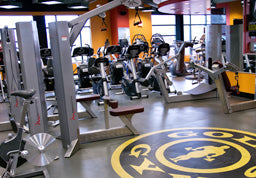
Gym flooring UK — professionally engineered, heavy-duty rubber flooring for home gyms, commercial fitness centres, CrossFit boxes and everything in between. At Rubberco, we've been supplying high-quality rubber gym flooring across the UK for over a decade. Whether you're fitting out a one-car garage gym or a 2,000m² commercial facility, we have the thickness, format and finish you need — with free UK delivery on every order.
Browse our full range of rubber gym tiles, gym flooring rolls and gym mats below, or scroll down for our complete buyer's guide covering thickness, types, installation and everything else you need to know before you buy.
Gym flooring is a specialist category of resilient flooring engineered to absorb impact, protect subfloors and provide a stable, non-slip surface under heavy training conditions. Unlike general-purpose flooring, gym flooring must withstand repeated dynamic loading — dropped weights, jumping, lateral movement and rolling equipment — without cracking, compressing or becoming a slip hazard.
The most widely used material for gym flooring is vulcanised rubber, typically SBR (Styrene Butadiene Rubber) for economy-grade options and EPDM (Ethylene Propylene Diene Monomer) for premium coloured surfaces. Rubber gym flooring offers unmatched durability, excellent grip, noise and vibration dampening, and genuine longevity — properly installed rubber gym flooring can last 20+ years under heavy commercial use.
Why does it matter? Three reasons:
Not all gym flooring is the same. Here's a breakdown of the main formats and when each is the right choice:
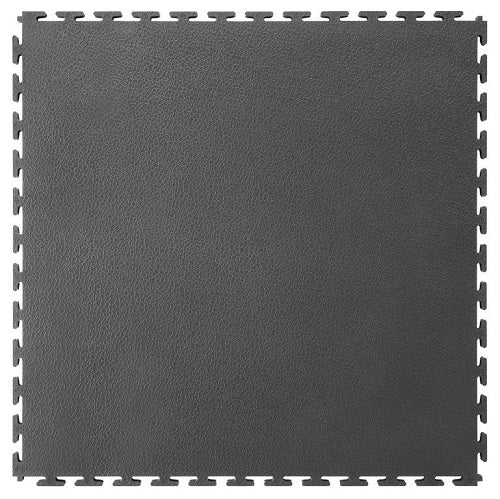
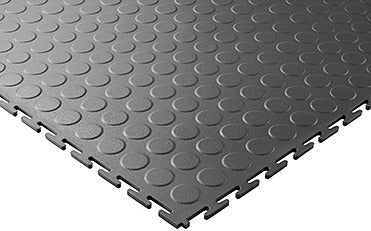
The most popular choice for home gyms and fitness studios. Rubber gym tiles typically interlock using a jigsaw-edge or straight-edge system, allowing you to cover any area without cutting every piece to size. Key advantages include easy installation without adhesive, the ability to lift and re-lay if you move, and the option to mix thicknesses in different zones. Available from 10mm for general use up to 20mm+ for heavy lifting areas. Our interlocking gym tiles are manufactured from high-density SBR rubber with EPDM surface chips for colour and UV stability.
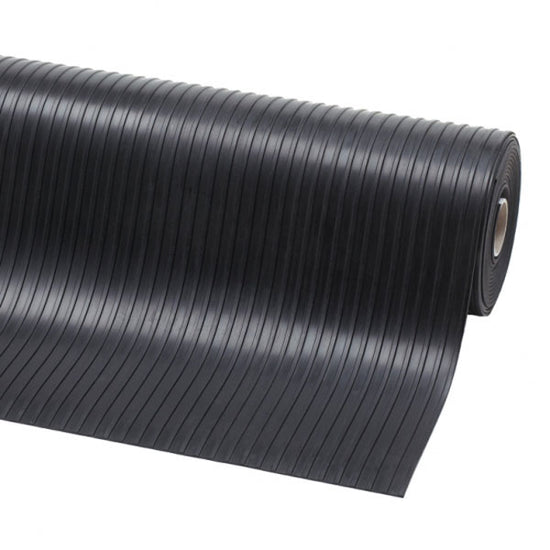
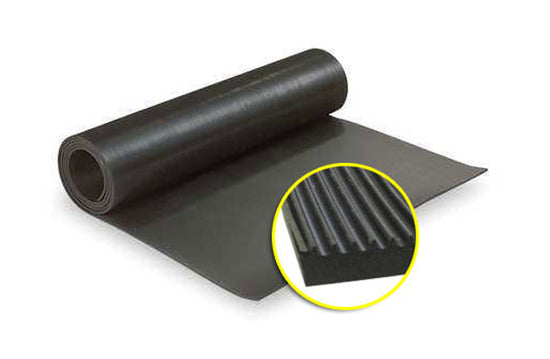
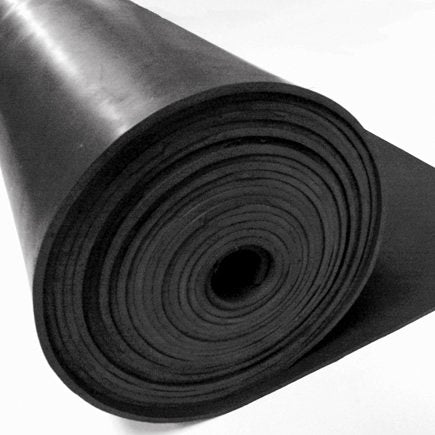
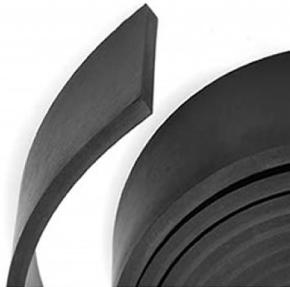
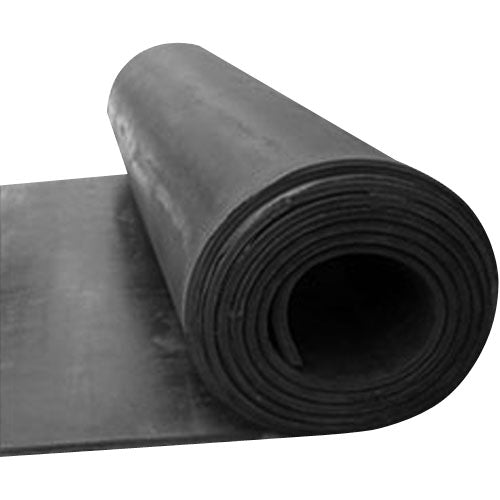
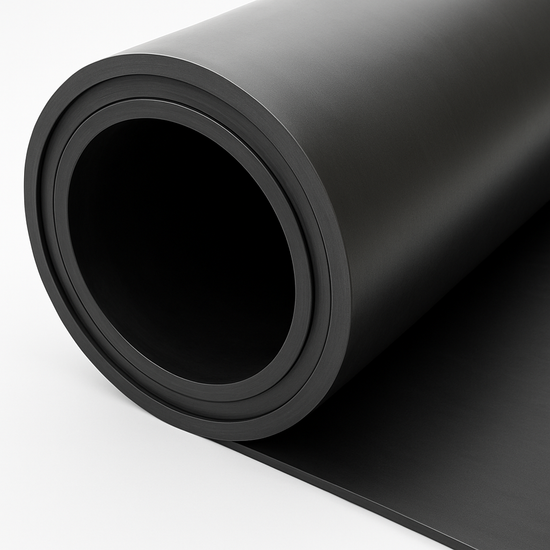
Rubber gym flooring rolls provide seamless coverage across large areas, eliminating tile joints that can catch equipment feet or accumulate dirt. Rolls are particularly suited to commercial gyms, sports halls and functional training spaces where a clean, continuous surface is required. Available in standard widths of 1m to 1.5m, our gym flooring rolls can be cut to any length. Typically 6mm–10mm in standard commercial weights, up to 15mm for heavy-use zones. See our rubber matting rolls range for full specifications.
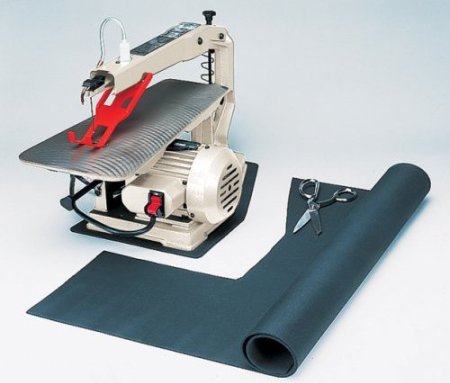
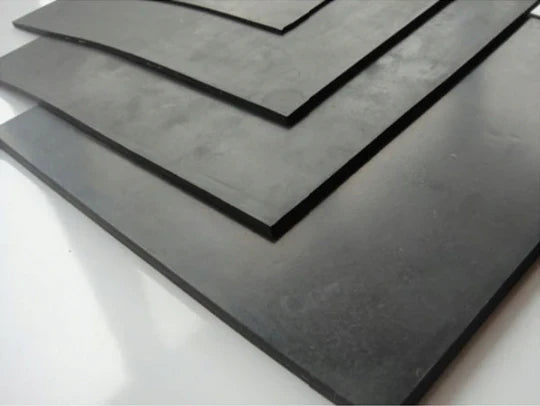
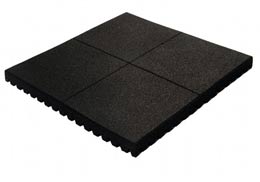
Individual gym mats are ideal for protecting specific equipment positions — under treadmills, beneath power racks, or as a deadlift platform. They can also be used as a cost-effective first layer while you build out a larger gym. Our heavy-duty rubber gym mats come in standard sizes and can be ordered in bespoke dimensions for unusual equipment footprints.
EVA foam interlocking tiles are lighter, softer underfoot and more comfortable for yoga, Pilates and stretching areas. Not recommended for weightlifting or heavy equipment — the foam will compress and degrade under repeated heavy loads. Best used in low-impact zones of a larger gym, or in dedicated yoga/mobility studios.
Commercial-grade vinyl gym flooring offers a clean, hygienic surface suited to fitness studios, spin rooms and dance floors. Easier to clean than rubber but offers less impact absorption. Not suitable for free weights areas without additional rubber underlayment.
Choosing the right thickness is one of the most important decisions in any gym flooring project. Too thin and you risk equipment damage and inadequate shock absorption; unnecessarily thick and you're spending more than you need to. Use this guide to match thickness to your specific training requirements:
| Thickness | Best For | Max Weight Handling |
|---|---|---|
| 6mm | Cardio machines, yoga, Pilates, light weights, spinning bikes | Up to 20kg dropped / equipment loads |
| 10mm | Home gym general use, HIIT, dumbbells, kettlebells, rowing machines | Up to 50kg |
| 15mm | Strength training, barbells, moderate dumbbell drops, functional training | Up to 100kg |
| 17mm | Heavy powerlifting, CrossFit, Olympic weightlifting, sled pushing | Up to 150kg |
| 20mm+ | Commercial gyms, dedicated deadlift platforms, regular bar drops from height | Up to 200kg+ |
Pro tip: For mixed-use home gyms, most customers choose 15mm throughout and add a dedicated 20mm deadlift platform if they lift heavy. For commercial gyms, zone your flooring — lighter in cardio areas, heavier in free weights and functional training zones.
Setting up a home gym is one of the best fitness investments you can make — and gym flooring is the foundation that makes it work properly. Here's what to consider before you buy:
Garage gyms are typically built on concrete subfloors, which is actually ideal for rubber gym flooring. Concrete is stable, level (usually) and doesn't flex — making it the best possible base. Key considerations for garage gym flooring:
Concrete is the ideal subfloor. It's rigid, doesn't flex and allows rubber tiles to sit perfectly flat without needing adhesive. For wooden subfloors (e.g., first-floor home gym rooms), you need to account for flex — use a minimum 15mm rubber, and consider using a thin foam underlayer first to compensate for any bounce. Do not place power racks or very heavy equipment on wooden floors without consulting a structural engineer about load distribution.
Measure your space in metres (length × width = total m²). Add 10% for cuts and waste — particularly important with tiles in rooms that aren't perfectly square. For a typical 1-car garage (3m × 5m = 15m²), allow for 16.5m² of material. For a 2-car garage (5m × 5.5m = 27.5m²), order 30m².
Budget gym flooring (6mm–10mm interlocking tiles) typically runs from £8–£15/m². Mid-range 15mm tiles cost £15–£25/m². Premium 20mm commercial-grade tiles and rolls start from £25/m². For most home gyms, the 10mm–15mm range delivers the best value — professional durability without the cost premium of commercial-grade products.
Commercial gym flooring must meet a higher standard — it's used by more people, more often, and must comply with relevant UK regulations. Here's what gym owners and facility managers need to know:
Under the Equality Act 2010 (which replaced the DDA), public facilities including commercial gyms must provide equal access for disabled users. This means slip resistance ratings of at least R10 (wet) in wet areas, appropriate tactile surfaces at level changes, and ensuring heavy rubber flooring doesn't create trip hazards at doorways. Our commercial gym tiles meet R11 slip resistance as standard.
For commercial premises, check the fire rating of your gym flooring. Our commercial rubber gym flooring achieves Cfl-s1 to Bfl-s1 fire classifications (European standard), making it suitable for most commercial gym environments. Always check current Building Regulations Part B requirements for your specific premises type.
Commercial gym flooring is used by hundreds of people per day and must be easy to clean. Rubber requires only a pH-neutral cleaner and a commercial mop or scrubber-dryer. Avoid solvent-based cleaners, petroleum products or extremely alkaline detergents — these will degrade the rubber surface over time. Our commercial tiles are specifically formulated to resist sweat, cleaning chemicals and UV exposure.
When specifying gym flooring for commercial use, look for: high Shore A hardness (60+), minimum 10-year warranty, REACH compliance for chemical safety, and independently tested slip resistance. All Rubberco commercial gym flooring meets these standards and comes with full documentation for planning and compliance purposes.
CrossFit and functional fitness gyms (also called boxes) have unique flooring requirements. The combination of Olympic lifting, bar drops, sled pushes, rope climbs and box jumps creates more extreme demands than a traditional gym environment:
Olympic lifting platforms and drop zones need minimum 20mm rubber, often with a 30mm platform built over the top. This is typically a central zone within a larger 15mm–17mm general floor. Don't try to use the same single thickness throughout — you'll either over-specify for cardio areas or under-specify for lifting zones.
If barbells are being dropped from overhead (Olympic lifting, CrossFit), the flooring must be able to absorb the impact repeatedly without cracking or lifting at the edges. Look for tiles with bevelled edges and interlocking pins rather than flat-edge tiles — they're significantly more stable under repeated shock loading.
Sled push tracks need smooth, low-friction rubber — typically 10mm–15mm of flat-surface rubber roll rather than profiled tiles. The sled's feet will catch on tile edges and profiled surfaces, making pushing significantly harder and potentially damaging the tiles.
Many CrossFit boxes and functional fitness gyms combine rubber gym flooring with artificial turf sections — rubber for lifting, turf for sleds and carries. We recommend 15mm rubber throughout and inlaying turf sections rather than using different thickness zones, which creates level differences that are both a trip hazard and aesthetically poor.
Accurate measurement is essential before ordering gym flooring. Follow these steps:
Example calculation: Room 6m × 4m = 24m². Add 10% = 26.4m². Round up to 27m². Order 27m² of tiles or appropriate roll quantities.
Not sure? Our expert team can help you calculate the right quantity — just get in touch with your room dimensions and we'll do the maths for you.
Most rubber gym flooring can be installed as a DIY project in a day. Here's what you need:
For home gyms and light commercial use, loose lay (no adhesive) is perfectly adequate — the weight of the rubber holds it in place and tiles can be lifted and adjusted. For heavy commercial use, high-traffic areas, or where equipment is bolted to the floor, use a commercial-grade contact adhesive on clean, primed concrete.
| Property | Rubber | EVA Foam | Vinyl |
|---|---|---|---|
| Impact absorption | ★★★★★ Excellent | ★★★★☆ Good | ★★☆☆☆ Limited |
| Durability | ★★★★★ 15–20+ years | ★★★☆☆ 3–5 years | ★★★★☆ 8–12 years |
| Weight capacity | ★★★★★ Up to 200kg+ | ★★☆☆☆ Light use only | ★★★☆☆ Moderate |
| Noise reduction | ★★★★★ Excellent | ★★★★☆ Good | ★★☆☆☆ Poor |
| Slip resistance | ★★★★★ Excellent | ★★★★☆ Good | ★★★☆☆ Varies |
| Ease of cleaning | ★★★★☆ Easy | ★★★☆☆ Moderate | ★★★★★ Very easy |
| Cost per m² | £8–£30 | £5–£15 | £10–£40 |
| Best for | All gym types, all weights | Yoga, light cardio only | Studio, spin rooms |
Our recommendation: Rubber gym flooring is the right choice for 95% of gym applications. It's the only material that handles heavy weights, high traffic and repeated impacts without degrading. For specific areas like yoga studios or stretching zones, EVA foam tiles can complement your rubber gym floor.
For a home gym with general use (dumbbells to 30kg, cardio machines), 10mm is the minimum. For barbell training, choose 15mm. For heavy powerlifting or CrossFit with bar drops, use 20mm. Commercial gyms should zone their flooring — 15mm in cardio areas, 20mm in free weights zones.
For garage gyms on concrete, 15mm interlocking rubber tiles are the best all-round choice. They install without adhesive, cover concrete perfectly, and handle most home gym activities including barbell training. If you're doing serious Olympic lifting, add a 20mm platform in your lifting zone.
New rubber gym flooring does have a distinctive rubber smell, which comes from the vulcanisation process. This is completely harmless and dissipates within 2–4 weeks with adequate ventilation. EPDM-topped tiles have a significantly lighter odour than pure SBR rubber. The smell does not indicate any off-gassing of harmful chemicals.
Yes. Rubber gym tiles up to 15mm can be cut with a sharp utility knife along a straight edge. Thicker tiles (17mm–20mm) are best cut with a jigsaw fitted with a fine-tooth blade. Rubber rolls can be cut to any length with a sharp utility knife. Rubberco can also supply pre-cut tiles or rolls to your exact dimensions — contact us for a quote.
Regular cleaning is simple: sweep or vacuum to remove debris, then mop with a solution of warm water and a pH-neutral cleaner. For commercial gyms, a scrubber-dryer with a neutral detergent is ideal. Avoid bleach, petrol-based solvents and strongly alkaline cleaners — these degrade the rubber surface over time. Spot-clean spills immediately, particularly oils and protein-based products.
For Olympic lifting and bar drops, you need minimum 20mm rubber, ideally with a dedicated 30mm+ platform beneath the barbell landing zone. Use high-density rubber tiles with interlocking edges rather than flat tiles — they handle repeated shock far better. Some Olympic lifters use a plywood platform layered over 20mm rubber for additional rigidity and shock absorption.
Quality rubber gym flooring lasts 15–25 years in home gym environments and 10–15 years in heavy commercial use. The main factors affecting longevity are: initial rubber quality, thickness (thicker lasts longer under the same conditions), installation quality, and cleaning/maintenance regime. Rubberco rubber gym tiles are manufactured to commercial standards and carry a 10-year performance guarantee.
Yes, with conditions. Rubber gym flooring can be used over underfloor heating systems, but the maximum operating temperature should not exceed 27°C at the floor surface, and the flooring should be loose-laid rather than glued where possible to allow for thermal expansion. Check the specific product datasheet for temperature ratings before installing over UFH. We recommend contacting our team for guidance on UFH installations.
Looking for related products? Browse our rubber matting, rubber floor tiles and anti-fatigue mats collections for complementary products for your gym or fitness space.
The gym flooring market has never been more complex. Where a decade ago the choice was simply "rubber tiles or foam", serious gym operators and home gym builders now face a bewildering selection of compounds, thicknesses, profiles, and installation systems — many marketed with technical-sounding claims that bear little relation to how the product actually performs under a 200kg deadlift or the daily grinding of commercial CrossFit traffic.
Rubberco has been supplying rubber flooring to professional gyms, military fitness facilities, professional sports clubs, and home gym builders for over 60 years. This guide reflects that accumulated operational knowledge.
Olympic lifting presents the most demanding gym flooring requirement: a barbell loaded to 130–220kg dropped from shoulder height or overhead creates a point impact force significantly exceeding the barbell's static weight. The energy must be absorbed within the mat rather than transmitted to the concrete subfloor (which causes cracking) or reflected back to the plates (which causes barbell bounce and potential injury).
Specification: 30mm–40mm platform rubber on a 20mm base layer. The two-layer system creates a graduated energy absorption profile — the upper layer deforms under impact, the lower layer resists the subsequent rebound. Platform-grade rubber must achieve a rebound resilience of less than 40% under ASTM D945 test conditions — this limits plate bounce while absorbing impact energy.
Powerlifting creates sustained compressive loads rather than impact loads. A competition deadlifter can exert over 300kg through a bar in contact with the floor for several seconds. The flooring must resist this sustained load without permanent compression — 'compression set', where the rubber remains flattened after the load is removed, indicates a failed specification. For powerlifting, 20mm–25mm solid SBR tiles with a compression set of less than 25% (tested under ASTM D395) provide a stable, non-compressing platform for both lifting and equipment placement.
CrossFit facilities face the most varied loading conditions of any gym: barbell drops, box jumps, rope climbs, sled pushes, and continuous high-frequency cardiovascular training on a single floor surface. The compound must be sweat-resistant, easy to clean, and maintain grip in the high-humidity environment a busy CrossFit session creates. EPDM-topped SBR tiles in 20mm provide the balance of durability, grip, and cleanability that CrossFit environments require. The EPDM top layer resists sweat degradation and maintains grip; the SBR base provides impact absorption at a more economical price point than full EPDM tiles.
A commercial gym with 200+ members sees its flooring subjected to 12+ hours of daily traffic across all training styles. Durability and cleanability take priority over maximum performance. 15mm–20mm recycled SBR interlocking tiles in the main training area, with 25mm+ platform rubber in Olympic lifting zones, provides the most cost-effective long-term specification. Budget approximately 5–10% of the annual flooring cost for maintenance and tile replacement in a busy commercial gym.
For home gym installations, budget and aesthetics play a larger role alongside performance. 15mm interlocking SBR tiles cover 90% of home gym requirements at the most economical price point. Upgrade to 20mm if Olympic lifting is planned. If the home gym is in a first-floor room or flat, add a 5mm acoustic underlay beneath the rubber tiles to reduce impact noise transmission to the rooms below — a consistent complaint in flatted properties with home gym installations.
| Property | SBR (Recycled) | EPDM | Vulcanised Natural Rubber |
|---|---|---|---|
| Source material | Recycled car tyres | Synthetic virgin rubber | Natural latex, vulcanised |
| Colour options | Black, black/colour fleck | Full colour range | Black standard |
| Odour (new) | Moderate (dissipates in 2–4 weeks) | Minimal | Minimal |
| Durability (commercial) | Excellent | Excellent | Good |
| Impact absorption | Good (thick grades) | Good | Excellent |
| Price (relative) | Lowest | Highest | Medium |
| Sustainability | Best (recycled content) | Moderate | Good (renewable) |
Fixed equipment with high point loads needs flooring that distributes that load without permanent compression. The four base plates of a standard squat rack exert concentrated loads — each plate typically contacts the floor at high stress. 20mm rubber tiles beneath the rack prevent floor damage and provide the level, stable base that a loaded squat rack requires. Ensure the tiles beneath fixed equipment are bonded or weighted — a rack that sits partly on a tile edge will rock as the tile shifts.
Treadmills generate vibration in the 10–50Hz frequency range. Without isolation, this vibration transmits through the floor structure and is audible as a rhythmic thumping in adjacent rooms. 8mm–10mm rubber tiles beneath cardio equipment provide adequate vibration isolation at an economical price. For first-floor or apartment installations, pair 10mm rubber tiles with a 5mm foam-rubber acoustic mat beneath for maximum isolation.
Dropped dumbbells and kettlebells create smaller, more frequent impacts than barbells. 15mm rubber tiles handle this load pattern comfortably — the impact is distributed across a larger area than a barbell, reducing peak stress. The primary failure mechanism from dumbbell drops is surface denting — ensure tiles have a hardness of Shore A 60+ to resist this. Softer gym mats (foam-rubber composites) show permanent denting under regular dumbbell drops within 12–18 months of use.
A quick reference for estimating coverage requirements:
| Area Type | Min. Size | Recommended Spec |
|---|---|---|
| Single squat rack with barbell zone | 3m × 3m | 20mm tiles, 9m² |
| Olympic platform | 2.44m × 2.44m | 30mm platform rubber, 6m² |
| Dumbbell rack + free weight area | 4m × 4m | 15–20mm tiles, 16m² |
| 4 treadmills in line | 8m × 2m | 8–10mm tiles, 16m² |
| Home garage gym (double garage) | 5.5m × 5.5m | 15mm tiles for 90% of space + 25mm in lifting zone, ~30m² |
The UK gym flooring market has several established players. Here's an honest assessment of where Rubberco stands:
The UK gym flooring market has several established players. Here's an honest technical comparison of what differentiates Rubberco from specialist gym flooring suppliers:
Most gym flooring specialists stock only standard SBR recycled rubber and basic EPDM colour chips. Rubberco stocks the full compound range — SBR, virgin EPDM, nitrile, and specialist grades — which matters when you need oil-resistant flooring in a combined gym/workshop, EPDM for an outdoor gym installation, or electrical safety matting for a gym located near an electrical panel. Specialists only offer the gym-specific portion of the range.
Standard gym tiles are 500×500mm or 1000×1000mm — which doesn't fit every space. Rubberco cuts rolls to any width and length, allowing precise coverage of non-standard gym dimensions without waste. For a gym room that is 4.7m wide, standard tiles leave an awkward border — Rubberco's cut service provides tiles or rolls at exactly 4.7m width.
For commercial gym fitouts requiring insurance documentation, planning permission, or compliance with BS EN 14904 (sports floor performance standards), Rubberco provides independent test certificates and compound specification documentation. This is rarely available from consumer-facing gym flooring websites.
Unheated garages in the UK regularly reach −5°C to −10°C in winter. Standard rubber gym tiles become stiffer in cold conditions but remain functional — the cushioning properties are temporarily reduced. For garage gyms that will be used in very cold conditions, allow tiles to warm to room temperature before intense training sessions. EPDM rubber maintains better low-temperature flexibility than SBR if this is a primary concern.
Impact noise from home gym training in first-floor rooms or flats is a consistent source of neighbour complaints and tenancy disputes. The combination of rubber gym tiles plus acoustic underlay provides approximately 25–40dB impact noise reduction. Specify: 5mm acoustic SBR rubber underlay as a base layer, 15mm interlocking SBR gym tiles over the underlay. This is significantly more effective than rubber tiles alone (which provide minimal acoustic isolation without a decoupling layer).
A busy commercial gym with 200+ members sees flooring subjected to 12+ hours of daily traffic. Durability expectations by zone:
| Zone | Typical Lifespan (commercial) | Replacement Trigger |
|---|---|---|
| Cardio area (15mm tiles) | 7–10 years | Surface compression, edge lifting |
| Free weights (20mm tiles) | 5–8 years in heavy use | Denting from dumbbell drops |
| Olympic platform (30–40mm) | 10–15 years | Delamination, cracking |
| CrossFit main floor (20mm) | 4–7 years | Surface wear, interlocking failure |
Rubber gym flooring in commercial environments requires regular cleaning to prevent hygiene issues (bacterial growth in rubber micro-pores) and to maintain slip resistance (sweat contamination reduces PTV). Recommended cleaning regime:
Products to avoid: bleach (causes surface bleaching and increases porosity in SBR), petroleum-based solvents (degrade rubber), and very hot water (above 50°C accelerates rubber degradation in regular use).
No single thickness suits all training styles. Use this definitive guide:
| Training Type | Minimum | Recommended | Why |
|---|---|---|---|
| Yoga / stretching | 6mm | 8mm | Cushion joints, stable base |
| Cardio / running machines | 8mm | 10mm | Vibration isolation, floor protection |
| HIIT / plyometrics | 12mm | 15mm | Impact absorption, floor protection |
| Free weights (dumbbells to 40kg) | 15mm | 17mm | Floor protection from drops |
| Barbell work (squat, deadlift) | 17mm | 20mm | Stable platform, floor protection |
| Olympic lifting (from floor) | 20mm | 25mm | Impact absorption, platform stability |
| Olympic lifting (drops from overhead) | 30mm platform | 40mm platform | Rated for impact from overhead drops |
Myth: Thicker is always better. Not true for cardio zones — 20mm under a treadmill adds unnecessary mass, costs more, and creates a step height at the tile edge without adding meaningful performance benefit. Match thickness to training type.
Myth: All rubber tiles smell the same. New SBR recycled rubber tiles have a stronger initial odour than virgin EPDM or natural rubber. The odour dissipates in 2–4 weeks with adequate ventilation. It is not harmful, but can be unpleasant in enclosed spaces. If odour is a concern (especially for indoor spaces with limited ventilation), specify EPDM or virgin rubber grade tiles.
Myth: You need to glue down gym tiles. For home gyms and most commercial installations with interlocking tiles, adhesive is not necessary. The combined weight and interlocking border connections provide sufficient stability. Only glue perimeter tiles and tiles beneath permanently fixed equipment where lifting would require moving the equipment first.
Myth: Foam tiles are adequate for weightlifting. EVA foam tiles compress permanently under repeated barbell or dumbbell contact. They lose their cushioning benefit within 12–18 months of regular use. For any training involving weights above 20kg, rubber tiles are the only specification that maintains performance over a reasonable service life.
Opening a commercial gym in the UK requires flooring that satisfies multiple stakeholders simultaneously: it must meet the planning authority's requirement for safe, compliant surfacing; satisfy your insurance provider's requirements for public liability cover; appeal aesthetically to prospective members; and survive the physical demands of 12+ hours of daily commercial use across multiple years. This section addresses the full commercial gym specification decision.
Commercial gym insurance policies in the UK increasingly specify flooring requirements as conditions of cover. Common provisions include:
Rubberco provides compliance documentation packs for commercial gym insurers — including independent slip test certificates and compound specifications that satisfy the majority of UK gym insurance requirements. Contact our commercial team with your specific insurance provider's requirements.
Commercial gym changes of use typically require planning permission and Building Regulations approval. Part M (Accessibility) of the Building Regulations requires that all areas of a commercial premises accessible to the public meet minimum slip resistance standards under Approved Document M. This aligns with the PTV 36+ specification that quality rubber gym flooring achieves — but it must be documented. Retain the manufacturer's slip resistance data sheet for Building Regulations compliance evidence.
Gym flooring is an investment with a measurable return. The analysis across UK gym fitouts:
| Spec | Cost per m² | Service Life | Annual Cost per m² |
|---|---|---|---|
| Economy foam tiles (8mm) | £8–£12 | 1–2 years commercial | £5–£10 |
| Standard SBR rubber (15mm) | £18–£28 | 6–8 years commercial | £2.50–£4.50 |
| Premium SBR rubber (20mm) | £28–£40 | 8–12 years commercial | £2.50–£5.00 |
| Platform rubber (30–40mm) | £45–£80 | 12–15 years | £3.50–£6.00 |
The economy foam tile appears cheapest upfront but costs the same or more per year once replacement frequency is factored in. Premium rubber has the lowest total cost of ownership in commercial use — which is why every professional gym, military base, and elite sports facility specifies solid rubber rather than foam.
Based on thousands of UK gym fitouts, these are the most common room configurations:
| Zone | Thickness | Compound | Format | Notes |
|---|---|---|---|---|
| Yoga / stretch | 6–8mm | SBR | Roll or tile | Smooth or coin profile |
| Cardio machines | 8–10mm | SBR | Interlocking or roll | Add acoustic underlay for flats |
| HIIT / class area | 12–15mm | SBR or EPDM | Interlocking tile | High traffic, regular cleaning |
| Free weights / dumbbells | 15–17mm | SBR | Interlocking tile | Compression set <25% |
| Barbell / squat | 20–25mm | SBR | Interlocking tile | Stable, no flex |
| Olympic platform | 30–40mm | SBR (platform grade) | Platform rubber | Rebound resilience <40% |
Installation checklist: ✅ Subfloor level ±3mm ✅ Moisture <75% RH ✅ Temperature 15–25°C ✅ Allow 24h acclimatisation ✅ Stagger tile joints ✅ Install border strips ✅ Wait 24h before heavy use
Rubberco advantage: We cut rolls to exact width and length — no waste from standard tile sizes. Same-day dispatch on standard stock. Independent test certificates available. Technical specification advice from our team who have been specifying gym rubber for over 60 years.
Verified reviews from UK buyers
































Dispatch in 24 Hours
Satisfaction Guarantee
Secure Payments
sales@rubberco.co.uk


