










Entrance Matting UK | Commercial Door Mats & Entrance Systems | Free Delivery
21 products
21 products
Up to 80% of the dirt in a building enters through its front door. Research by the British Institute of Cleaning Science (BICSc) shows that effective entrance matting UK is the single most cost-efficient cleaning investment any commercial premises can make — every £1 spent on entrance matting saves £10–£15 in subsequent cleaning and floor maintenance costs. At Rubberco, we supply professional-grade commercial entrance matting, rubber door mats, coir matting and barrier systems for offices, retail, industrial and public sector buildings, all with free UK delivery on qualifying orders.
The dirt and moisture problem at building entrances is more significant than most facilities managers appreciate. Studies consistently show:
The UK's wet climate makes entrance matting especially critical. Unlike drier climates where footwear picks up primarily dry dust, UK winters bring consistent tracked mud, moisture, and road grit that aggressively abrades interior flooring without proper matting protection.
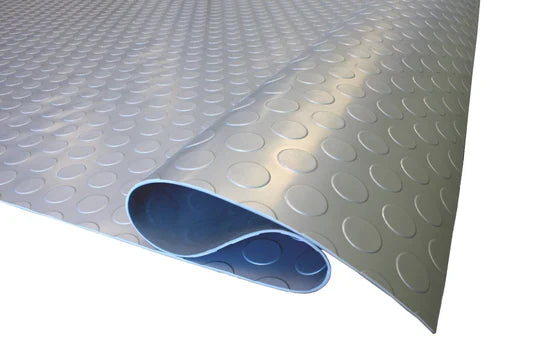
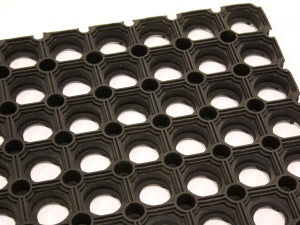
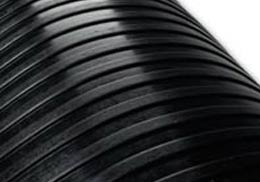
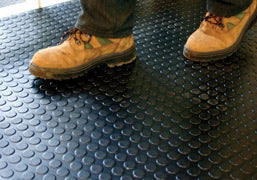
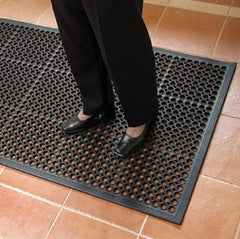
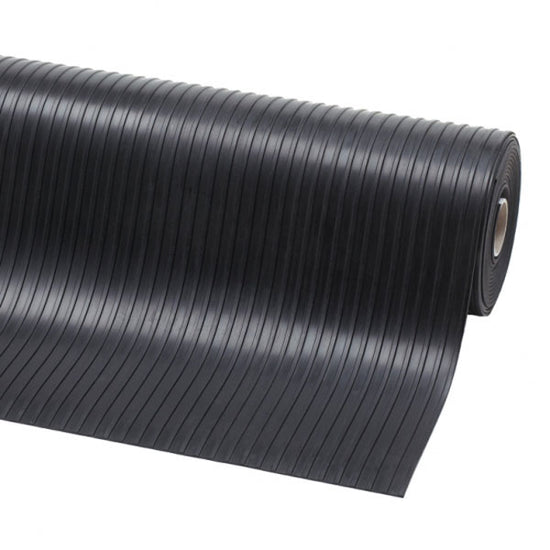
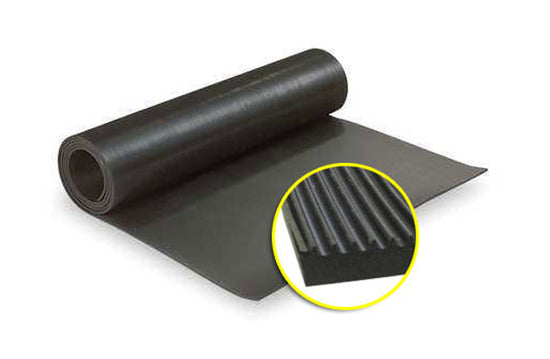
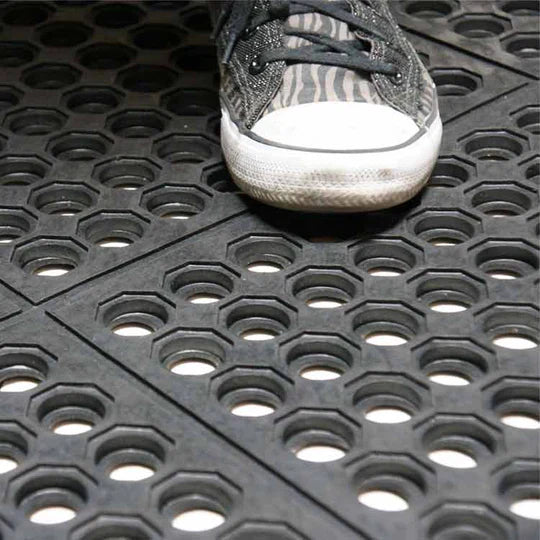
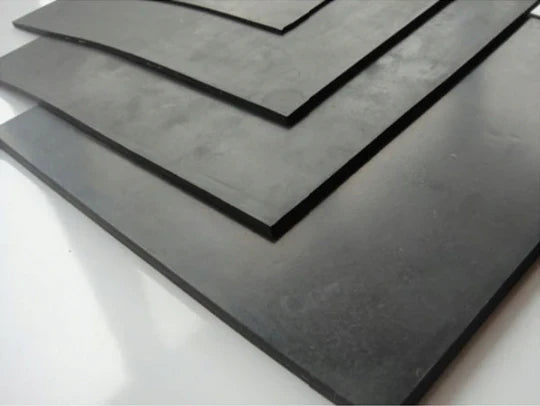
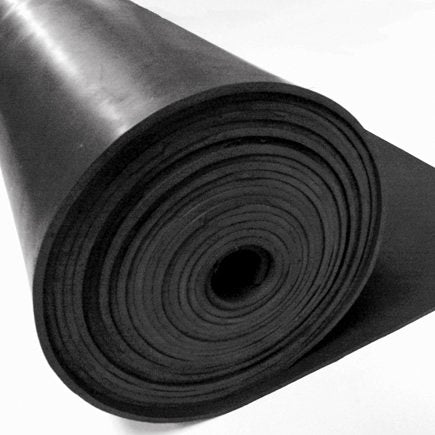
The most durable choice for commercial and industrial entrance positions. Vulcanised rubber withstands UV, frost, rain, salt, and heavy wheeled traffic (trolleys, pallet trucks) without degrading. Available in ribbed, waffle, studded, and brush-pattern surfaces. Key advantages:
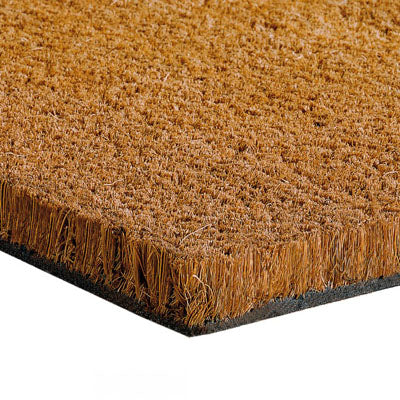
Traditional coconut husk fibre — the best scraping matting available for removing heavy mud and debris from footwear before it reaches interior floors. Stiff, coarse coir fibres act like thousands of tiny brushes. Used in the Stage 1 exterior position in a professional two-stage entrance system. Key properties:
A textile upper surface (polypropylene, nylon, or polyester loop pile) bonded to a rubber or vinyl base. Used in the Stage 2 internal lobby position following the exterior scraper mat. The pile structure traps fine dry soil and absorbs residual moisture before it reaches interior flooring. Key features:
Dense polypropylene or nylon bristles set into a heavy rubber or aluminium frame. The bristling action removes dried mud and debris that other mat types leave on the sole. Suited for outdoor positions, agricultural settings, industrial plants, and any environment where heavy footwear tracks in solid debris.
Heavy-duty aluminium-framed entrance matting for high-footfall commercial and public sector buildings. The rigid aluminium frame sits flush in a recessed mat well, completely eliminating trip hazards. Infills available in rubber, carpet tiles, vinyl, or coir. Maximum durability — the aluminium framework lasts the life of the building; infill panels are simply replaced when worn.
The recommended specification for any commercial entrance with more than 100 visitors per day is a two-stage system:
| Stage | Position | Mat Type | Primary Function |
|---|---|---|---|
| Stage 1 | External / semi-sheltered | Rubber scraper or heavy coir | Remove mud, heavy debris, and excess moisture from soles |
| Stage 2 | Internal lobby / vestibule | Barrier / textile mat | Capture fine particles and absorb residual moisture |
Research shows a two-stage system captures up to 80% of all door-entry soiling. A single mat, however good, typically captures 40–60%. For high-footfall retail, hospitality, or office environments, the two-stage specification is the cost-effective standard.
| Factor | Residential / Domestic | Commercial / Industrial |
|---|---|---|
| Daily foot traffic | 10–50 passes | 100–10,000+ passes |
| Mat construction | Light backing, standard pile | Heavy rubber base, deep pile or rigid scraper |
| Expected service life | 1–3 years | 5–20 years |
| Typical sizes | 600×900mm standard | Custom cut, 900mm–3,000mm wide |
| Installation | Lay flat, self-weighted | Mat well, adhesive or heavy-frame system |
| Cleaning requirement | Weekly or as needed | Daily vacuum, weekly deep clean |
Professional appearance matters at business entrances. Barrier matting with clean loop pile and rubber backing gives the practical performance of a commercial mat with the aesthetic finish appropriate for corporate environments. Logo mats — printed with your company name or brand — create a strong first impression while protecting floors.
High footfall combined with the need for clean, attractive-looking entrances makes two-stage systems the standard for UK retail. High-capacity barrier mats at the internal position need to be changed/rotated twice daily in very high-footfall retail environments (supermarkets, department stores) to maintain absorption performance.
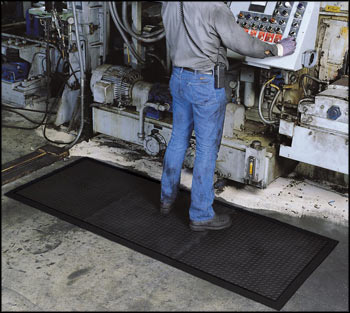
Industrial premises need rubber entrance mats that can handle forklift traffic, steel-capped boots, oily and contaminated soles, and outdoor/sheltered positions. Heavy-duty rubber studded or ribbed mats in 10–12mm thickness are the standard specification. Brush mats at machinery access points remove solid debris.
Infection control and food hygiene compliance make entrance matting critical in hospitals, medical centres, and food production facilities. Antimicrobial-treated mats, combined with entry protocols (overshoe dispensers, shoe sanitisation trays), are common. Easy-sanitise rubber mats that can be removed and autoclave-cleaned are specified in clean room environments.
School entrances see very high footfall concentrated in short periods (start/end of day). Durable rubber mats in heavy-coir or ribbed rubber at exterior positions, paired with barrier mats in lobbies, are the typical specification. Bright colour options suit children's environments.
Wet entrances are the most common site for slip and fall accidents in UK workplaces. The Health and Safety at Work Act 1974 and associated regulations place a duty of care on employers and building owners to control slip risks. Entrance matting is one of the primary risk controls. Key HSE guidelines:
See HSE guidance document HSG155 — Slips and Trips for full employer requirements regarding entrance areas.
| Frequency | Action | Mat Type |
|---|---|---|
| Daily | Vacuum or shake out loose debris; inspect for saturation | All types |
| Daily (wet weather) | Rotate mats — replace saturated mats with dry rotation stock | Barrier/textile mats |
| Weekly | Deep clean with pH-neutral detergent and hot water scrubber or pressure washer | Rubber, coir |
| Weekly | Machine wash or deep clean in situ with extraction cleaner | Barrier/textile mats |
| Monthly | Lift mat and clean underneath — prevent dirt/moisture accumulation below | All types |
| Annually | Inspect mat condition; replace worn or permanently compressed sections | All types |
For most UK commercial buildings, a two-stage system gives the best performance: a heavy rubber ribbed mat at the exterior position to remove mud and moisture, followed by a barrier (textile-over-rubber) mat in the internal lobby to absorb fine dust and residual moisture. For high-footfall entrances (retail, hotels), extend the matting zone to 2–3m depth and maintain a rotation of mats for daily replacement of saturated units.
As a minimum, aim for 1.5–2m of matting depth (front-to-back) — enough for both feet to contact the mat at least twice. For high-footfall commercial entrances, 3m is the preferred specification. Width should match the full door opening width plus 150mm each side.
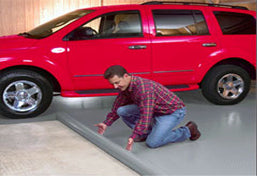
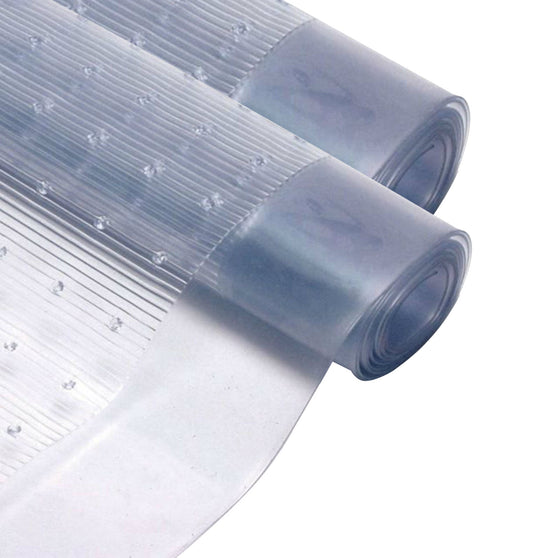
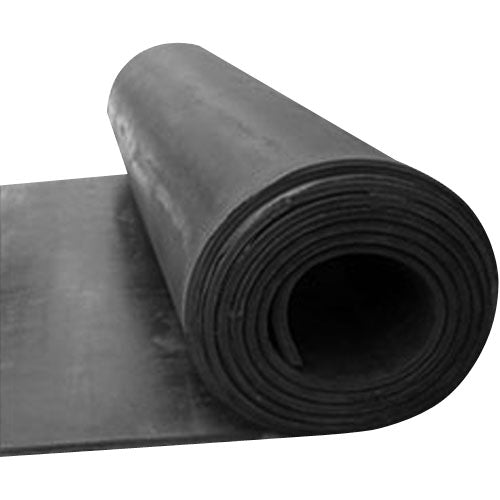
Yes. Rubberco supplies entrance matting in rolls that can be cut to any exact dimension. Ideal for mat wells with non-standard dimensions. Order by specifying your exact measurements — we cut to mm precision with no minimum quantity.
Research consistently shows £1 spent on entrance matting saves £10–£15 in subsequent interior cleaning costs. By capturing 80% of floor soil at the entrance, effective matting dramatically reduces scrubbing and mopping frequency, extends the life of expensive interior flooring, and reduces the labour cost of daily cleaning operations.
A recessed mat well is best practice because it allows the mat to sit flush with the floor — completely eliminating trip hazards at mat edges. However, where recessing isn't possible, thick bevelled-edge mats that lie flat without curling are a practical alternative. The bevelled edge creates a gentle ramp that eliminates the trip hazard at mat edges.
Coir mats (coconut husk fibre) provide superior scraping action for removing heavy mud and debris, and are naturally absorbent. They suit semi-sheltered positions and environments with heavy mud. Rubber entrance mats are more durable, handle full weather exposure, withstand wheeled traffic, and last significantly longer. For most UK commercial entrances, rubber is preferred for exterior positions; coir is excellent for covered entrance lobbies.
High-traffic commercial entrance matting should be vacuumed or shaken daily, and deep cleaned weekly. During wet UK winters, saturated textile/barrier mats should be rotated out and replaced with dry mats — a saturated mat actively spreads moisture rather than absorbing it, and becomes a slip hazard. Rubber mats should be pressure washed or scrubbed weekly. Lift all mats monthly to clean underneath.
Yes. Rubberco entrance matting products are selected to meet or exceed HSE slip safety guidance (HSG155) requirements. Rubber mats achieve PTV values well above the recommended 36 minimum. Bevelled edges on all commercial mats eliminate trip hazards at mat borders, in compliance with the Health and Safety at Work Act 1974 and associated workplace regulations.
Understanding entrance matting costs helps you specify the right product within your budget. Prices vary significantly by material, size, and format.
| Type | Size | Price Range | Typical Setting |
|---|---|---|---|
| Ribbed Rubber Mat | 600×900mm | £12–£22 | Residential, small commercial |
| Ribbed Rubber Mat | 900×1500mm | £20–£35 | Office entrance, shop doorway |
| Coir Entrance Mat | 600×900mm | £18–£30 | Traditional entrance, porch |
| Coir Entrance Mat | 900×1500mm | £30–£50 | Period building, hotel entrance |
| Heavy Duty Barrier Mat | 900×1500mm | £45–£80 | High-traffic commercial entrance |
| Heavy Duty Barrier Mat | 1200×1800mm | £65–£120 | Shopping centre, school entrance |
| Rubber Roll (per linear metre) | 1.0m wide | £8–£15/m | Long corridor entrance runs |
| Rubber Roll (per linear metre) | 1.2m wide | £12–£20/m | Wider entrance corridors |
| Aluminium Entrance System | 900mm wide per linear metre | £80–£160/m | Premium commercial, high-traffic |
Prices correct May 2026. Custom sizes available — contact us for mat well fitting quotes.
For commercial buildings, entrance matting should comply with or reference the following UK standards:
BS 7953 recommends that commercial entrance matting should provide a minimum contact zone of 2.1 metres in the direction of walking — the equivalent of approximately 6 footfalls. This ensures each shoe sole makes full contact with the mat surface during normal walking pace, capturing the maximum dirt and moisture load. For single-door residential entrances, 600–900mm is often sufficient; for high-traffic commercial entrances, 1200–2100mm or more is recommended. For buildings with separate scraper and absorption zones (two-stage entrance matting), each zone should be at minimum 900mm deep.
In typical commercial settings, entrance mats should be vacuumed or shaken daily and deep cleaned weekly. High-traffic entrances (supermarkets, transport hubs, hospitals) may require twice-daily maintenance during wet weather. Coir mats can be beaten or vacuumed; rubber and barrier mats can be hosed down or pressure washed. Allow to dry completely before returning to service to prevent mould growth beneath the mat.
Schools and nurseries typically specify heavy-duty barrier matting in 1200mm or 1500mm widths across the full entrance corridor width. The mat must be robust enough to withstand hundreds of children's footfalls per hour during arrival and departure times. Rubber-backed barrier mats with a low-pile textile face provide excellent dirt absorption for muddy school footwear. Safety edge profile (bevelled or recessed) is essential in child-occupied settings.
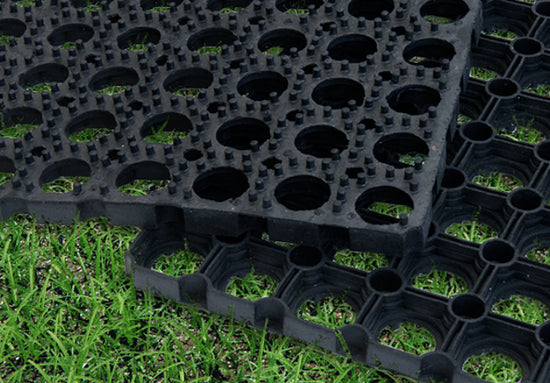
Outdoor entrance matting must be manufactured from UV-stable, weatherproof materials — EPDM rubber or UV-stabilised polypropylene. Standard coir mats and textile barrier mats are NOT suitable for permanent outdoor exposure and will degrade rapidly. For exterior positions, choose studded or ribbed rubber mats in EPDM compound, or purpose-designed exterior barrier systems with drainage to prevent water pooling beneath the mat.
Entrance matting is one of the most ROI-positive investments in a commercial building. Independent studies by the British Flooring Association confirm that a correctly specified entrance mat system removes up to 95% of tracked-in dirt and moisture within the first 2 metres of travel — reducing interior cleaning costs by up to 80% and extending hard floor and carpet lifespans by 3–7 years. Yet the majority of UK commercial buildings are under-specified in their entrance matting — relying on a single consumer-grade doormat rather than a designed system.
Professional entrance matting systems use a three-zone approach that building services engineers and facilities managers specify for Class A office buildings, healthcare facilities, and premium retail:
Total minimum depth: 2,000mm for standard commercial entrances. For high-footfall public buildings (transport hubs, supermarkets, hospitals), 3,000mm+ is the professional specification.
Loose-lay entrance mats on hard floors are a perennial trip hazard — mat edges lift, corners curl, and the mat displaces under foot traffic. The professional solution is a recessed mat well: a rebate in the floor surface exactly sized for the mat, keeping it flush with the surrounding floor level. Recessed mat wells are standard in architect-specified commercial buildings and are required by BS 8300 for accessible entrance design (no raised edges for wheelchair users or mobility aid users).
Key dimensions for recessed mat wells:
The entrance mat is the first impression of every visitor to a commercial premises. Custom logo mats — printing or weaving a company logo, brand name, or directional message into the mat surface — reinforce brand identity at the most-seen single location in the building. Production lead time for custom logo mats is typically 10–15 working days. Available in full-colour photographic quality on premium nylon pile, or in woven designs in up to 20 colours. Rubberco offers custom logo mats in standard sizes or bespoke dimensions to fit any mat well or entrance area.
BS 8300:2018 covers the requirements for accessible building design including entrance areas. Key provisions affecting entrance mat specification:
Regulation 12 requires that floors (including entrance areas) are maintained in a condition that does not expose persons to slip, trip, or fall risks. A loose entrance mat that slides under foot traffic, a mat with raised edges creating a trip hazard, or a mat that has become saturated and is spreading rather than removing water — all represent potential Regulation 12 non-compliances. Properly specified and maintained entrance matting is a documented risk control measure.
In manufacturing, automotive, and industrial premises where contaminated materials may be tracked on footwear, entrance matting serves as a contamination control measure under the Environmental Permitting Regulations. Decontamination mats at site exits — rubber mats treated with disinfectant solution — are standard practice in agricultural biosecurity, food production, and hazardous materials handling environments.
| Mat Type | Daily | Weekly | Monthly | Replace |
|---|---|---|---|---|
| Coir scraper | Beat/vacuum | Hose, air dry | Deep clean | Fibre flattened — 12–24 months |
| Rubber scraper | Sweep | Mop, neutral cleaner | Inspect | Profile worn flat — 3–5 years |
| Textile barrier | Vacuum | Extract clean | Deep extraction | Pile worn — 18–36 months |
| Logo mat | Vacuum | Low-pressure wash | Professional clean | Logo faded or pile worn |
Many UK facilities managers default to mat rental services (ISS, Mats Inc, etc.) for entrance matting because it includes cleaning and replacement. The rental model has genuine benefits — regular professional cleaning, automatic replacement when worn — but the total cost of ownership typically exceeds outright purchase by 200–400% over a 5-year period.
A typical premium entrance mat rental contract in the UK costs £15–£30/week per mat for a small commercial mat, including cleaning. Over 5 years: £3,900–£7,800 per mat. A comparable quality outright purchase mat from Rubberco: £80–£250. The rental model is justified if: cleaning capacity is genuinely unavailable in-house; the premises has very high footfall making weekly replacement genuinely necessary; or the contractual simplicity has value. For most standard commercial premises, outright purchase with a simple in-house cleaning schedule provides materially better value.
NHS and private healthcare entrance matting must achieve PTV 36+ in dry conditions (as a minimum) and must be compliant with infection control protocols. Antimicrobial-treated mat fibres are available for healthcare where contamination control is critical. Under NHS Estates guidance, entrance mats must not impede access for wheelchair users and mobility aid users — recessed wells are strongly preferred.
A hotel main entrance mat is seen by every guest, every day — it is a brand statement as much as a functional product. Premium branded entrance matting in the hotel's colour scheme, with the hotel name or logo, communicates quality and attention to detail. Rubberco supplies custom logo entrance mats for hotels, restaurants, and premium retail environments with 10–15 working day lead time from artwork approval.
Retail entrance matting must handle the combined effects of wet UK weather, high footfall, and frequent cleaning. Rubber-backed textile barrier mats in the primary scraper/wiper zone, with a rubber scraper in an external covered position, provides a three-stage system that maintains clean, dry interior floors through the worst UK weather. Replace textile wiper mats when pile height falls below 6mm — below this, the mat wipes but doesn't absorb.
| Factor | Light Commercial | Standard Commercial | Premium / High Footfall |
|---|---|---|---|
| Mat depth | 900mm | 1,500mm | 2,000–3,000mm |
| System type | Single scraper mat | Scraper + wiper | 3-zone system |
| Installation | Loose-lay | Anti-slip backing | Recessed well |
| Logo mat? | Optional | Recommended | Standard |
| Typical cost | £40–£120 | £120–£350 | £350–£2,000+ |
The Rubberco entrance mat range covers every point in this spectrum — from economical coir doorstep mats to full commercial three-zone barrier systems with custom logo mats. Every product is available cut to size with no minimum order. Custom logo mats in 10–15 working day lead time. Free UK mainland delivery on all orders. Our entrance matting specialists provide system design advice for any entrance configuration — contact us with your entrance dimensions and footfall level for a recommended specification.
All entrance mats are available cut to size — enter your exact dimensions at checkout. Standard entrance mats ship from stock same or next working day. Custom logo mats require 10–15 working days from artwork approval. For standard sizes without logos, we cut from rolls to your specified width and length with no minimum order and no waste charges.
| Environment | Recommended Product | Min. Mat Depth |
|---|---|---|
| Small office / domestic | Coir on PVC backing | 900mm |
| Retail shop | Rubber scraper + textile wiper | 1,500mm |
| Restaurant / hotel | Logo mat + rubber scraper | 2,000mm |
| School / hospital | 3-zone barrier system, recessed | 2,000–3,000mm |
| Decontamination (industrial) | Rubber mat with sump / replacement insert | 1,000mm |
Free UK mainland delivery on all entrance matting orders. Custom logo mat design service included at no extra charge — upload your logo and our design team produces the artwork proof for approval before production.
For a standard UK office entrance in a recessed mat well: 1,500mm deep coir mat as the primary scraper, followed by a textile wiper mat (microfibre or nylon pile) for moisture absorption. This two-zone system removes 90%+ of contamination in normal UK weather. For covered outdoor vestibule areas: add an external rubber scraper mat before the first zone.
Coir: vacuum or beat daily; hose weekly with cold water and air dry fully. Textile/nylon: vacuum daily; extraction clean weekly in high-footfall premises; replace when pile height below 6mm. Rubber scraper: sweep daily; mop with neutral floor cleaner weekly; inspect for lifting edges monthly. Never machine-wash coir mats — hot water shrinks natural coir fibre.
A standard entrance mat is a single product providing basic dirt removal. Barrier matting is a designed system combining a rigid scraper zone (coir or rubber) with an absorbent wiper zone (textile), sized to provide at least 1,500mm of cleaning surface in the direction of foot travel. Barrier matting systems achieve 90–95% contamination removal vs 60–70% for a single standard mat.
Yes. Custom logo entrance mats are available in nylon pile (full-colour photographic quality) or woven formats (up to 20 colour combination designs). Any size from 600×900mm to 2,000×4,000mm. Standard lead time 10–15 working days from artwork approval. The logo mat is the most-seen marketing touchpoint in any commercial building — a professional branded mat communicates quality to every visitor.
All entrance matting products are available cut to size — specify your exact dimensions at checkout. Standard in-stock products dispatch same or next working day. Custom logo mats: 10–15 working days from artwork approval, with a free design proof before production. Bulk pricing available for hotel groups, retail chains, and multi-site facilities managers — contact our commercial team for volume pricing.
Rubberco holds the largest entrance mat range of any UK rubber specialist — from economical coir doorstep mats to full commercial three-zone barrier systems with recessed drainage frames and custom branding. Technical specification advice is available from our entrance mat team for any application from a small office to a major transport hub. We provide the system design, product specification, and BS 8300 compliance documentation needed for architect-specified commercial projects and accessibility audits.
Free UK mainland delivery on all orders. No minimum order. Call our team to discuss your entrance matting requirements — we provide no-obligation specification advice and will design the most cost-effective system for your entrance configuration and footfall level.
Rubberco has supplied entrance matting to UK businesses, public sector buildings, healthcare facilities, and domestic customers since the 1960s. We understand the regulatory landscape (BS 8300, Workplace Regs 1992, BRE mat well specifications) and provide the compliance documentation needed for accessibility audits and procurement approval. Our entrance mat specialists provide no-obligation specification advice by phone or email — call us with your entrance dimensions, footfall level, and any specific compliance requirements, and we will design the optimal system for your building.
Our entrance matting range is stocked and dispatched from our UK warehouse — no drop-shipping or extended lead times. Every coir mat is cut from UK-stocked rolls with finished edges to prevent fraying. Every rubber-backed mat is anti-slip tested and meets the PTV requirements of BS 8300 for accessible building design. We hold our own stock of all standard entrance mat profiles and sizes, ensuring consistent availability and same or next working day dispatch. For large project orders (100+ mats, multi-site programmes), contact our commercial team for dedicated account support and project delivery management.
Entrance matting is covered under our standard UK delivery service — free mainland UK delivery, same or next working day from our stocked range. Custom and bespoke mats confirmed with you before production and delivered within our agreed lead time. Our 60+ years in the rubber and matting industry means we understand the long-term performance requirements of commercial entrance systems — we specify products that last, not products that look good initially and fail within 18 months.
Fast, reliable UK supply since the 1960s.
Verified reviews from UK buyers





























Dispatch in 24 Hours
Satisfaction Guarantee
Secure Payments
sales@rubberco.co.uk


